




Straight Front Drawers
When you search for straight front drawers, you enter a world of practical domestic storage built from rich timbers over centuries.
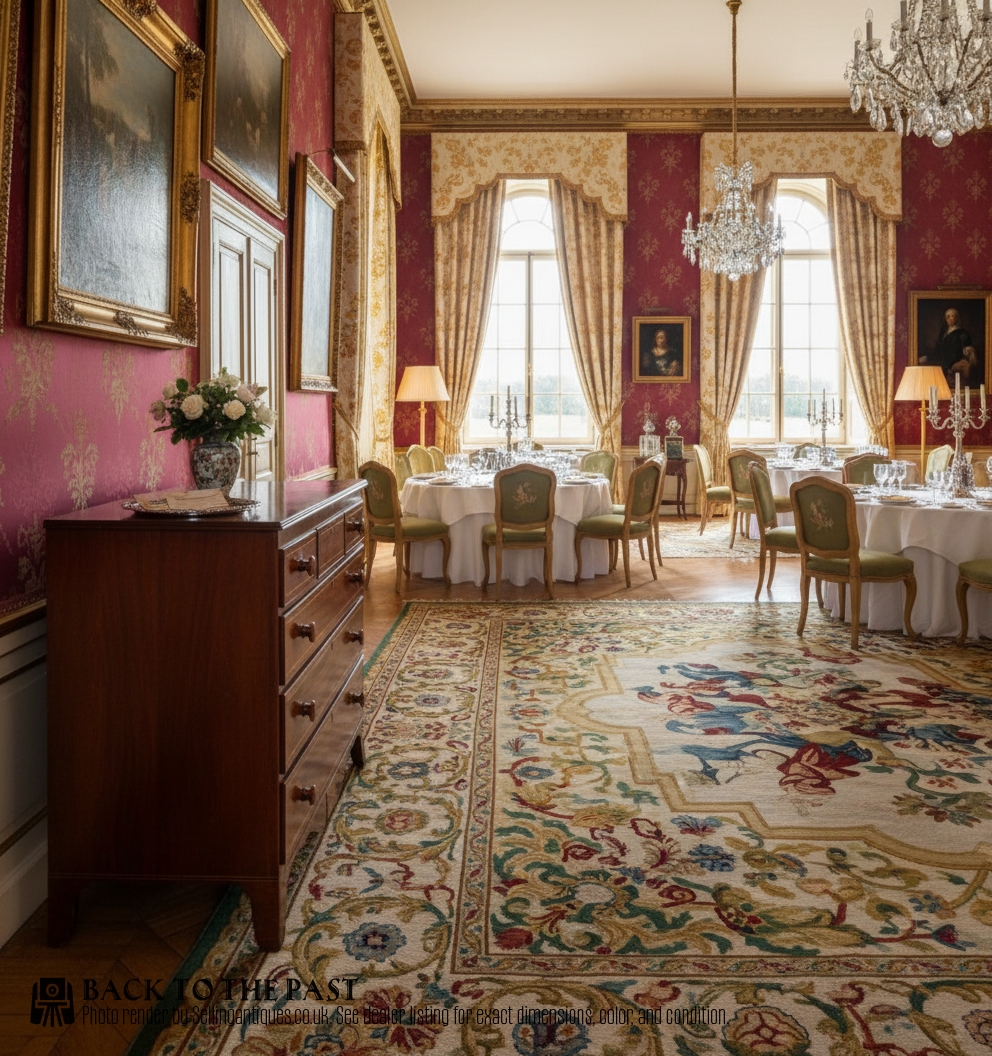
Straight Front Drawers
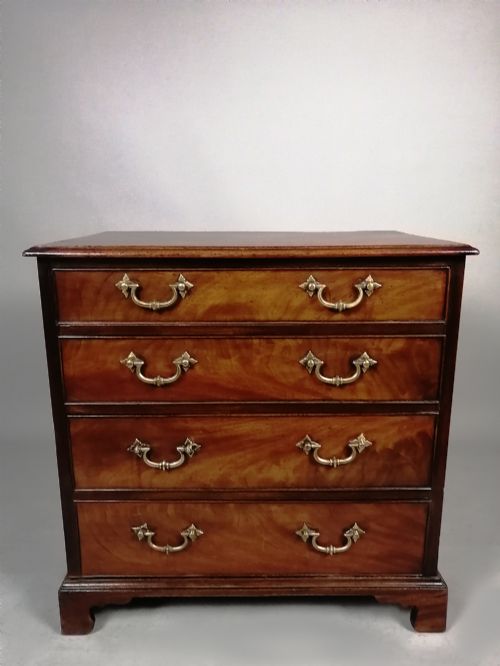
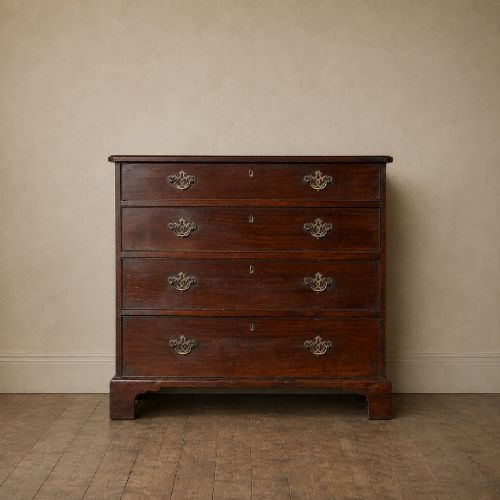
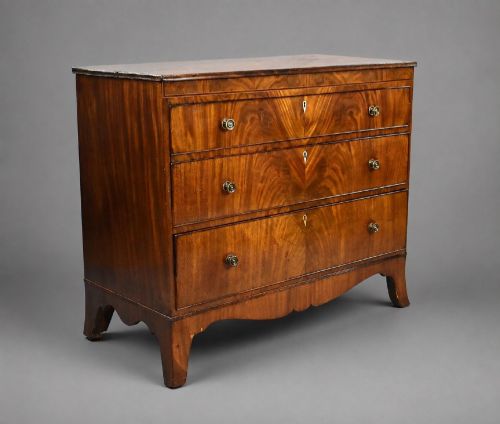
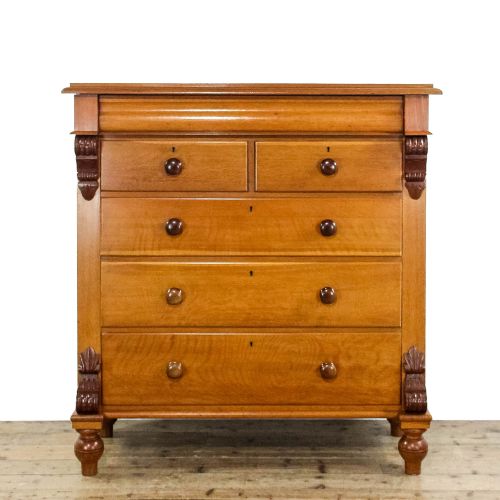
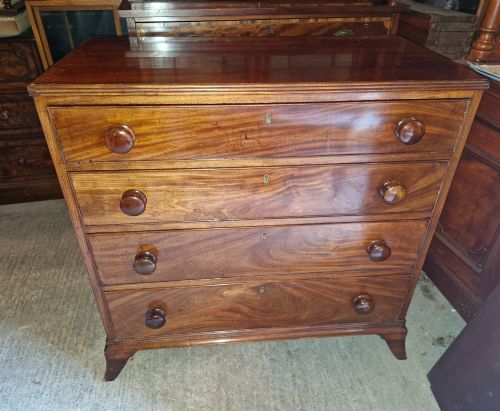
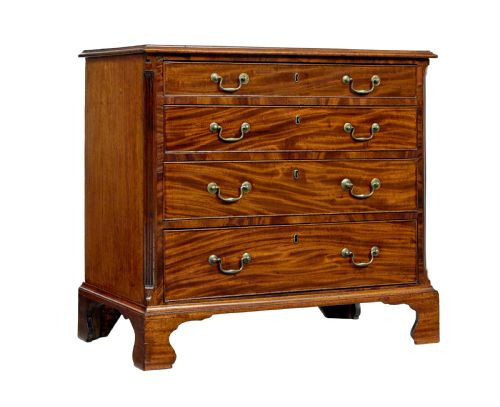
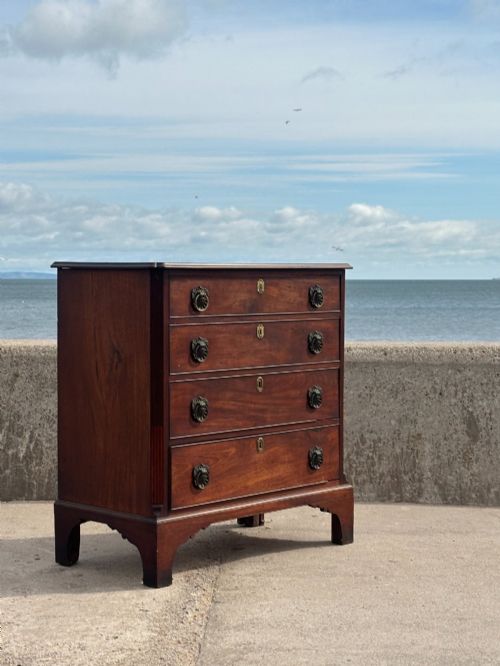
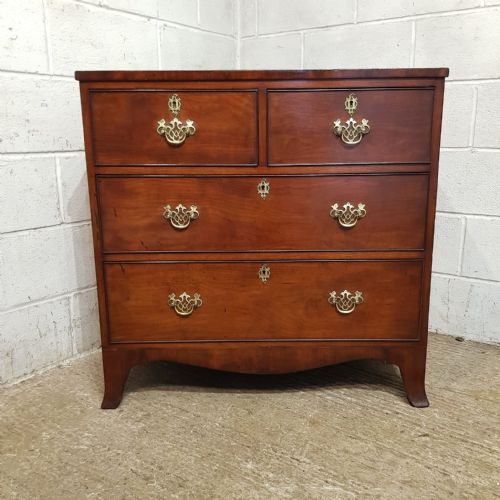
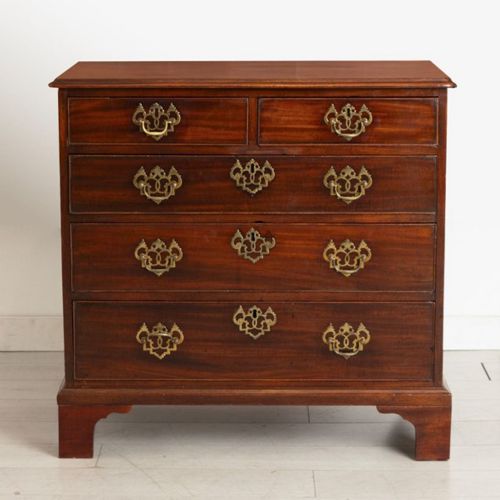
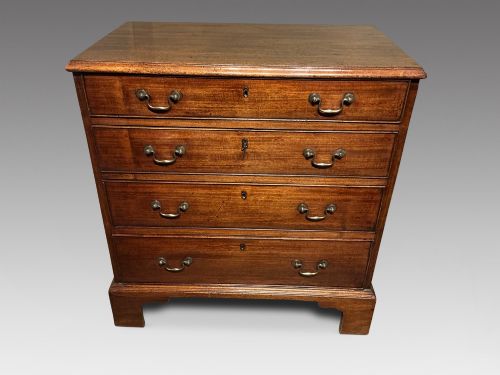
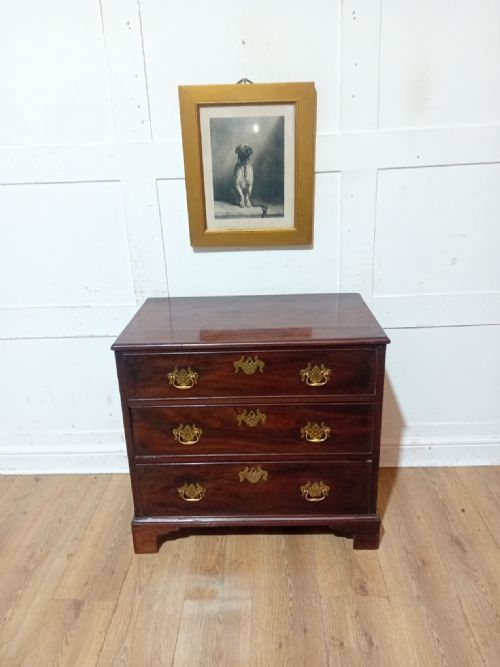
Straight front drawers, commonly found as chests of drawers, offer practical storage with a flat, forward-facing elevation rather than a serpentine or bow shape. You will most frequently meet mahogany and oak examples spanning the Georgian, Regency, and Victorian periods.
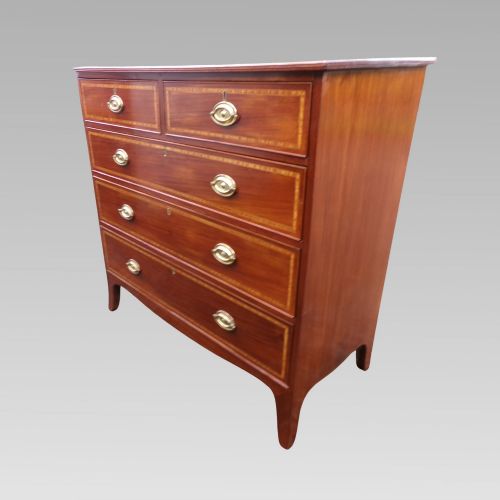
The pieces on this page range from compact bachelor chests with brushing slides to tall four-height storage units. Many retain their original bracket feet, oval brass handles, or inlaid satinwood details characteristic of late eighteenth and nineteenth-century cabinet work.
Materials and Construction
Makers utilised solid timbers and veneers, predominantly mahogany, Cuban mahogany, and oak for structural rigidity and drawer linings. Joinery relies on tightly cut dovetails for drawer construction and sturdy framing to support multiple horizontal tiers.
Surface decoration involves simple line inlay, crossbanding in satinwood, and polished flame mahogany grains. Brass swing handles and escutcheons are fitted to punctuate the timber facades.
Listings feature eighteenth-century, Georgian, Regency, and Victorian periods utilising mahogany, oak, satinwood, and brass.
Quality and Distinction
Quality rests in the selection of timber figures, such as curl or flame mahogany, and the crispness of the hand-cut dovetails joining the drawer sides. Superior examples preserve original brass hardware, feet, and secondary timbers like oak drawer linings.
Later alterations, replaced handles, or heavy refinishing distinguish everyday utility pieces from those retaining their primary surface patination and period structural integrity.
Mawer and Stephenson·Gillows
The Straight Front Drawers Glossary
- Brushing slide
- A pull-out shelf located above the top drawers, historically used for writing or brushing clothes. It slides flush into the cabinet frame when not in use.
- Bracket feet
- Small structural feet supporting the corners of the chest, often taking an ogee or simple bracket profile. They lift the cabinet base off the floor.
- Crossbanding
- A narrow strip of veneer laid around the border of a drawer front with the grain running perpendicular to the centre panel. This technique frames the primary timber.
- Flame mahogany
- A veneer cut from the fork of a mahogany tree that creates a distinctive swirling, flame-like pattern across the drawer fronts.
- Oak lined
- The use of solid oak for the internal sides and bottoms of the drawers, commonly found in higher-quality Georgian cabinet work.
Straight Front Drawers: Frequently Asked Questions
What is a straight front chest?
A straight front chest is a storage unit featuring horizontal drawers set into a flat, uncurved facade. This classic form maximises internal capacity while maintaining a clean architectural profile against a wall.
Such pieces serve as versatile bedroom or hallway furniture, holding linens or garments while displaying the natural grain of woods like mahogany and oak.
How do I date a mahogany chest?
Dating relies on examining construction methods, handle styles, and secondary timbers. Eighteenth-century pieces often feature hand-cut dovetails and oak drawer linings, whereas later Victorian examples show machine precision and different framing techniques.
Changes in foot styles, from bracket feet to later turned feet, also help narrow down the period of manufacture alongside inlaid decorative motifs.
Were brushing slides common?
Brushing slides appear frequently on Georgian and eighteenth-century chests, positioned just beneath the top surface. They provided a clean pull-out shelf for folding garments or writing brief notes without opening the main drawers.
Today, this feature is valued by collectors as an indicator of finer cabinet making and thoughtful domestic utility from the period.
How do I care for antique timber?
Antique timber benefits from placement away from direct heat sources and strong sunlight, which can dry out and fade the polished surface. Regular dusting with a soft, dry cloth preserves the finish without requiring heavy polishes.
Maintaining a stable room humidity prevents the solid mahogany or oak from warping or cracking across the seasonal changes.