

Georgian Three Over Three
Georgian three over three chests of drawers offer symmetrical proportions and generous storage, making them a practical centrepiece for any traditional bedroom.
Georgian Three Over Three
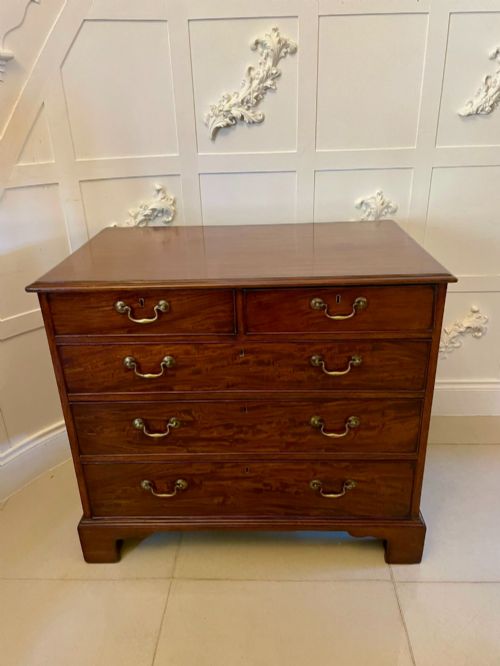
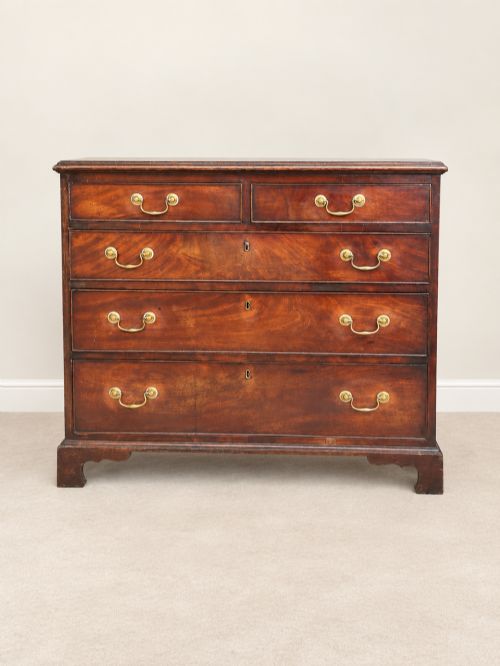
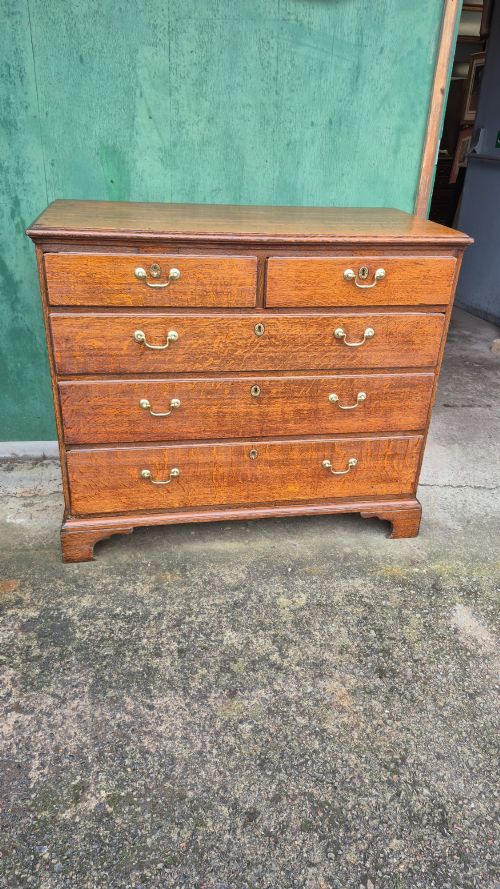
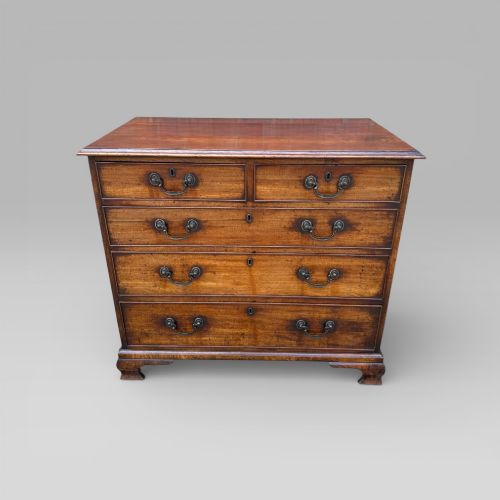
When you search for georgian three over three, you are looking at substantial timber storage furniture defined by a traditional arrangement of three small drawers positioned above three larger graduated drawers below. This specific configuration forms the core of domestic storage from the eighteenth century onwards.
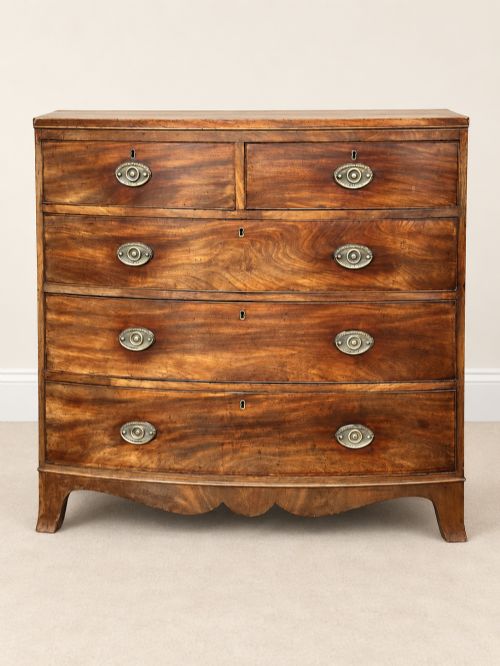
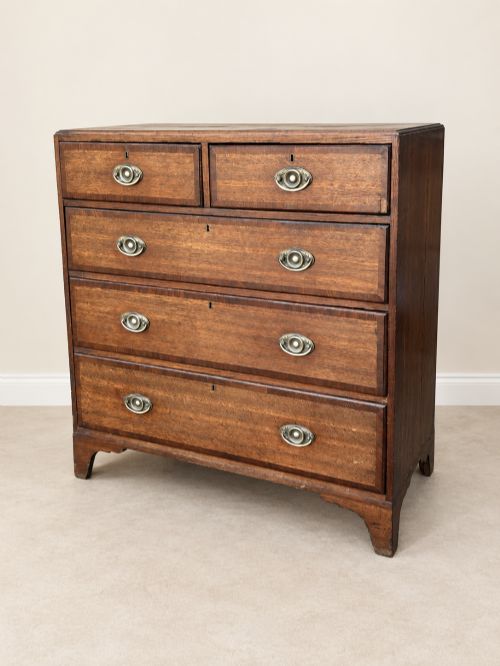
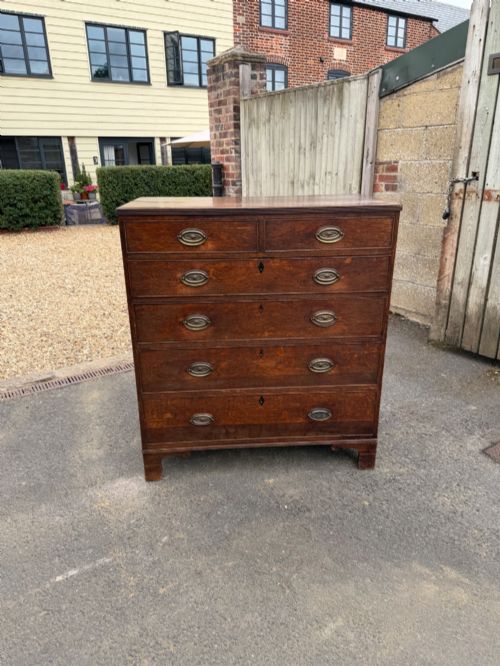
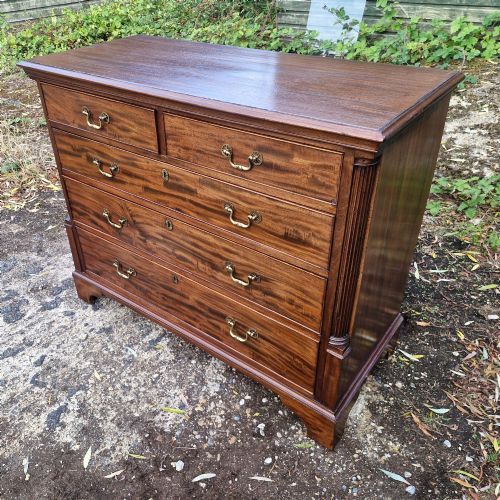
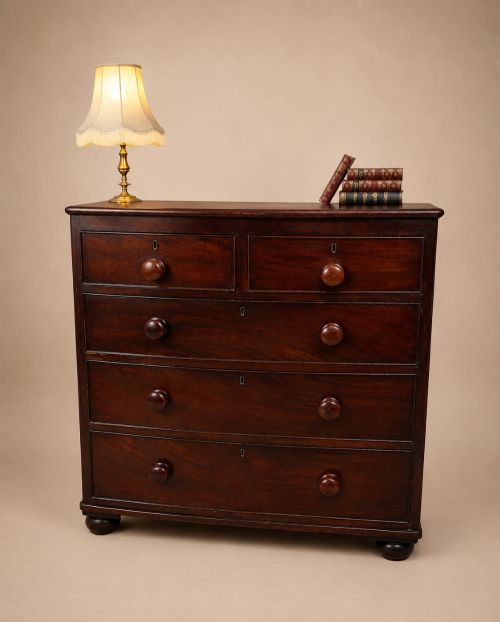
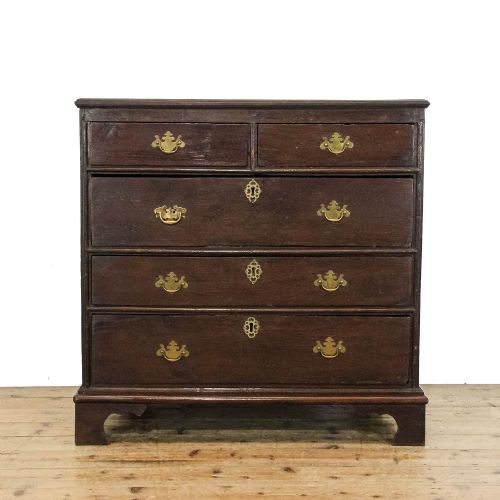
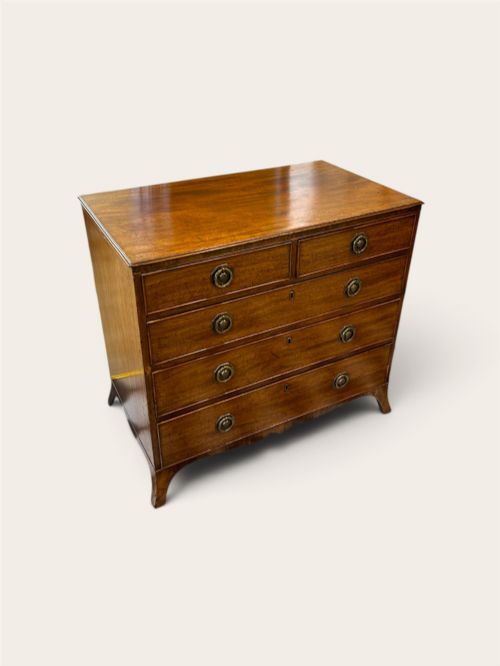
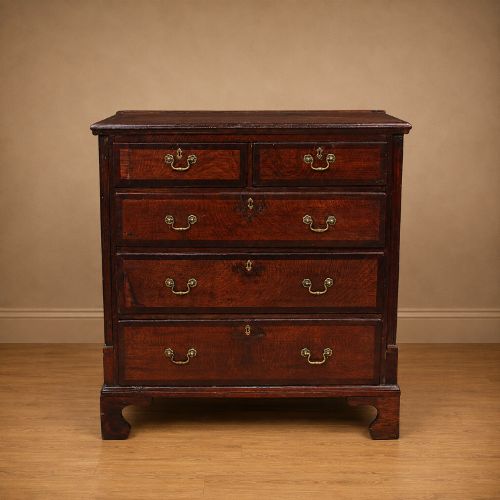
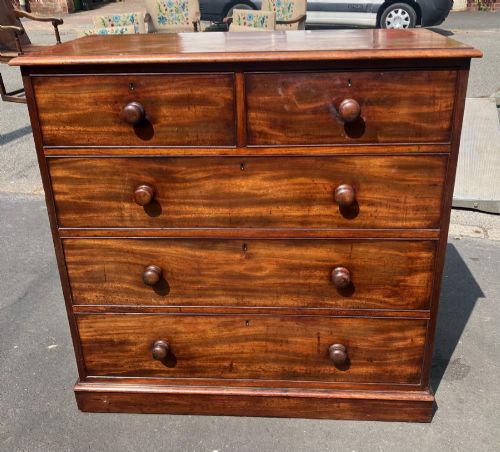
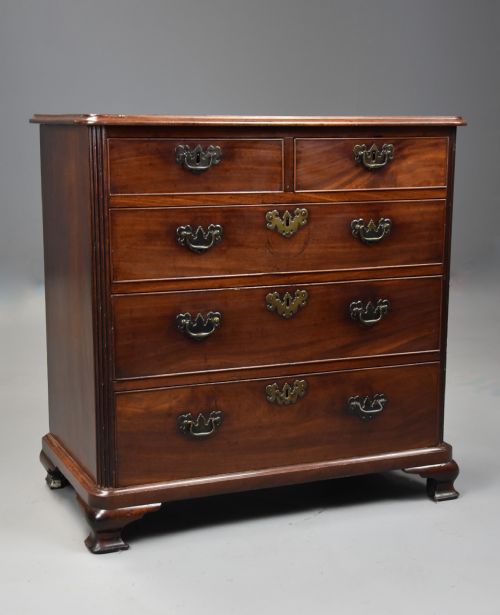
The versions you are most likely to meet on this page span the Georgian, Regency and Victorian periods, often constructed from dense hardwoods like mahogany or oak. These pieces range from robust provincial oak examples to refined George III mahogany designs featuring crossbanding and bracket feet.
Makers and workshops constructed these chests to serve primary domestic needs in bedrooms and hallways, utilising durable timbers that survive centuries of daily use. Their enduring appeal lies entirely in this combination of functional storage and balanced proportions.
Materials and construction
Cabinet makers relied heavily on solid mahogany, oak, and walnut, frequently applying flame mahogany veneer or burr walnut to primary visible surfaces for decorative effect. Crossbanding in contrasting timber often frames the drawer fronts and top edges.
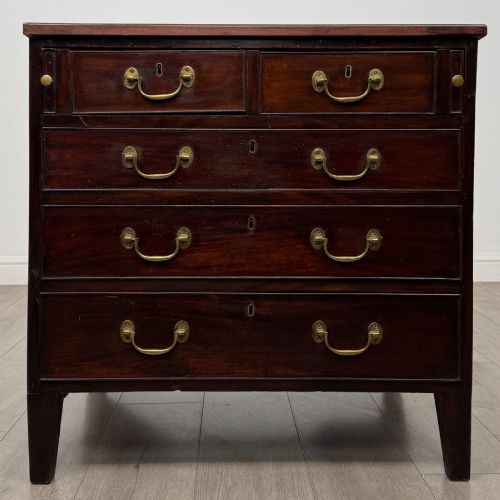
Structural integrity relied on pegged mortise and tenon joints for the carcase, alongside hand-cut dovetails on the drawer construction. Brass drop handles and escutcheons were fitted as standard hardware, often fixed with original working locks.
One remarkably honest piece arrives complete with its working key, ready to secure your most prized possessions after two centuries.
Distinguishing quality
The distinction between ordinary examples and finer pieces rests on the choice of timber and the precision of the cabinet work. Figured veneers, well-matched mahogany grains, and subtle crossbanding elevate a simple storage box into a sophisticated piece of furniture.
Proportions also dictate the hierarchy of these pieces, with small proportions and narrow formats commanding greater attention than standard dimensions. Original feet, intact brass hardware, and a preserved surface patina complete the measure of quality.
J Moorcroft
The Georgian Three Over Three Glossary
- Crossbanding
- A strip of veneer applied across the grain of the primary timber to form a decorative border around drawer fronts or table tops. This technique frames the surface and demonstrates greater joinery skill.
- Bowfront
- A curved convex front profile popular during the Regency period. This shape softens the rigid angles of a room while maintaining internal storage capacity.
- Caddy top
- A raised or moulded tabletop design resembling the lid of a tea caddy. It adds a distinct architectural profile to the upper edge of the chest.
- Patina
- The surface sheen and colour acquired by wood through age, wear, and polishing over many decades. It reveals the genuine history of the timber.
- Bracket foot
- A structural support foot shaped like a bracket, often ogee or plain in profile, elevating the chest cleanly from the floor.
Georgian Three Over Three: Frequently Asked Questions
What is a three over three chest?
A three over three chest is a drawer configuration featuring a row of three smaller upper drawers above three wider graduated drawers below.
This specific layout provides versatile storage for smaller items alongside bulky garments.
How do I date a Georgian chest?
Dating relies on observing construction methods, timber choices, and hardware styles across different reigns. Earlier pieces often utilise oak or walnut, while later eighteenth-century examples favour solid or veneered mahogany.
Foot styles and drawer dovetailing also shift from hand-cut irregularities in the mid eighteenth century to more refined machinery use by the Victorian era.
Where should I place this chest?
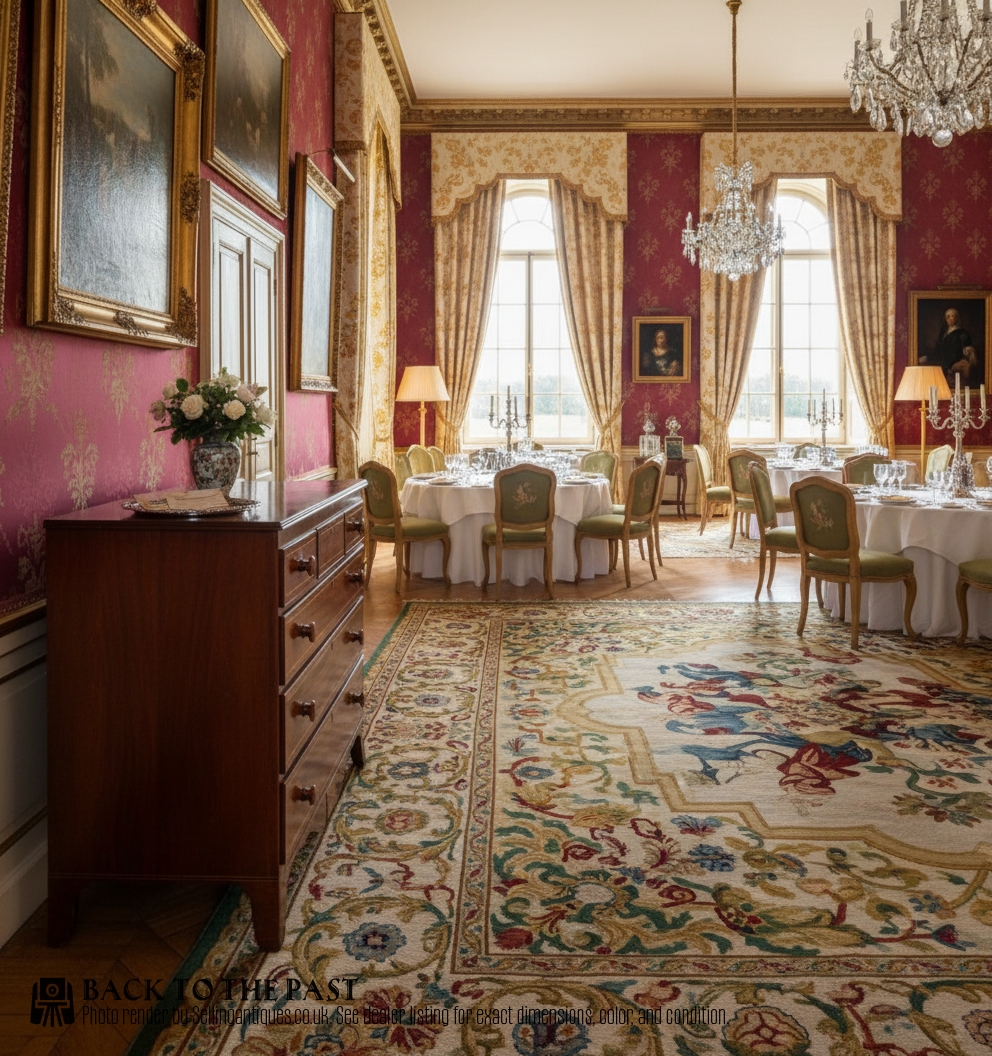
These chests suit bedrooms, grand hallways, or living spaces as focal storage units. Their balanced proportions allow them to anchor a wall without overwhelming the room.
Ensure placement avoids direct sunlight and extreme humidity to protect the timber and veneer.
Are original handles important?
Original brass handles and escutcheons contribute significantly to the historical integrity and visual harmony of the piece. Matching brassware indicates that the hardware has survived intact alongside the timber carcase.
Replacements are common, but matched period replacements still allow the chest to function effectively in a home.