


Sterling Silver Table Mirror
A sterling silver table mirror brings reflective light and tactile metalwork to a dressing table, combining utility with period design.
Sterling Silver Table Mirror
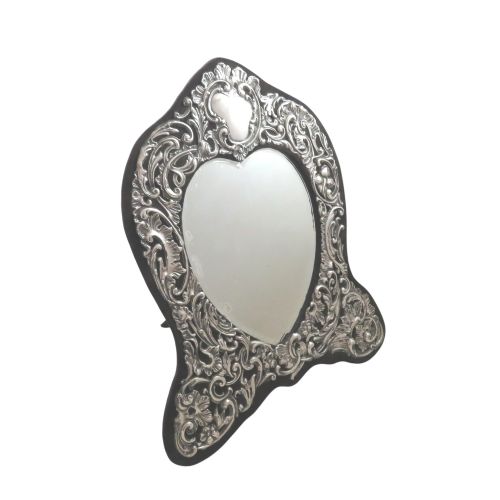
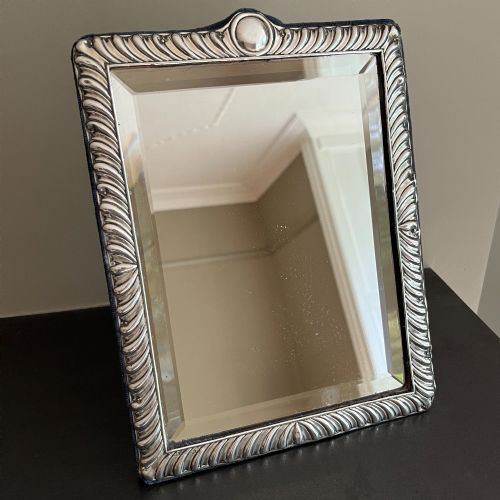
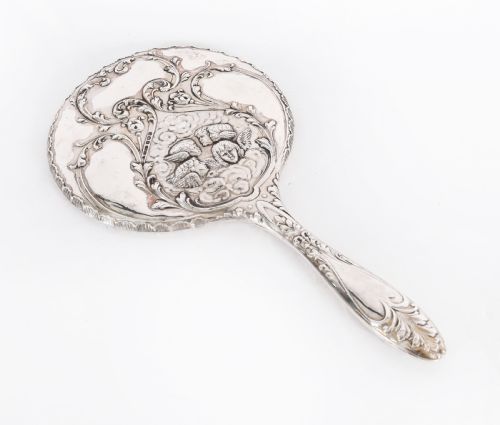
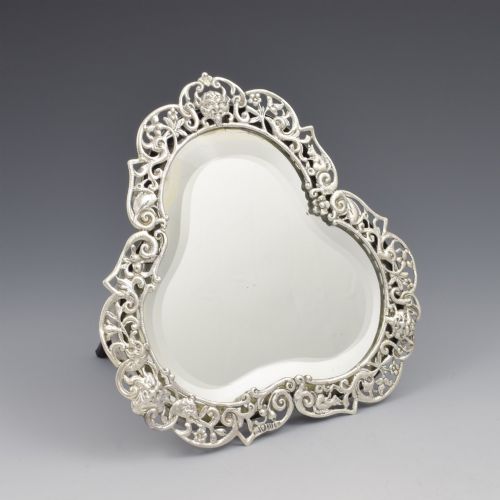
A sterling silver table mirror sits upon dressing tables or surfaces supported by easel backs or structured frames. These pieces take various forms including hand mirrors, dressing table mirrors, vanity mirrors, and heart shaped mirrors.
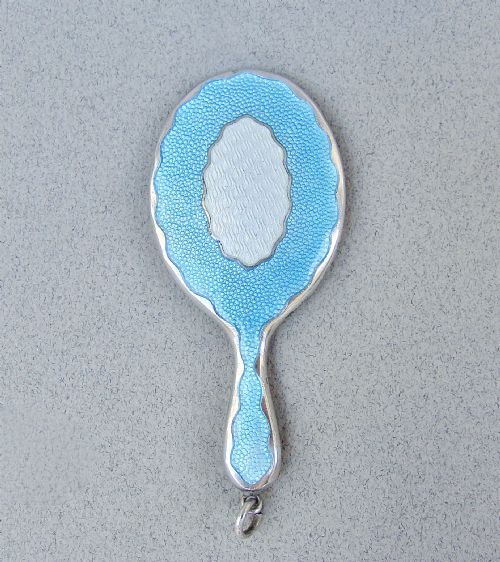
The pieces appearing on this page span the Victorian, Edwardian, and Art Deco periods, alongside Chinese Export and Victorian Rococo Revival styles. Buyers encounter both small miniature purse mirrors and large dressing table mirrors measuring up to fourteen or eighteen inches.
Most examples function as vanity items or dressing table sets, often incorporating glass mirror panels alongside wooden supports and velvet backings. Their survival reflects decades of use upon domestic surfaces.
Assessing Quality
Quality rests upon the weight of the sterling silver frame and the depth of the metalwork, whether through crisp embossed detailing, intricate piercing, or smooth enamel work. Heavier gauge silver provides structural integrity to larger easel mirrors and hand mirrors alike.
The distinction between standard commercial pieces and superior examples lies in the execution of design, such as figural components or maker signatures from noted silversmiths. Original mirror glass and intact velvet or wooden struts add to the integrity of a surviving piece.
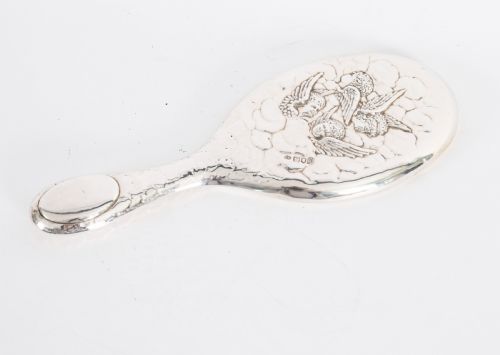
Several silver mirrors feature mischievous cherubs peering out from embossed frames alongside carved animals and birds.
Henry Williamson·Charles Boyton·S Blanckensee And Son·William Comyns·Henry Matthews
The Sterling Silver Table Mirror Glossary
- Sterling silver
- A silver alloy containing 92.5 percent pure silver and 7.5 percent other metals, typically copper, used for structural durability.
- Easel mirror
- A table mirror supported by a hinged back leg that allows the glass to stand upright on a flat surface.
- Guilloche enamel
- Decorative enamel applied over a metal surface that has been mechanically engraved with an intricate repeating pattern.
- Pierced silver
- Metalwork created by cutting or sawing patterns through the silver sheet to form openwork designs.
- Dressing table mirror
- A mirror designed specifically for use on a dressing table, bureau, or vanity surface.
Sterling Silver Table Mirror: Frequently Asked Questions
How do I clean a silver mirror?
Silver frames require gentle cleaning with a specialist silver cloth to remove tarnish without abrading the metal or disturbing any enamel work.
Care must be taken to keep cleaning substances away from the mirror glass edges and the wooden or velvet backing materials.
Are these mirrors sturdy enough to use?
Easel backs provide stable support for daily placement on flat surfaces, provided the hinges remain secure and aligned.
Larger table mirrors rely on their substantial wooden struts to hold the weight of the heavy silver and glass frame.
What is guilloche enamel?
Guilloche enamel involves applying translucent coloured enamel over a meticulously engine-turned metal background.
This technique creates geometric patterns that show through the glossy coloured surface on Edwardian and Art Deco pieces.
How do I date a silver mirror?
Hallmarks stamped into the sterling silver frame record the assay office, standard mark, and date letter corresponding to the year of manufacture.
Stylistic indicators such as Art Deco geometric lines or Victorian embossed floral scrolls further confirm the period.