

Sterling Silver Table Centrepiece
A sterling silver table centrepiece anchors a formal dining arrangement, bringing height, light and heavy metalwork to the middle of the board.
Sterling Silver Table Centrepiece
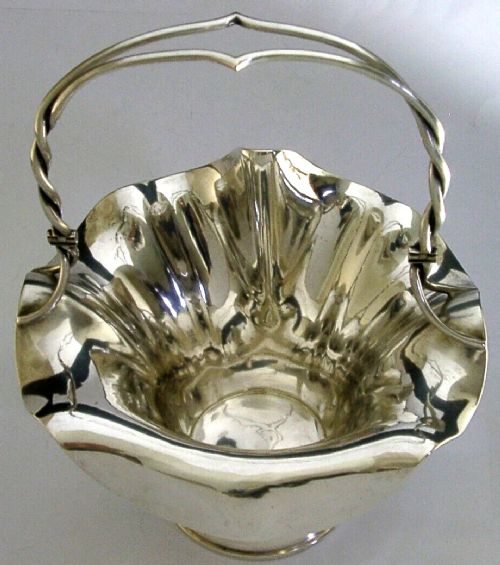
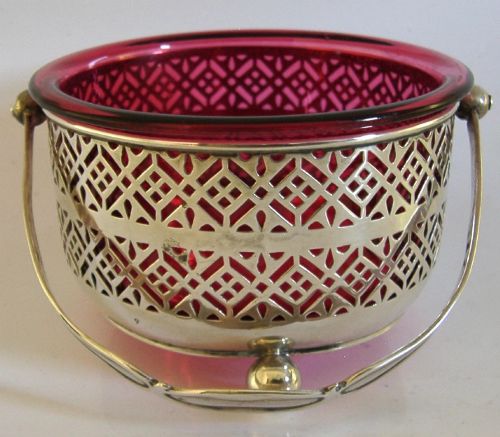
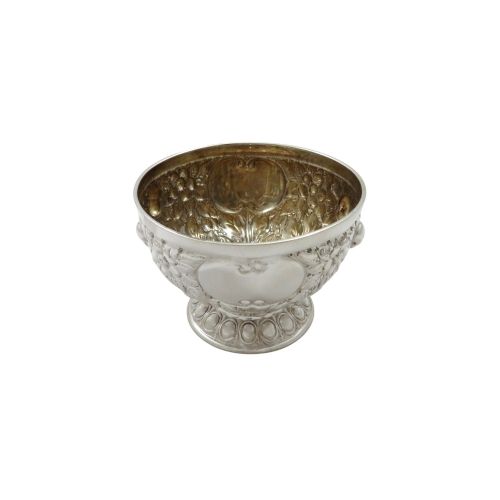
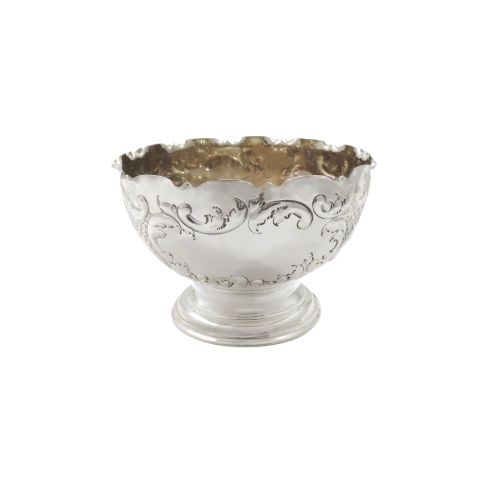
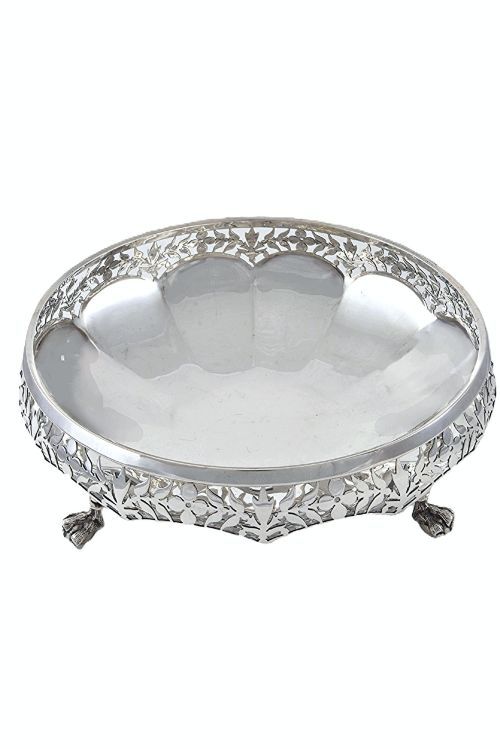
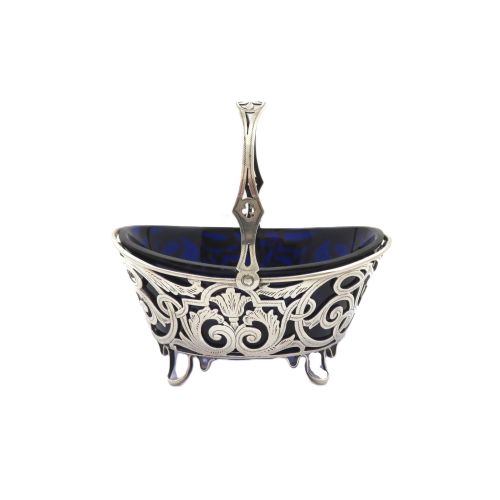
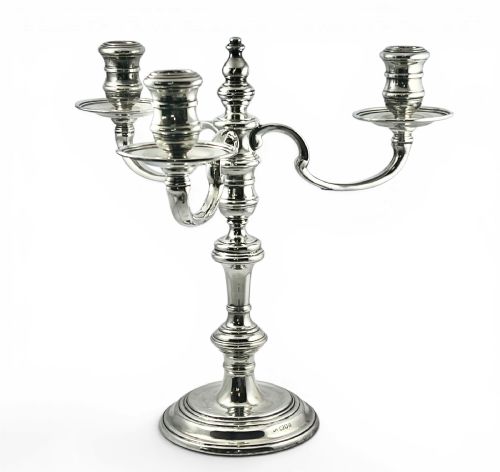
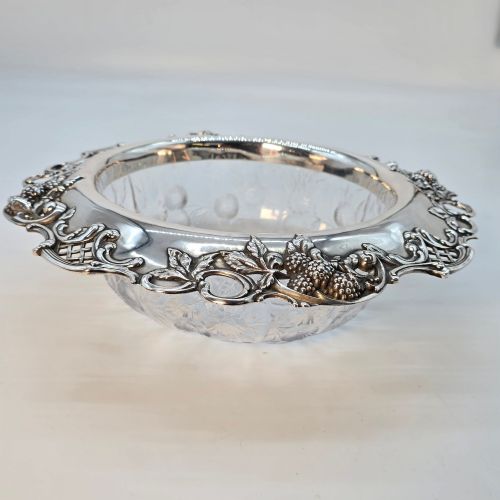
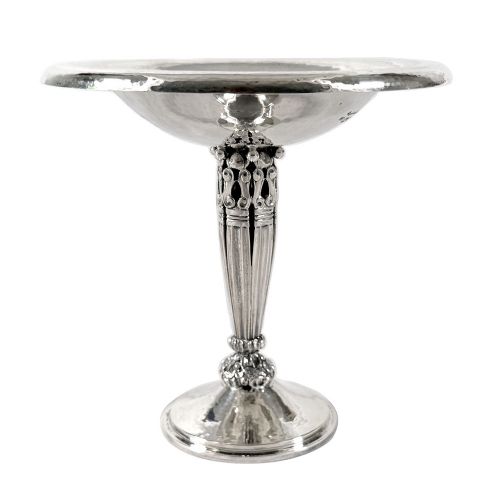
A sterling silver table centrepiece takes many shapes across the Victorian, Edwardian and mid-century periods, appearing as substantial pedestal bowls, heavy footed dishes, elaborate epergnes and multi-branch candelabra. You will frequently encounter baskets and fruit bowls fitted with intricate pierced work, lattice detail or swing handles, often accompanied by coloured glass liners in cranberry, cobalt or green.
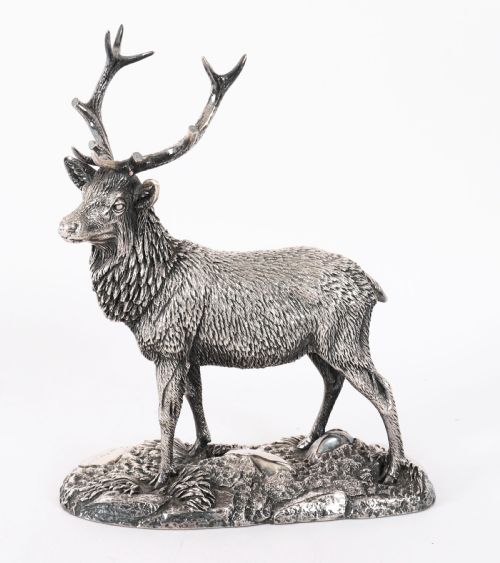
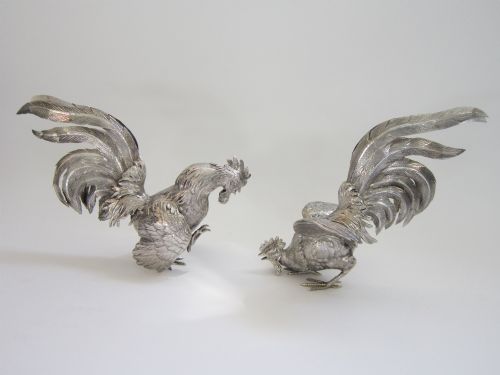
Beyond standard vessels, these central table ornaments stretch to include figural animal sculptures like stags and fighting cockerels, alongside paired candlesticks and tazzas. The origins span local British assay offices in London and Sheffield alongside Continental and American workshops, crossing George V, Art Deco and Arts and Crafts styles.
Materials and Techniques
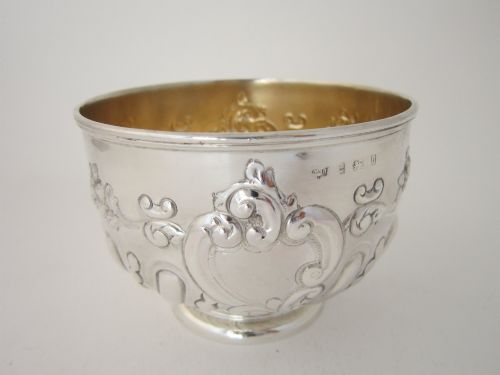
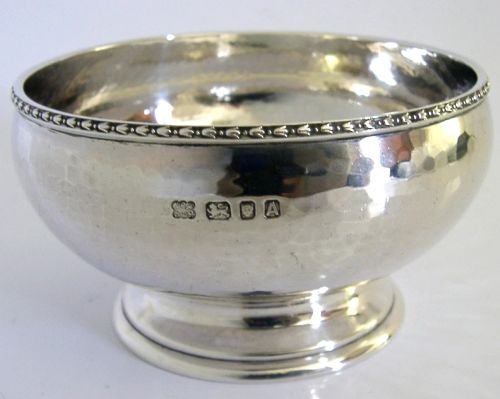
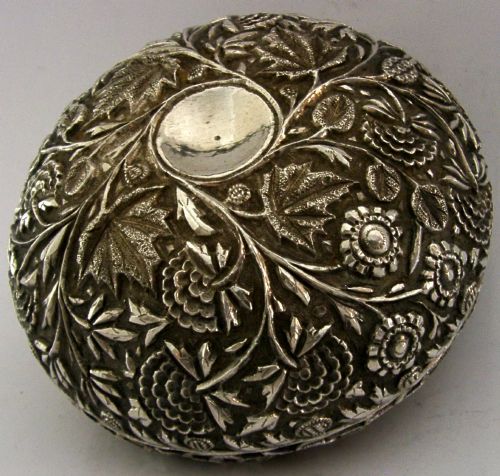
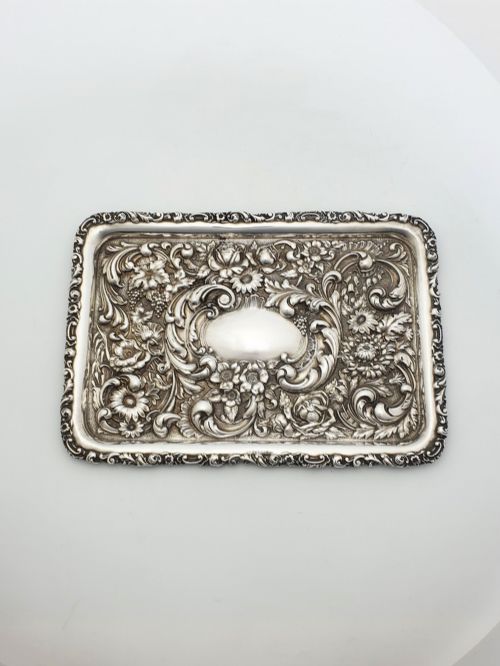
Silversmiths constructed these large display pieces primarily from solid sterling silver, occasionally applying silver gilt to interiors for a contrasting tone. Master craftsmen employed planished and hammered finishes, repoussé floral relief, and delicate fretwork piercing to decorate the heavy gauge metal.
Many open-work baskets and bowls incorporate fitted glass liners made from crystal, cranberry glass or cobalt glass, held securely within pierced sterling frameworks. Candlesticks and animal figures utilise weighted bases to support their vertical forms safely on dining tables.
Silver stags and fighting cockerels stand ready to guard the dining table alongside traditional fruit bowls and pierced baskets.
Distinctions in Quality
Quality rests upon the weight and gauge of the sterling silver used in the body, separating flimsy stamped items from heavy, substantial vessels that maintain structural integrity across wide spans. Superior examples display crisp, deep repoussé chasing and precise hand-pierced lattice work without distortion to the surrounding metal.
The integration of original, undamaged glass liners - whether cranberry, green or clear crystal - adds considerably to the integrity of a piece. Maker attribution to notable silversmith firms further defines the upper tier of these display items.
Tom Mackie·Tiffany and Co·Charles Boyton·Joseph Rodgers·Viners·William Comyns·Walker and Hall·Hammond Creake and Co·William Hutton and Sons·James Dixon and Sons Ltd
The Sterling Silver Table Centrepiece Glossary
- Sterling silver
- An alloy containing 92.5 percent silver by mass, with the remainder consisting of other metals like copper. This standard composition forms the primary material for nearly all quality British table silver.
- Repoussé
- A metalworking technique where the silversmith hammers the design from the reverse side to form raised floral or scroll reliefs on the front. Edwardian trays and bowls frequently utilise this method for decorative borders.
- Epergne
- A large ornamental centrepiece featuring a central bowl or basket surrounded by smaller detachable hanging baskets or branch vases. These dramatic dining pieces rose to great popularity during the Edwardian period.
- Planished
- A surface finish created by striking silver repeatedly with a small-faced hammer, leaving regular, flat overlapping indentations. This technique is a hallmark of the Arts and Crafts movement.
- Tazza
- A low, wide-rimmed decorative vessel supported on a central foot or pedestal. They serve as elevated fruit dishes or presentation bowls on formal tables.
Sterling Silver Table Centrepiece: Frequently Asked Questions
What is a sterling silver table centrepiece used for?
These large vessels served as the visual anchor of a formal dining table, holding fruit, flowers or sweetmeats during large nineteenth and twentieth-century banquets. They provided height and reflected candlelight across the dining room.
Today, they function primarily as decorative focal points on sideboards, dining tables or entrance halls, often retaining their original glass liners for practical display.
How do I clean a sterling silver centrepiece?
Cleaning requires a soft microfibre cloth and a quality silver polish designed to remove tarnish without stripping the underlying metal. Take extra care around deep repoussé work and hand-pierced lattice sections where polish can accumulate.
Avoid abrasive scrubbing pads and harsh chemical dips, particularly on pieces with silver gilt interiors or fragile glass liners.
How do I date an antique silver centrepiece?
Dating relies heavily on the hallmarks stamped into the silver, which record the assay office, the specific date letter, and the sterling standard mark. Stylistic clues such as Art Nouveau whiplash lines, Edwardian pierced scrollwork or Art Deco geometric forms also help narrow down the era.