



Sterling Silver Sweetmeat Basket
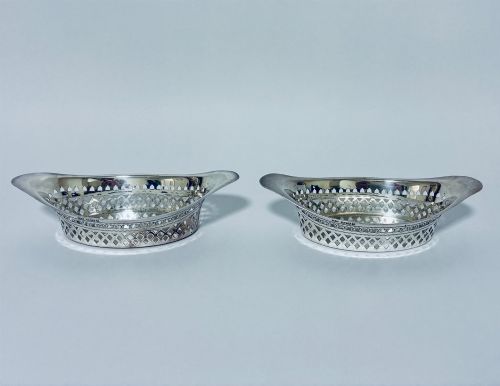
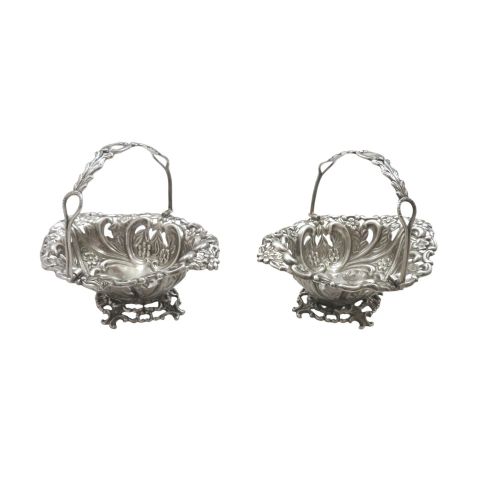
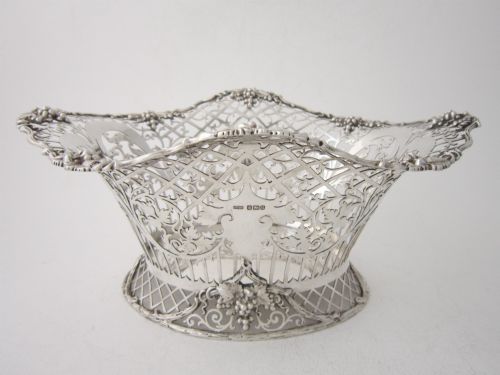
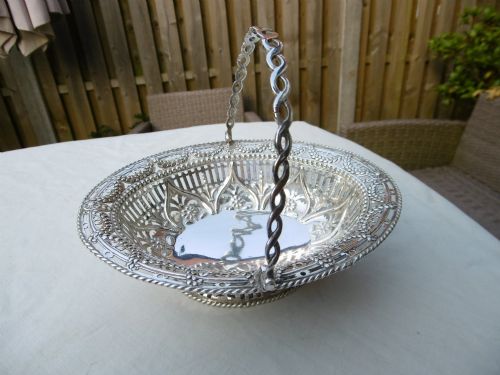
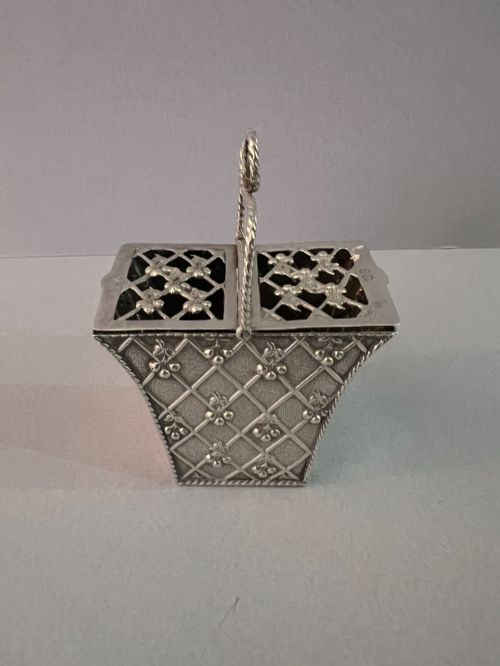
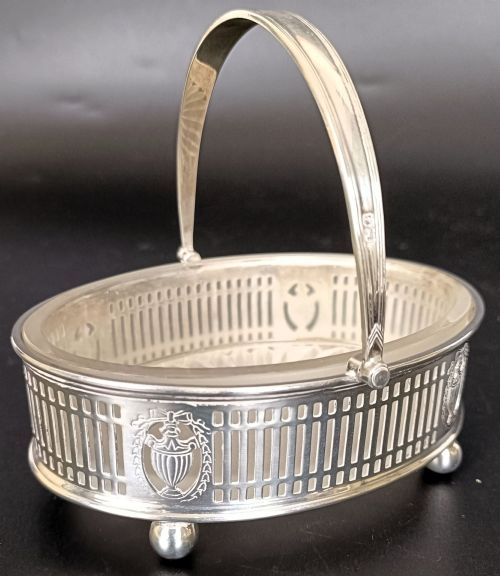
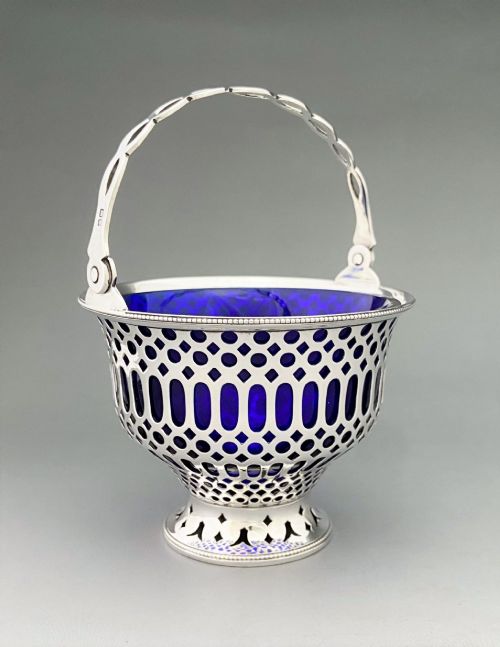
These sterling silver sweetmeat basket examples offer intricate pierced work and swing handles designed for serving small confections during formal dining.
Sterling Silver Sweetmeat Basket
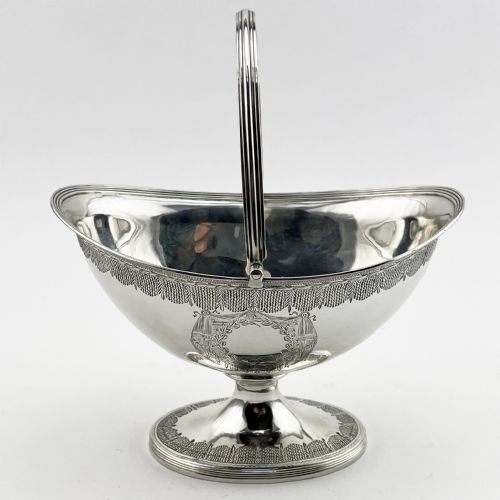
A sterling silver sweetmeat basket sits on the dining table to hold sweetmeats, sugar, bonbons, or fruit, taking forms that range from oval dishes to footed bowls and swing-handled baskets. You will most frequently encounter Edwardian and Victorian examples on this page, alongside Georgian pieces and occasional items from the nineteen-thirties.
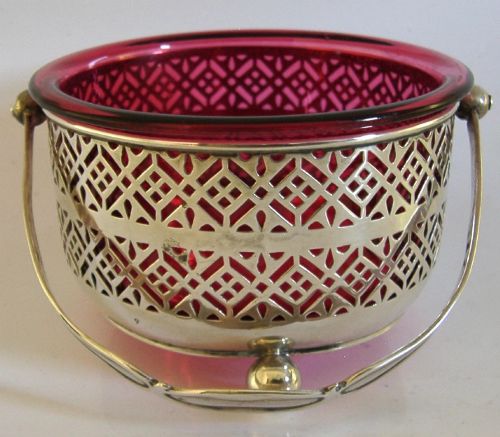
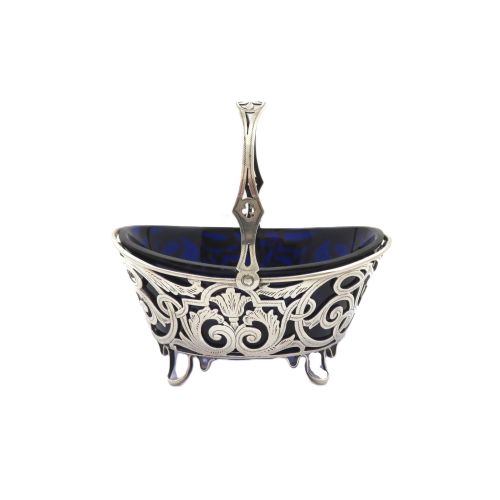
The objects span sugar baskets, bonbon dishes, cream pails, and epergnes, often incorporating coloured glass liners in ruby, cranberry, or cobalt hues. Makers from the eighteenth century onward utilised traditional hollowware forms to create these small, decorative vessels.
Materials and Techniques
Silversmiths shaped solid silver and sterling silver through piercing, embossing, and cast floral handle construction, producing intricate lattice work and geometric patterns. Many pieces incorporate swing handles attached to oval or circular bodies, while others rely on three-footed bases.
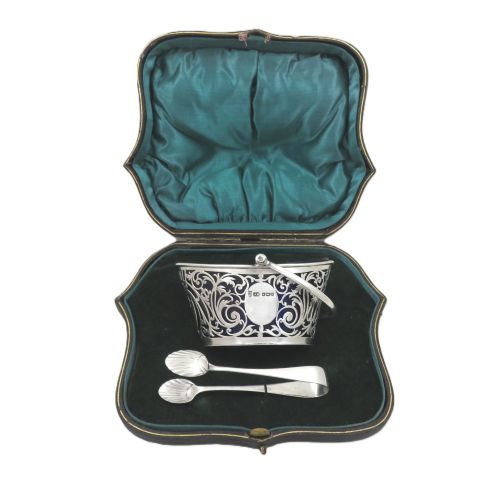
Glass liners in cranberry, ruby, or cobalt colours were fitted into pierced silver frameworks to display preserves or small sweets. Hallmarks stamped into the metal record the assay office, year of manufacture, and silversmith's mark.
Several baskets retain their original fitted leather cases, suggesting they spent more time travelling between dining rooms than holding sugar.
Quality and Craftsmanship
The distinction between standard production and exceptional work rests on the crispness of the pierced-work and the weight of the metal. Hand-cut lattice patterns executed with precision separate superior pieces from simpler embossed alternatives.
Makers who incorporated cast floral handles and heavy gauge sterling silver produced durable items that retain structural integrity in their swing mechanisms and footed bases over centuries.
Aldridge and Green·Henry Chawner·Fenton Brothers·William Comyns·James Deakin and Sons·James Dixon and Sons·Martin Hall·William Bond·George Fox
The Sterling Silver Sweetmeat Basket Glossary
- Sweetmeat
- A small confection, dry sweet, or candied fruit served after dinner from a specialised small basket. These delicacies required dedicated tableware for formal hospitality.
- Pierced-work
- A decorative technique involving the cutting of openings through the silver sheet to form geometric or floral motifs. This method lightens the appearance of the basket while displaying any glass liner within.
- Swing handle
- A movable arched handle attached to the rim of a basket by pivot pins. This feature allowed easy passing of the dish across the dining table.
- Bonbon dish
- A small open vessel intended for holding sugared almonds or small sweets. These table items frequently appear in pairs on this page.
- Hallmark
- A series of official marks stamped onto precious metal items to guarantee purity, origin, and date of manufacture. British pieces typically show a city mark, standard mark, and date letter.
Sterling Silver Sweetmeat Basket: Frequently Asked Questions
What is a sterling silver sweetmeat basket used for?
These vessels held small confections, sugar, or nuts during formal dining and entertaining in the eighteenth, nineteenth, and early twentieth centuries.
Hosts passed them around the table so guests could help themselves to sweetmeats or after-dinner treats.
How do I identify the date of a silver basket?
Look for the hallmarks stamped into the silver, which include a date letter corresponding to the specific year and assay office of manufacture.
Stylistic markers such as Edwardian pierced-work or Georgian neoclassical revival designs also help narrow down the period.
Why do some baskets have coloured glass inserts?
Glass liners in cranberry, ruby, or cobalt blue protected the silver from sticky residues while creating a striking visual contrast through the pierced lattice work.
They allowed wet or syrupy preserves to be served safely inside open metal frames.
How should I care for an antique silver basket?
Clean the metal gently with a soft cloth and proprietary silver polish only when necessary to preserve the underlying detail and original hallmarks.
Avoid abrasive cleaners that wear down the embossed detailing and delicate pierced patterns over time.