
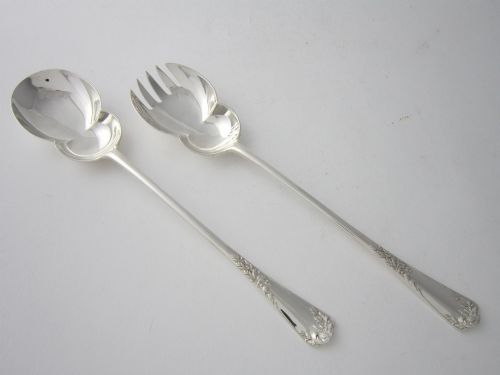


Sterling Silver Serving Fork
A sterling silver serving fork handles large portions at the table with the solid weight and bright polish of true silver.
Sterling Silver Serving Fork
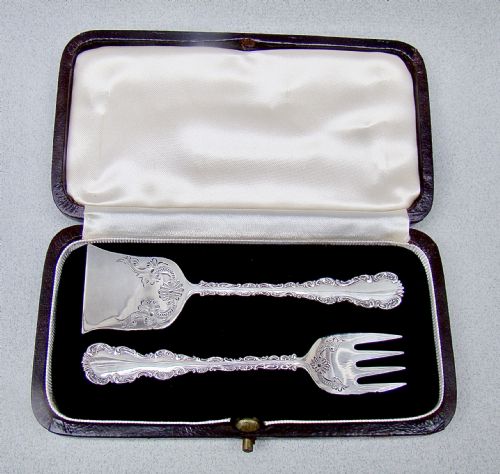
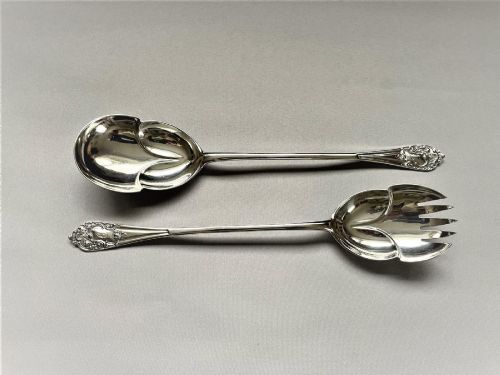
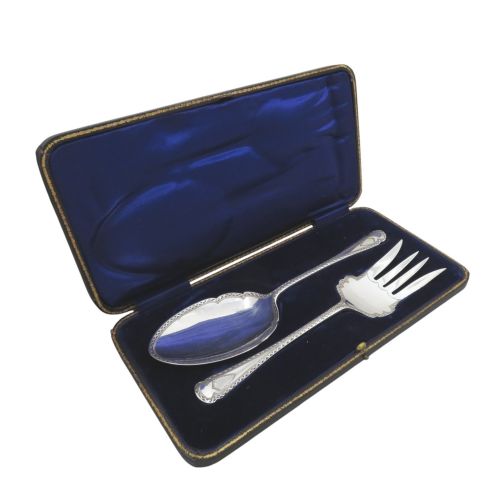
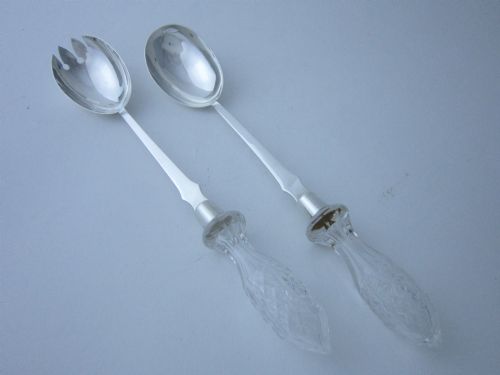
A sterling silver serving fork appears in many guises, from the grand Georgian table pieces of the late eighteenth century to the cased Victorian and Edwardian sets designed for fish, salad, sardines, and bread. You will most frequently encounter Edwardian and Victorian examples on this page, often paired with spoons or housed in velvet and silk lined cases alongside crystal or mother-of-pearl.
The larger items span George III periods down to mid-twentieth century designs, including specialised utensils like pickle forks, jam spoons, and heavy crested serving implements. Makers applied distinct styles ranging from formal traditional patterns to ornate Art Nouveau motifs like the Iris and Old Orange Blossom designs.
Whether standalone large items measuring over eleven inches or part of a fitted canteen for twelve persons, these pieces serve specific culinary roles. They bring period craftsmanship to modern dining, functioning as durable tools made from solid silver.
Materials and Technique
Silversmiths forged these utensils primarily from sterling silver, shaping the metal into heavy shafts, rat-tail joints, and broad, pierced tines for serving fish or salad. Many pieces combine this silver body with organic elements, incorporating carved ivory, mother-of-pearl handles, or glass barrels into the design.
Victorian sardine servers required a specific wide, flat tine layout so diners could lift slippery fish without breaking the delicate skin.
Standards of Execution
The distinction between ordinary and exceptional work lies in the heft of the metal and the crispness of the chased or engraved detail on the handle. Heavier grams indicate substantial silver content that resists bending under pressure, whereas lighter pieces feel insubstantial in the hand.
Quality also shows in the integration of mixed materials, where mother-of-pearl, ivory, or cut glass fits seamlessly against the silver mounts without gaps or loose pins. Preserved original cases lined in silk and velvet add considerable merit to a set.
Henry Wilkinson·William Devenport·Georg Jensen·Walter and John Barnard·Cooper Brothers·Alvin
The Sterling Silver Serving Fork Glossary
- Sterling silver
- An alloy containing ninety-two point five percent silver and seven point five percent other metals, chosen for durability in tableware.
- Rat tail
- A traditional tapering spine running down the back of a fork bowl or prong junction to reinforce the handle attachment.
- Canteen
- A fitted box or chest designed to hold a complete set of cutlery and serving utensils for a household.
- Assay mark
- A stamped symbol indicating the testing office, purity, and date letter of precious metal items.
- Pierced work
- Metal cut through with a saw or punch to create decorative openwork patterns on serving tines.
Sterling Silver Serving Fork: Frequently Asked Questions
How do I clean a sterling silver serving fork?
Wash the piece gently in warm soapy water using a soft cloth, then dry it thoroughly with a lint-free towel to maintain the shine.
Avoid harsh abrasive dips that strip away the natural patina accumulated over decades of careful preservation.
Can I use these forks for daily meals?
Solid silver serving utensils are robust enough for regular dining use, provided you wash them by hand rather than placing them in a mechanical dishwasher.
Hand washing prevents harsh detergents from damaging organic handle materials like mother-of-pearl or ivory.
What is a runcible spoon serving fork?
This hybrid utensil combines the deep bowl of a spoon with the tined edge of a fork, designed for serving complex dishes efficiently.
Georgian makers produced these unusual pieces to handle multiple food types with a single implement.
How can I date an antique fork?
Examine the hallmarks stamped into the metal, which typically include a maker mark, a standard fineness mark, and a date letter corresponding to an assay office year.
Style indicators such as Art Nouveau floral motifs or Georgian proportions also help narrow down the decade of manufacture.