


Sterling Silver Glass Container
These sterling silver glass container pieces combine solid metal work with clear or coloured vessels, offering practical storage for the dressing table and dining room.
Sterling Silver Glass Container
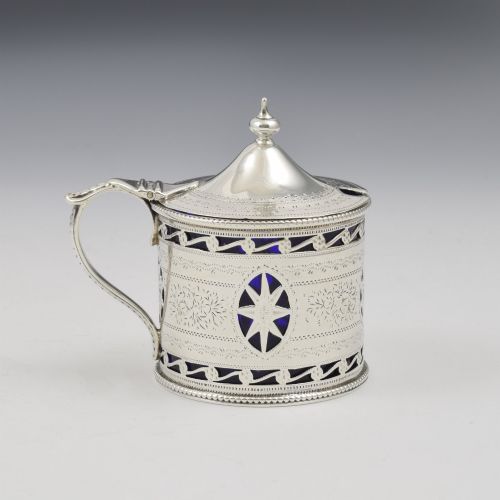
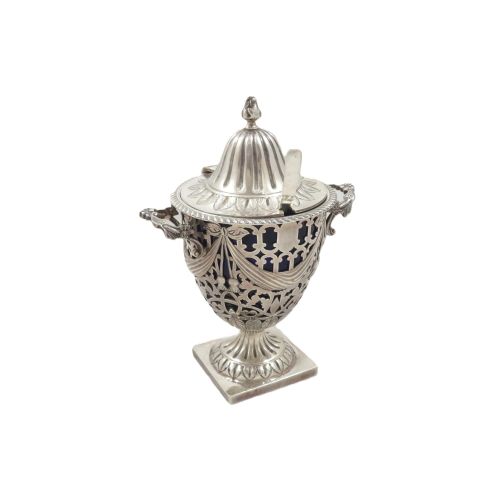
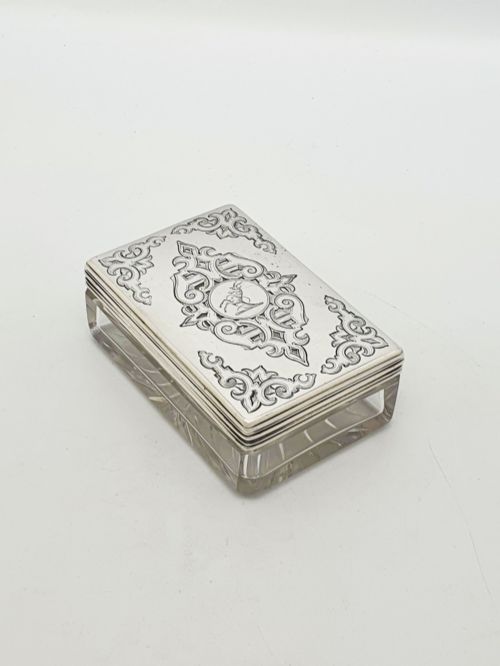
A sterling silver glass container spans utilitarian dining wares and delicate dressing table items, merging glass bodies with hallmarked metal mounts, lids, or collars. You encounter vanity jars, trinket boxes, mustard pots, biscuit barrels, and stamp boxes originating from Victorian, Edwardian, and Art Deco periods.
The glass component frequently appears as cut crystal, cobalt glass, amethyst glass, or plain blown vessels housed within pierced or solid silver frames. Most surviving examples hail from British assay offices in Birmingham, Sheffield, and Chester, spanning the nineteenth and twentieth centuries.
Materials and construction methods
Silversmiths formed the mounts and lids from sterling silver, employing techniques such as piercing, embossing, and engine-turning to apply guilloche enamel decoration. These metal elements are securely fitted to blown, moulded, or hand-cut glass and crystal bodies.
Maker workshops utilised cobalt and amethyst glass for specific coloured vessels, complementing the bright polished finish of the silver elements. Assay office hallmarks stamped onto the metal provide reliable indicators of the production year and maker.
Stamp boxes designed with double trough-shaped interiors ensured damp-free storage for Edwardian postal adhesives.
Markers of distinction and build
Superior examples demonstrate crisp cutting to the crystal and glass bodies, free from chips or deep scratching, alongside substantial gauge silver mounts that retain their structural integrity. The precision with which a hinged lid closes flush against the silver collar denotes superior craftsmanship.
The inclusion of undamaged coloured glass liners, such as cobalt or amethyst, or intact guilloche enamel panels elevates the piece. Maker attribution to notable silversmiths further separates standard utilitarian containers from finer cabinet specimens.
Nathan and Hayes·Levi and Salaman·Walker and Hall·James Dixon and Sons
The Sterling Silver Glass Container Glossary
- Sterling silver
- An alloy of silver containing 92.5% pure silver and 7.5% other metals, typically copper, used for all qualifying mounts and lids.
- Hallmark
- A series of official marks stamped onto precious metal items in Britain, indicating the maker, purity, assay office, and year of testing.
- Guilloche enamel
- A decorative technique where translucent enamel is layered over precisely machined or engine-turned metal surfaces.
- Cut crystal
- High-clarity glass cut with geometric or floral facets to refract light, frequently utilised for heavier boxes and jars.
- Biscuit barrel
- A covered ceramic or glass container mounted in silver, designed for storing dry biscuits on the dining table.
Sterling Silver Glass Container: Frequently Asked Questions
How do I clean the silver mounts without damaging the glass?
Use a soft cloth and a gentle silver polish, taking care to avoid getting chemical cleaners trapped between the silver collar and the glass body.
For pieces where the glass lifts out, separate the components to clean them individually and prevent moisture accumulation in the joins.
What were these glass and silver containers originally used for?
Many served specific domestic functions, from holding mustard and condiments on the dining table to containing stamps, trinkets, or cosmetics on a vanity.
Larger vessels functioned as biscuit barrels or preserve jars, while smaller lidded boxes kept pins and vanity items tidy.
How can I tell the date of my container?
Examine the silver mounts for the set of standard British hallmarks, which typically include a date letter corresponding to a specific assay year.
The style of the cutting, the presence of Art Deco enamel, or Victorian piercing also offers strong stylistic clues to the era of manufacture.
Are coloured glass liners original to the pieces?
Coloured glass inserts, such as cobalt or amethyst vessels, were standard for mustard pots and vanity items to contrast with the polished silver.
Matching the glass colour and fit to the period of the silver mount helps confirm whether the components are original to one another.