


Antique Glass Powder Pot
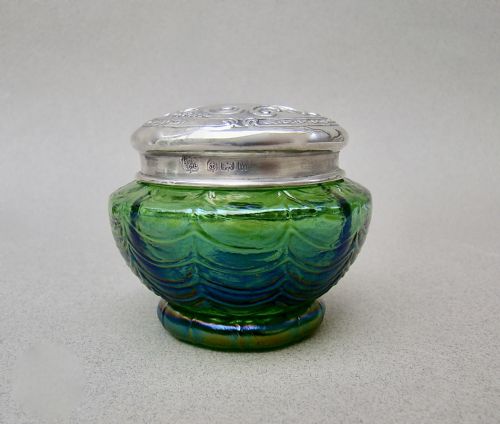
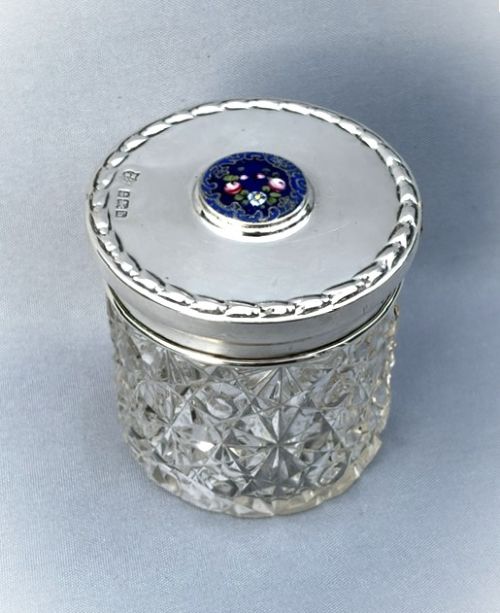
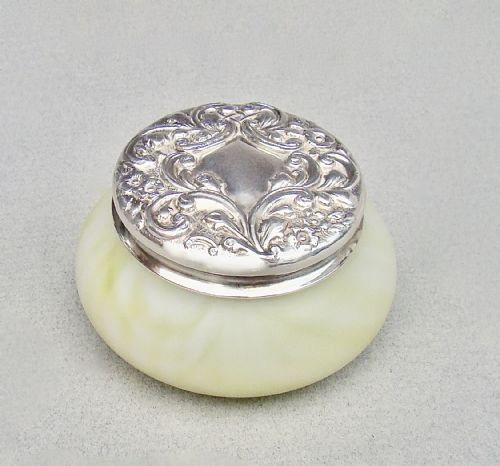
An antique glass powder pot brings colour and refinement to a dressing table, combining heavy cut crystal with decorated metal lids.
Antique Glass Powder Pot
An antique glass powder pot is a functional dressing table accessory designed to hold cosmetics, trinkets, or pins, frequently encountered in Edwardian and Art Deco forms. These vessels combine a glass base with a fitted metal lid, spanning vanity jars, lidded bowls, and trinket boxes across the nineteenth and twentieth centuries.
The selection ranges from simple nineteenth-century French examples to geometric Art Deco designs featuring intricate sterling silver mounts. Makers utilised various glass types, including frosted, overlaid, and moulded varieties, paired with polished metal covers.
Materials and construction methods
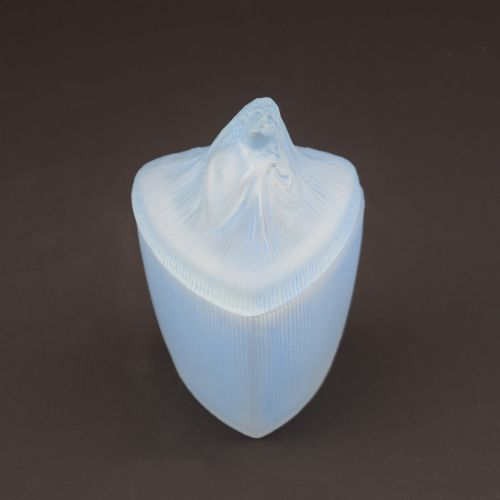
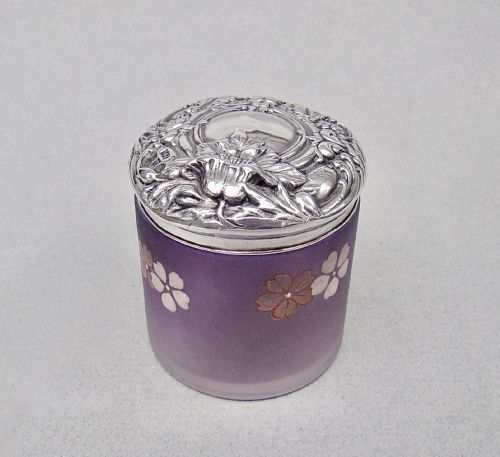
Glass bases were produced through heavy cutting, moulding, or blowing, utilising materials like crystal, satin glass, and coloured glass. Artisans shaped the vessels into round, heart, or panelled forms to catch the light on dressing tables.
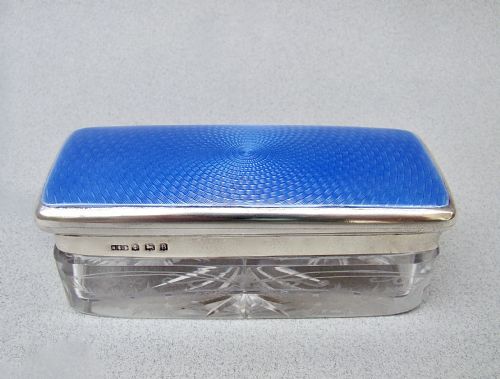
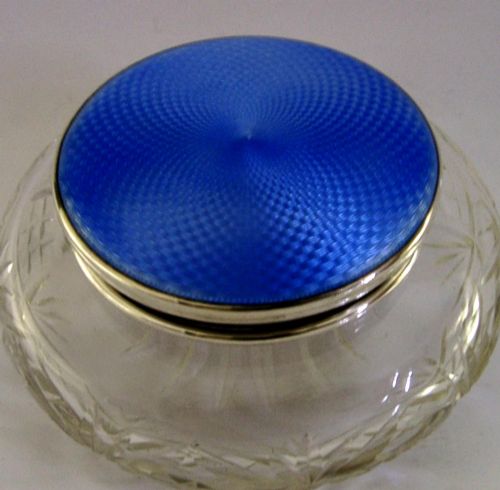
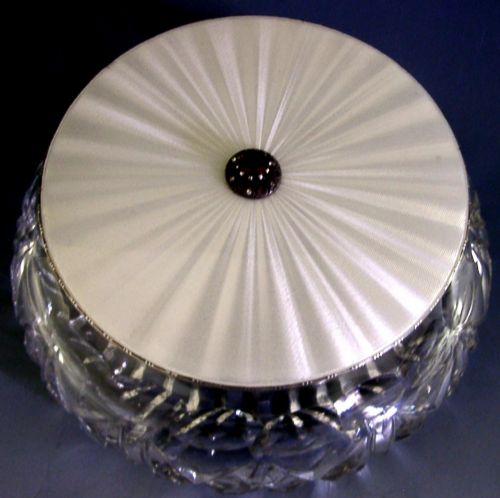
Lids incorporate sterling silver mounts, often hallmarked, combined with decorative elements such as guilloche enamel, tortoiseshell, or intricate etching. Metalwork was securely fitted to the glass rims, frequently featuring hinged or lift-off tops.
Some powder pots feature secret compartments for rouge, proving that historical vanity was remarkably well organised.
Distinguishing quality across examples
Quality rests in the weight and clarity of the glass, alongside the precision of the cutting and the depth of any coloured overlay. Superior examples display crisp faceting, unclouded material, and robust thickness.
The standard of the lid determines the overall tier of the piece. Fine specimens feature undamaged guilloche enamel, clear hallmarks on substantial sterling silver, and tightly fitting mounts that show careful smithing rather than mass production.
A. J. Pepper & Co·Henry Clifford Davis·A. Bromet & Co·Rene Lalique
The Antique Glass Powder Pot Glossary
- Guilloche enamel
- A decorative technique where metal is engraved with a repetitive geometric pattern and covered with translucent enamel. This method was widely utilised on silver lids during the Edwardian and Art Deco periods.
- Cut crystal
- Glass with a high lead content that is deeply faceted by grinding and polishing to maximise brilliance. It provides substantial weight to dressing table jars.
- Satin glass
- Glass treated with an acid bath to produce a velvety, matte finish rather than a high gloss. This texture appears frequently on early twentieth-century vanity jars.
- Cranberry glass
- A rich pinkish-red transparent glass created by adding gold chloride to the molten batch. It is a defining material of Victorian and Edwardian dressing accessories.
- Sterling silver
- An alloy consisting of ninety-two point five percent silver and seven point five percent other metals, chiefly copper. This standard metal appears on the mounted lids of vanity jars.
Antique Glass Powder Pot: Frequently Asked Questions
What were glass powder pots used for?
These vessels held loose face powder on dressing tables, allowing women to apply cosmetics using a soft puff.
They also served as decorative containers for pins, trinkets, and small personal items in bedrooms and boudoirs.
How do I identify an Art Deco powder pot?
Art Deco pieces display geometric lines, streamlined forms, and contrasting colours like blue enamel paired with polished silver.
They often date from the nineteen-twenties and nineteen-thirties, showing stark contrast to earlier floral Edwardian styles.
Are the silver lids marked?
Most English silver lids bear clear hallmarks indicating the assay office, maker, and year of manufacture.
These tiny stamped marks help date the piece precisely, often pointing to Birmingham or London workshops.
How should I clean my glass jar?
Wash the glass base gently in warm soapy water, avoiding harsh abrasives that might scratch the surface.
Keep moisture away from any enamel or tortoiseshell mounted on the silver lids to protect the delicate joins.