
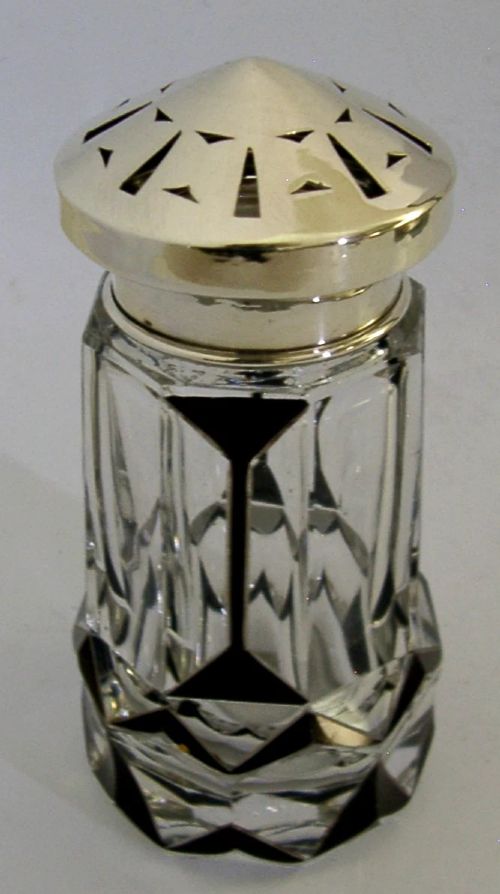
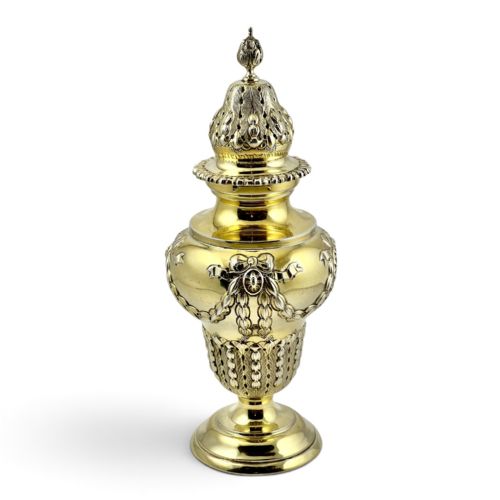
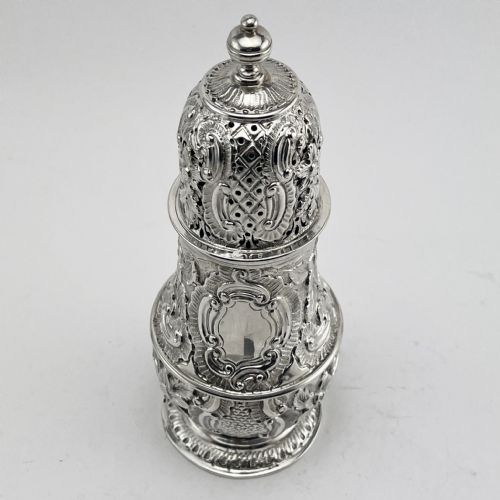


Sterling Silver Dredger
These sterling silver dredger pieces are functional table vessels for dispensing sugar or pepper, sought after for their refined metalwork and historical utility.
Sterling Silver Dredger
When you search for a sterling silver dredger, you are looking at small tabletop containers designed to sprinkle sugar or pepper over food. The items on this page span several centuries, reaching from the early eighteenth century through the Victorian and Edwardian eras up to the mid-twentieth century.
You are most likely to meet sugar casters and shakers among these listings, alongside occasional pepper casters. The forms vary from octagonal George I shapes to flowing Art Nouveau profiles and later revival styles.
Origins stretch across British assay offices like London, Birmingham, and Sheffield, alongside continental European workshops such as the Danish pieces by Evald Nielsen. Each period brings distinct silhouettes to the table, ranging from plain cylindrical bodies to panelled octagonal designs.
How they were made
Makers fashioned these vessels primarily from solid sterling silver, occasionally applying a silver-gilt finish to the interior or exterior for a rich golden appearance. The metal was cast or shaped to form the body and the removable pierced lid.
Craftsmen utilised piercing techniques to create intricate patterns on the top covers, allowing fine powder to sift through evenly when shaken. Silversmiths then applied hallmarks and maker's marks to validate the metal standard and trace the origin.
Some early casters weigh as much as a heavy paperback book, proving our ancestors took their sugar very seriously indeed.
What varies in quality
Quality in these pieces rests upon the crispness of the piercing on the lid and the weight of the silver used in the body. Earlier examples by notable Huguenot makers demonstrate superior casting and heavy gauge metal.
Design execution and proportional balance separate standard items from exceptional ones. Clean hallmarks, well-preserved gilding, and intact armorial engravings elevate the standing of a piece.
Simon Pantin·Barker Brothers·James Dixon & Sons Ltd·Evald Nielsen·Thomas Pritchard
The Sterling Silver Dredger Glossary
- Sterling silver
- A silver alloy containing 92.5 percent pure silver and 7.5 percent other metals, usually copper, ensuring durability for tableware.
- Silver-gilt
- Silver that has been plated with a thin layer of gold on its surface, often referred to as vermeil.
- Caster
- A small jar or shaker with a pierced top used for sprinkling sugar or spices onto food.
- Hallmark
- An official stamp applied to precious metals indicating the standard of purity, the assay office, and the year of manufacture.
- Huguenot
- French Protestant refugees who fled to Britain and brought advanced silversmithing techniques and continental designs.
Sterling Silver Dredger: Frequently Asked Questions
What is a sterling silver dredger used for?
These vessels were designed to hold and dispense fine sugar or spices at the dining table. The pierced lid allowed the contents to be shaken evenly over food.
Over time, they evolved from utilitarian kitchen and dining implements into decorative display pieces for sideboard collections.
How do I clean a silver dredger?
Clean your silver using a soft cloth and a specialised silver polish designed to remove tarnish without scratching the metal. Avoid harsh abrasive cleaners that can damage fine details or wear away gilding.
Wash the piece in warm soapy water and dry it thoroughly after polishing to maintain its lustre.
How can I tell an 18th-century caster from a later piece?
Examine the hallmarks stamped on the body and lid, which indicate the exact assay office and year of production. The stylistic cues, such as octagonal George I forms or heavier gauge casting, also point to earlier periods.
Later revival pieces often imitate these older styles but carry twentieth-century date letters and maker marks.
Can I use my silver dredger daily?
You can use these pieces for dining, provided you handle them with care and clean them gently after use. Solid silver is durable enough for regular table service when treated properly.
Many collectors prefer to display them or reserve them for special occasions to preserve their antique condition.