




Sterling Silver Cigarette Case
A sterling silver cigarette case is a pocket accessory of substantial metalwork that holds rolled tobacco securely for daily use.
Forms and Origins
A sterling silver cigarette case represents a portable container designed to protect and dispense cigarettes or cheroot holders during social engagements. These pieces span the nineteenth century, the Victorian and Edwardian eras, and run through the Art Deco period into the mid-twentieth century, originating from English workshops, London and provincial assay offices, and international makers.
The objects take the form of flat, rectangular containers hinged along one edge, often featuring curved profiles to fit comfortably against a pocket. Variants include items with internal elastic straps, dual compartments, or specialised configurations such as the six-finger design.
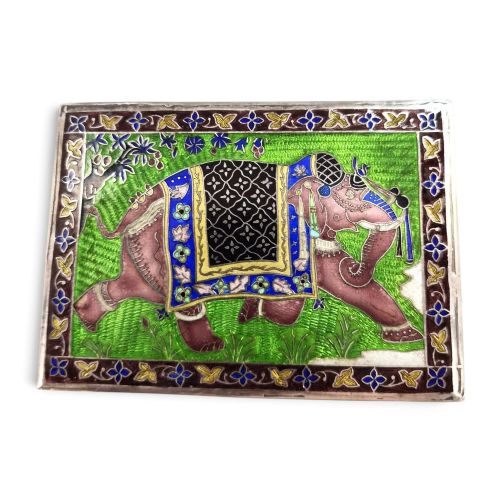
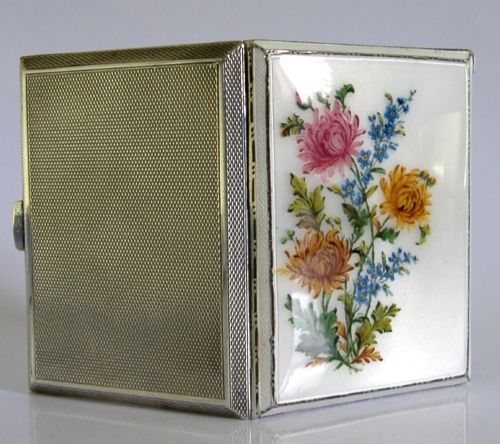
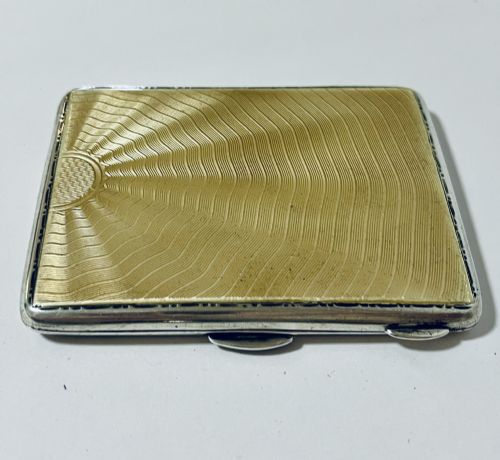
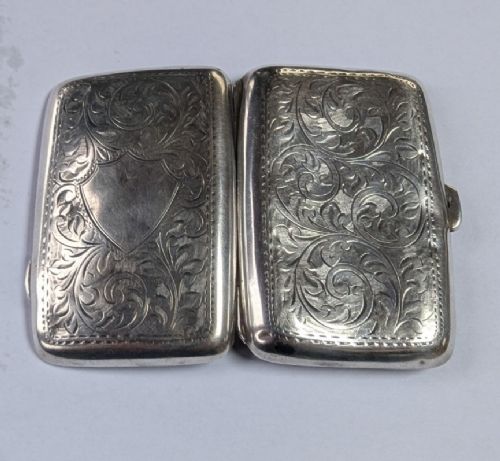
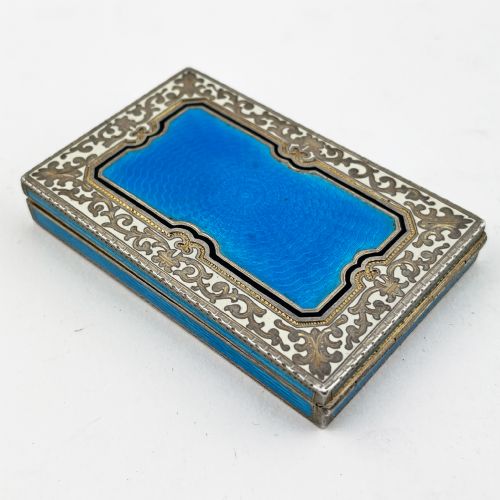
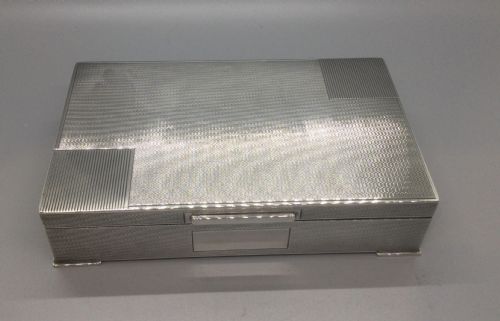
Many examples incorporate decorative surface treatments, ranging from plain polished metal to intricate engine-turned patterns, applied crests, and vibrant enamel work including guilloche sunburst rays, hand-painted florals, animals, and figurative scenes.
Materials and Techniques
The construction relies primarily on solid sterling silver, occasionally augmented with silver gilt interiors or contrasting bands of yellow gold. Makers shaped the metal sheets through hammering, pressing, and engine-turning to create geometric surface textures.
Decorative finishes frequently involve vitreous enamel fused to the silver base, including translucent guilloche enamel over rayed patterns, opaque coloured fields, and detailed hand-painted miniatures depicting flowers, cherubs, and landscapes. Mechanical elements such as hidden catches, hinges, and thumb-pieces require precise metalworking to ensure a secure snap closure.
The archive records forms ranging from plain polished containers to complex guilloche enamel and hand-painted floral designs.
Assessing Craftsmanship
Quality rests in the weight of the metal and the precision of the mechanical engineering, where heavier gauges of silver and tightly fitted, flush hinges distinguish superior examples from lighter production. The complexity and condition of the enamel work further elevate an object, with flawless guilloche rays and hand-painted details commanding greater attention than plain surfaces.
Maker attribution also dictates standing, as pieces bearing the marks of recognised workshops or silversmiths demonstrate higher standards of design and finishing in their engraved crests, internal gilding, and integrated catches.
Sampson Mordan·William Neale And Son Ltd·Mappin And Webb·Joseph Gloster·Walker And Hall·A E Poston And Co Ltd·Watrous Manufacturing Co·Evald Nielsen
The Sterling Silver Cigarette Case Glossary
- Sterling silver
- An alloy consisting of 92.5 percent pure silver and 7.5 percent other metals, typically copper, chosen for durability in functional items. This standard is verified by hallmark stamps on British pieces.
- Guilloche
- A decorative technique where a precise mechanical pattern is engraved into the metal substrate beneath translucent enamel. This creates shifting geometric reflections as light moves across the surface.
- Engine turning
- A method of mechanical engraving that cuts intricate, repeating geometric patterns into metal surfaces using a lathe. It provides both texture and grip while masking minor handling marks.
- Silver gilt
- Sterling silver that has been coated with a thin layer of gold through electrochemical means or fire gilding. This treatment protects the interior from tobacco residues and tarnishing.
- Assay office
- An official body responsible for testing the purity of precious metal items and stamping them with statutory hallmarks. British offices include London, Birmingham, and Chester.
Frequently Asked Questions
How were these cases used?
Owners carried these cases daily as personal accessories for social smoking, presenting them when offering cigarettes to others. They served as markers of personal style and status.
Many pieces also functioned as presentation items, given for military service, institutional milestones, or sports victories, often featuring engraved dedications or organizational crests.
How do I care for silver and enamel?
Maintenance requires gentle cleaning with a soft cloth to preserve the polished silver surfaces and delicate enamel panels. Abrasive polishes should be avoided near enamelled areas to prevent scratching.
Storage in a dry, tarnish-resistant environment keeps the metal stable and protects the hinges and catches from strain over time.
How are different periods identified?
Dating relies on statutory hallmarks stamped into the metal, which include maker marks, standard marks, and date letters corresponding to specific assay offices and years. Stylistic shifts also aid identification.
Victorian and Edwardian examples often feature florid engraving and applied crests, whereas 1920s and 1930s pieces lean towards Art Deco geometric engine-turning and vibrant guilloche enamels.