
Sterling Silver Christening Cup
A sterling silver christening cup is a traditional gift of solid metal made to mark a birth or baptism, valued for its lasting weight and utility.
Sterling Silver Christening Cup
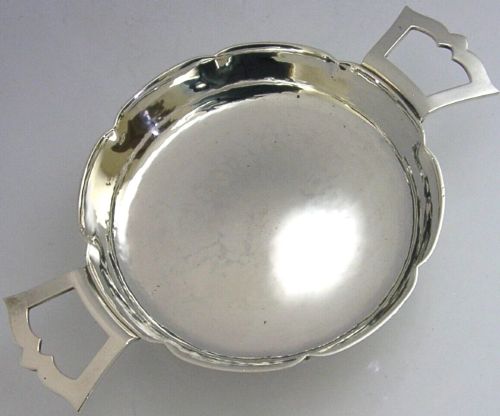
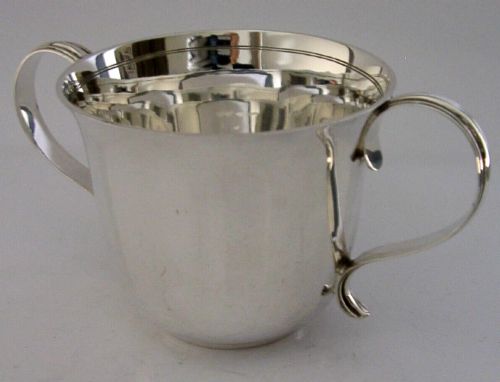
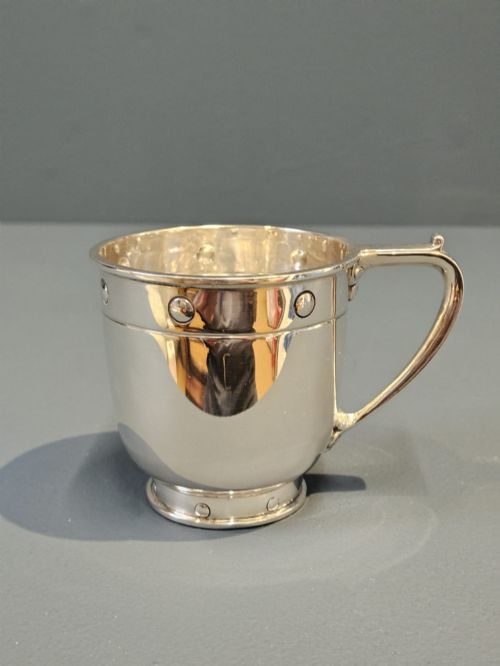
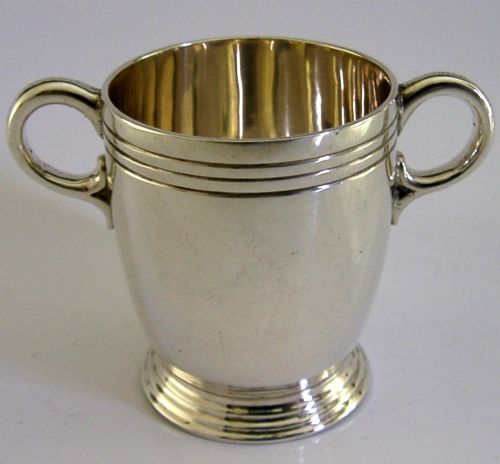
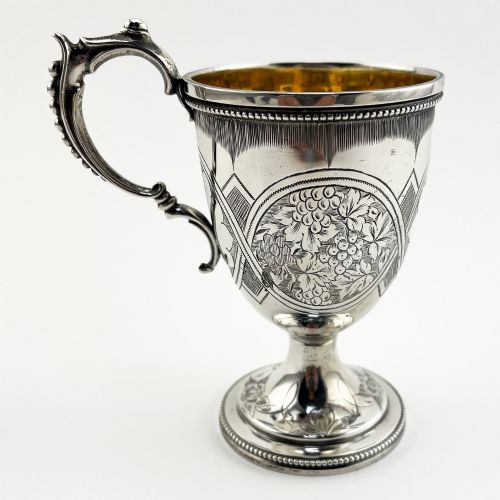
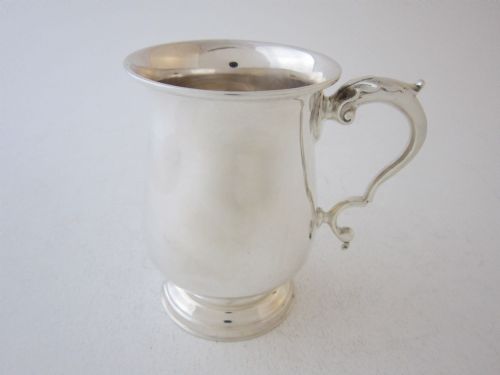
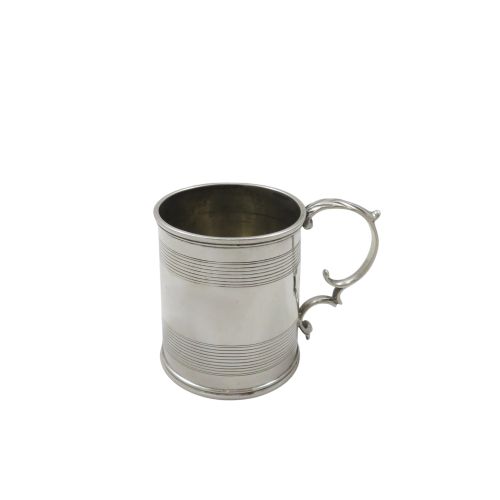
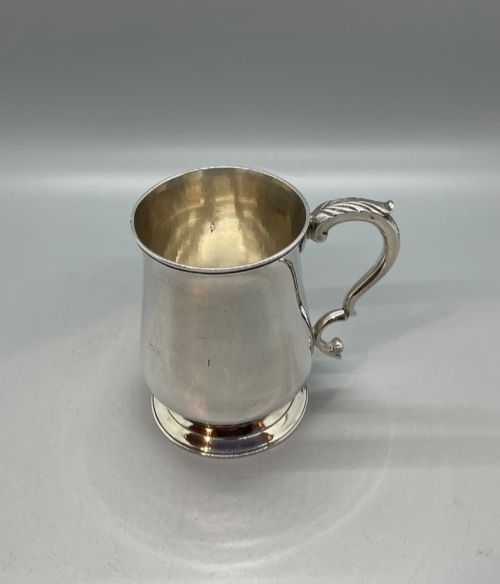
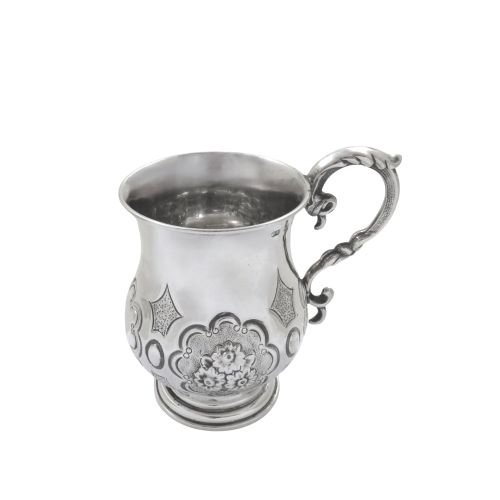
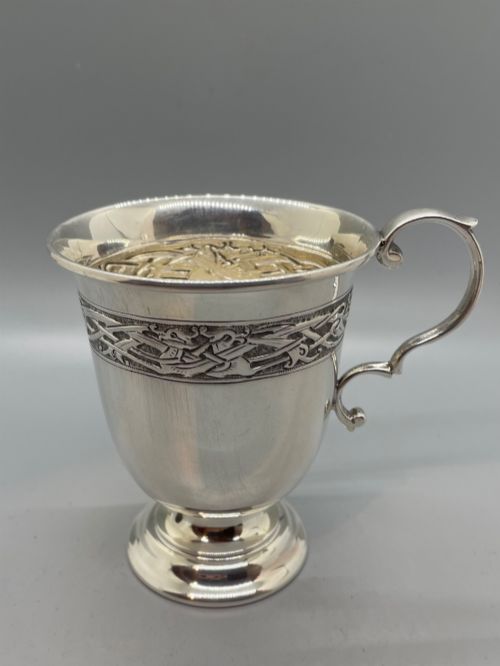
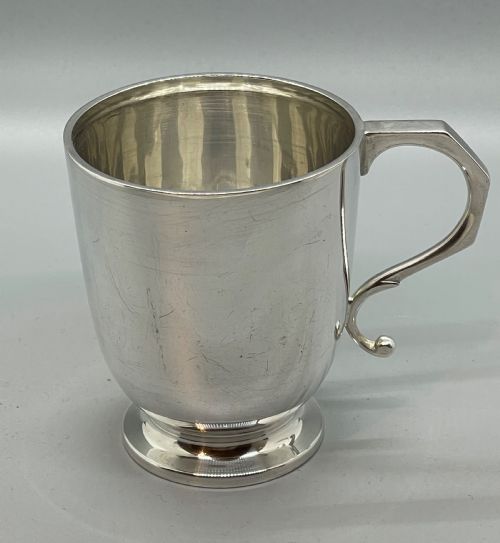
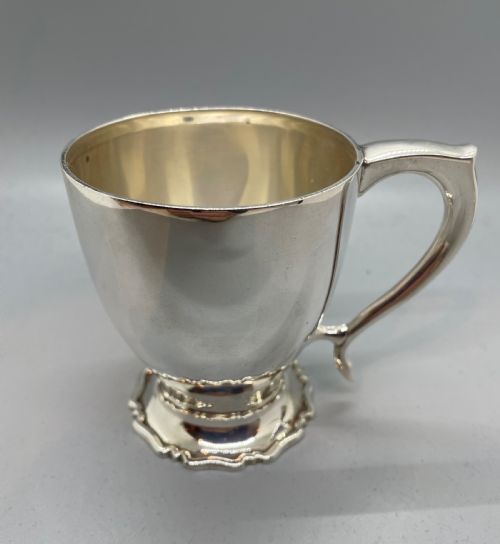
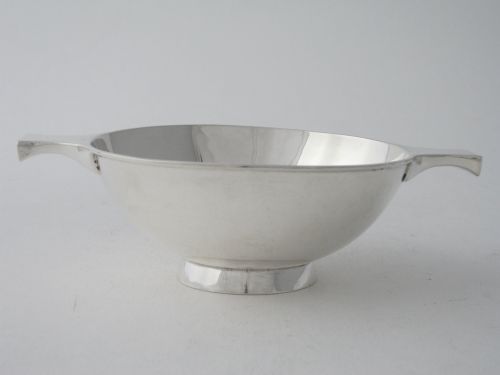
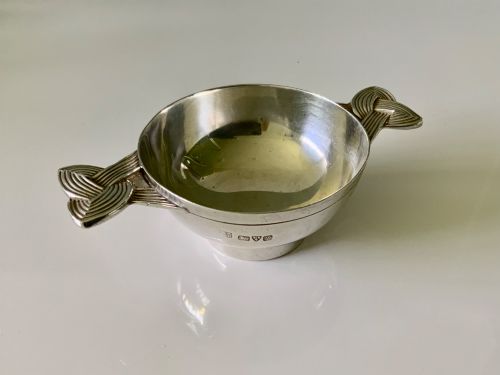
A sterling silver christening cup takes the form of a small mug, tankard, beaker, porringer, or quaich designed for a child. These pieces span from the Georgian and Victorian eras through the Edwardian period, the Arts & Crafts movement, and Art Deco up to mid-century modern designs.
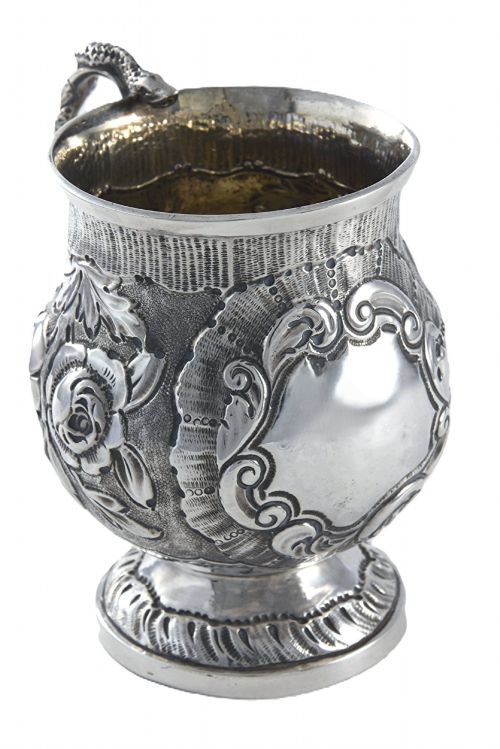
The selection ranges from plain cylindrical bodies and scroll-handled tankards to floral engraved vessels and boxed sets containing spoons or egg cups. Buyers encounter examples originating from London, Birmingham, Sheffield, Chester, and Scotland, alongside international pieces.
The pieces on this page reflect generations of silversmithing, providing functional vessels that often carry personal inscriptions, dates, or family heraldry from their original presentation.
How They Were Made
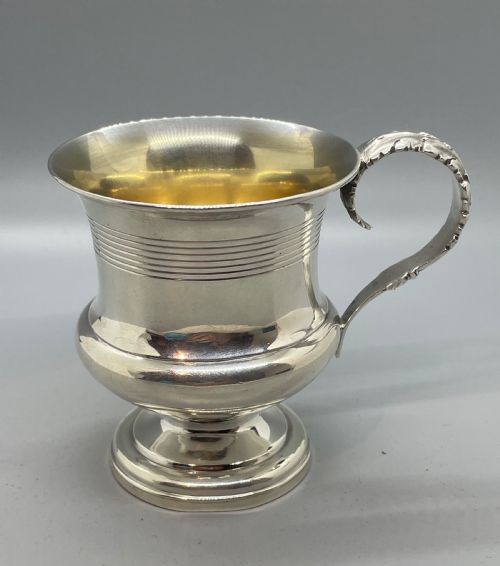
Makers formed these pieces from solid sterling silver, occasionally applying gold gilt to the interior or utilising silver gilt and planished surface treatments. Articles from periods such as the Arts & Crafts movement display visible hand-hammered textures left by the silversmith's hammer.
Handles were cast separately and soldered to the body, taking the form of hollow scrolls, loop handles, or twin handles on porringers. Decoration was applied through hand engraving, floral chasing, or left entirely plain to highlight the quality of the metal.
Some cups retain contemporary scratch-engraved infant handwriting, recording tiny names that outlived empires.
What Varies in Quality
The substance of the piece is defined by its metal weight and the thickness of the silver wall, which dictates how the vessel feels in the hand. Substantial gauge silver prevents denting and provides the structural integrity expected of domestic plate.
Design execution distinguishes standard production from notable maker output, seen in the crispness of chased floral details, the balance of scroll handles, and the harmony of proportion between the base and rim. Fitted presentation boxes lined in silk or velvet add a further tier of completeness to surviving sets.
R E Stone·Barker Bros·William Bateman·Joseph Angell·Charles Fox·Tiffany & Co
The Sterling Silver Christening Cup Glossary
- Sterling silver
- An alloy of silver containing 92.5% pure silver and 7.5% other metals, usually copper, chosen to provide durability for functional objects. This standard has been legally regulated in Britain for centuries.
- Porringer
- A small, deep bowl provided with one or two flat horizontal handles, used historically for porridge or broth. In silver form, it serves as an alternative presentation vessel to the standard mug.
- Quaich
- A traditional Scottish two-handled drinking vessel, characterised by a shallow circular bowl and flat projecting lugs or handles. Examples appear in planished silver associated with the Arts & Crafts movement.
- Planished
- A surface finish resulting from hammering metal with a polished round-faced hammer, leaving regular, subtle facets across the body. This technique was favoured by Arts & Crafts silversmiths to show hand working.
- Silver gilt
- Sterling silver that has been coated with a thin layer of gold on the interior or exterior surface. This technique prevents the silver taste when used for drinking and creates a two-tone appearance.
Sterling Silver Christening Cup: Frequently Asked Questions
What is a christening cup used for?
These vessels were created as ceremonial and practical gifts to celebrate the birth or baptism of a child. Families often used them for daily dining or kept them on display as a keepsake.
Over generations, many accumulated personal engravings recording the child's name, initials, and birth date. They remain enduring tokens for family milestones.
How do I date a silver cup?
Dating relies primarily on the hallmarks stamped into the metal by official assay offices such as London, Birmingham, or Sheffield. These marks include date letters, maker's marks, and standard purity symbols.
Stylistic indicators such as Victorian floral engraving, Edwardian proportions, or Art Deco geometric lines also help place a piece within a specific era.
How should I care for antique silver?
Antique silver benefits from gentle cleaning using a non-abrasive silver cloth or specialised polish only when tarnish becomes heavy. Regular handling transfers natural oils that slow down the tarnishing process.
Avoiding harsh chemical dips preserves the original surface finish and any subtle hand-hammered or engraved details.