


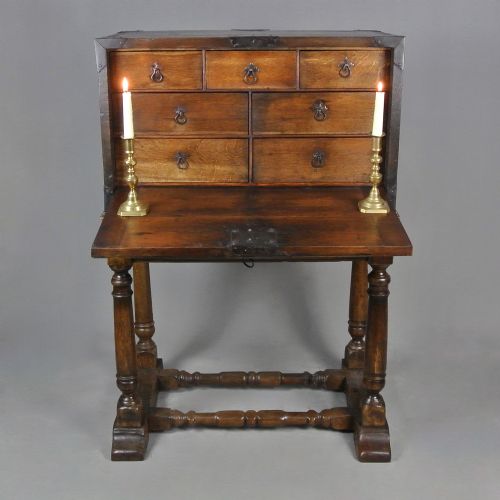
Standing Writing Desk
Standing writing desk forms bridge centuries of craft, offering elevated surfaces for correspondence and record-keeping in mahogany, oak, and burr walnut.
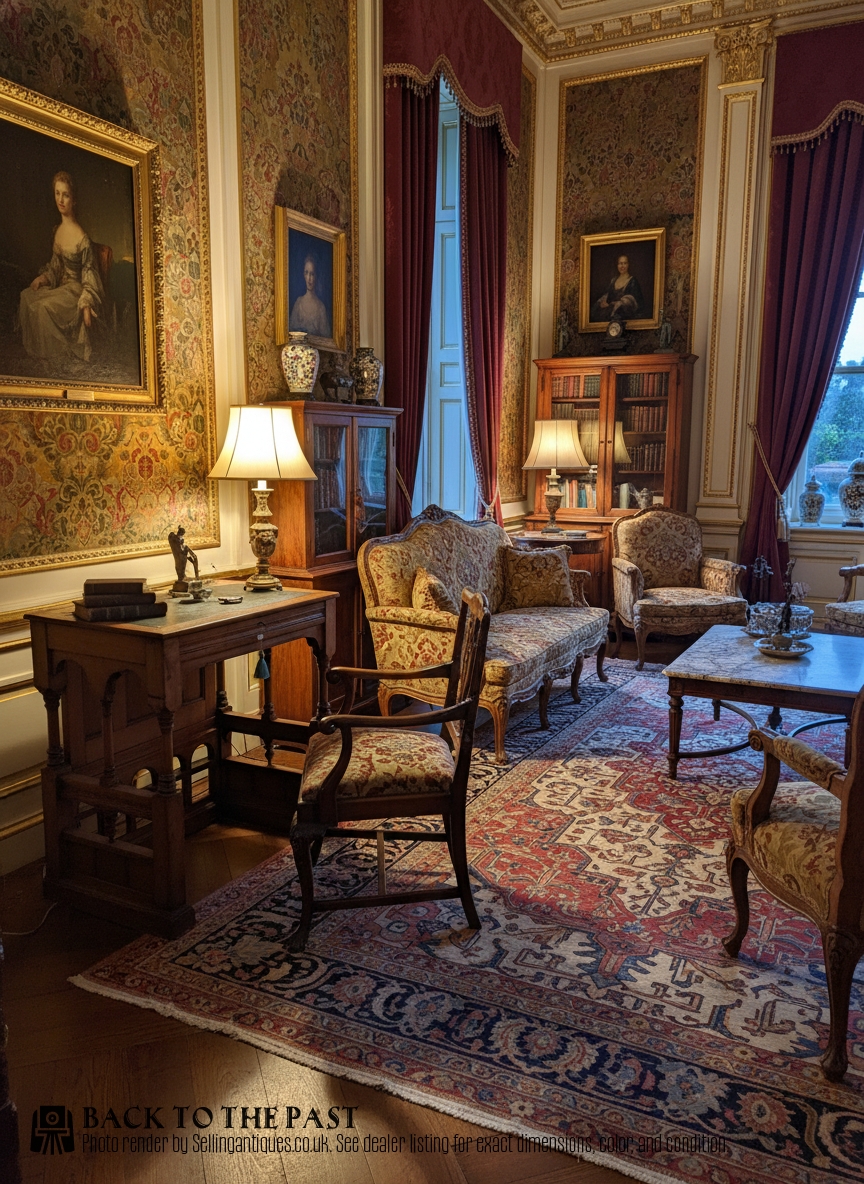
Standing Writing Desk
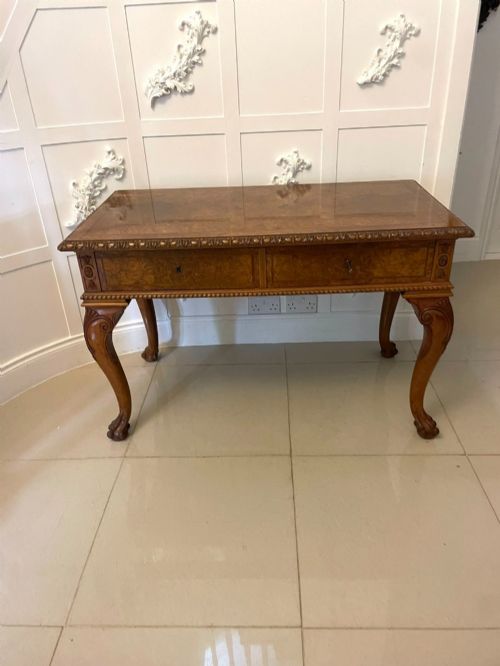
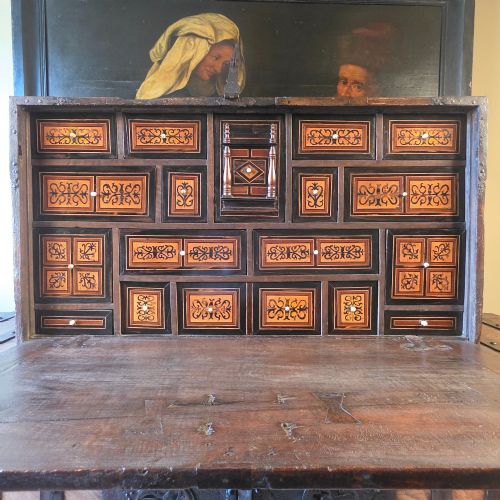
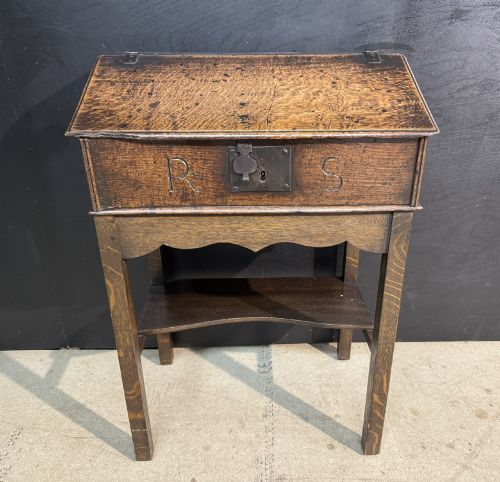
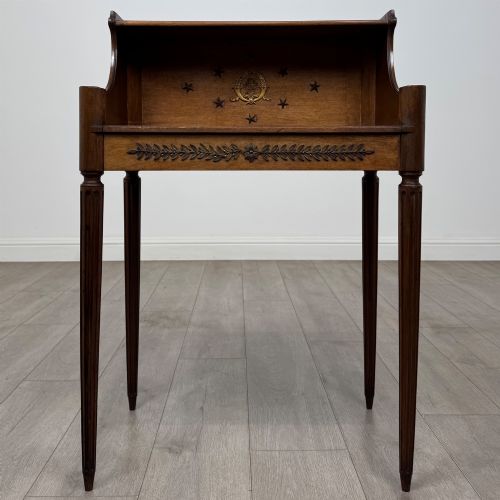
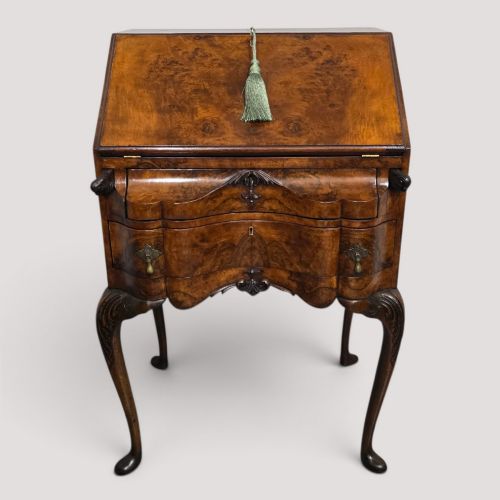
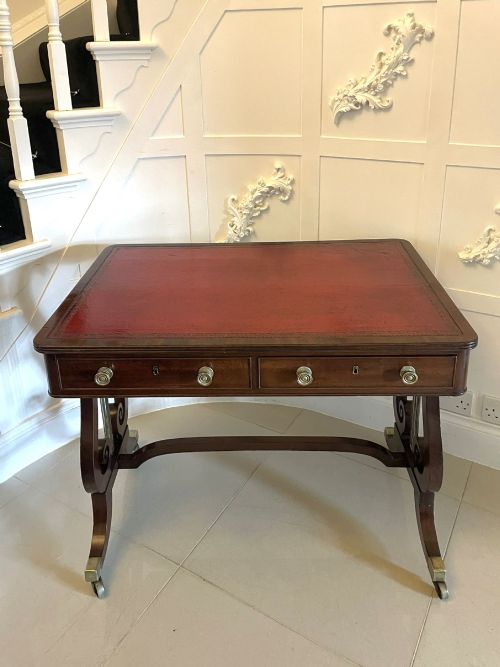
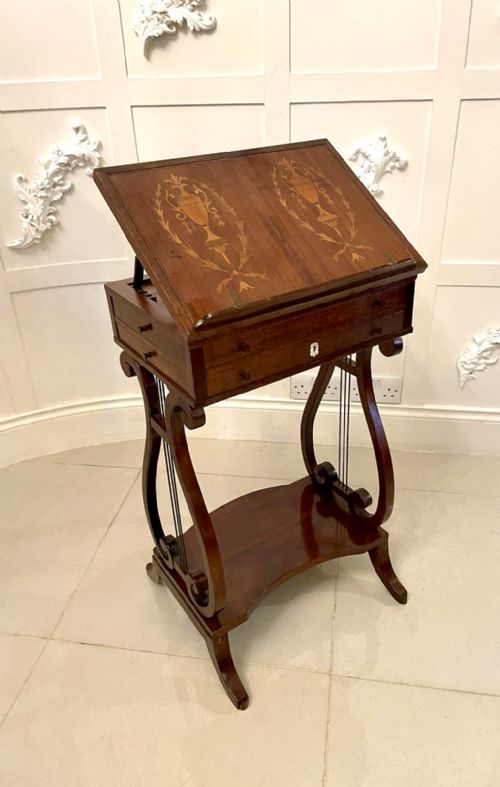
A standing writing desk encompasses tall pedestals, bureaux on stands, writing cabinets, and reading tables designed for upright labour. These pieces span the 17th century through the Edwardian era, incorporating Georgian and Victorian iterations alongside earlier oak strong boxes and walnut bargueño cabinets.
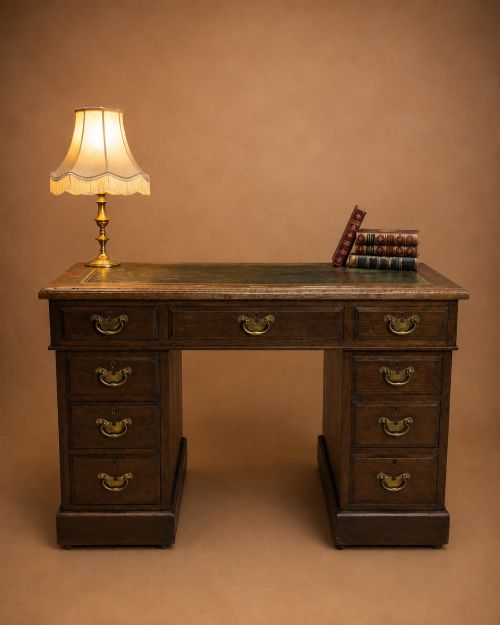
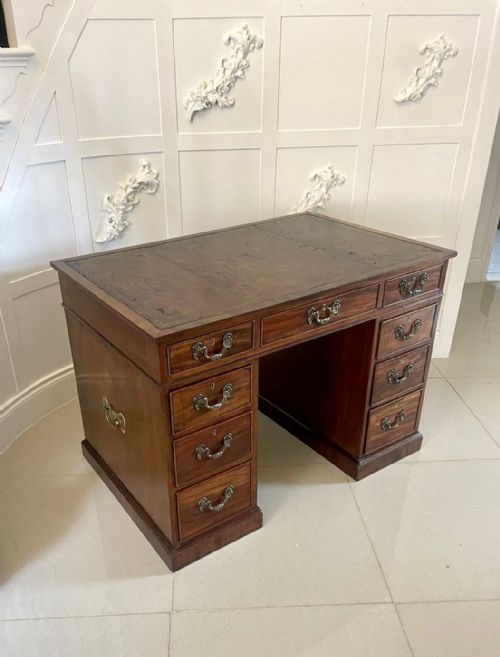
Mahogany and burr walnut dominate the refined Regency and Victorian examples, while oak anchors the 17th-century pieces and Georgian clerk forms. Buyers frequently encounter freestanding kneehole desks, cylinder top writing desks, and Davenport variants that allow placement in the centre of a room rather than against a wall.
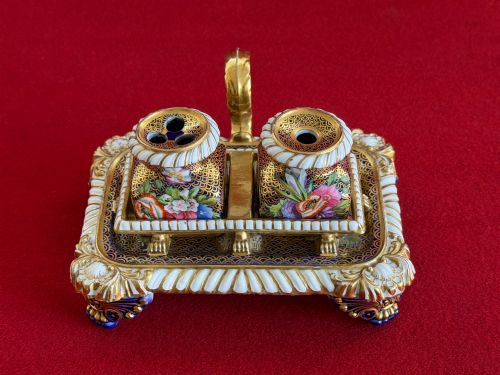
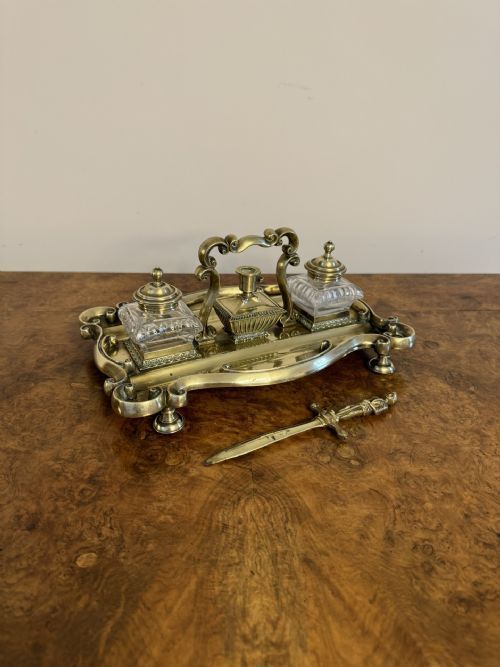
Accessories such as brass desk sets, silver-plated inkstands, and bronze pen rests supplement the larger furniture forms. These desk accessories reflect the same stylistic shifts, moving from Baroque and Jacobean heaviness to delicate Edwardian marquetry and Art Deco onyx.
Materials and construction
Cabinetmakers utilised dense hardwoods including mahogany, walnut, oak, and rosewood, often applying burr walnut veneers or intricate marquetry and parquetry patterns. Brass hardware, ormolu mounts, and leather writing inserts provide functional contrast and decorative punctuation to the wooden carcases.
Joinery techniques ranged from robust 17th-century panel construction to precise 19th-century dovetailing and inlay work. Secondary elements incorporate glass, marble, and silver plating, binding structural timber with specialised writing surfaces and compartments.
Standing Writing Desk Retail Price Guide 2026
Typical asking prices for standing writing desk among the pieces listed under this phrase on Sellingantiques today, from the lower quarter to the upper quarter. They describe what is for sale here now, not the wider market.
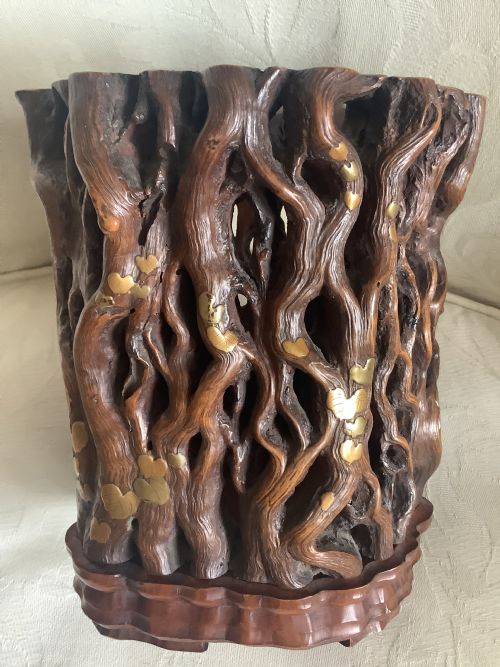
Black Forest owls hide inkwells within their carved wooden plumage.
Evaluating workmanship
Quality rests upon the selection of timber figure, particularly the richness of burr walnut or the depth of mahogany grain. Superior examples exhibit seamless veneer matching and restrained inlay that respects the architectural proportions of the piece.
The integration of freestanding finished backs separates utilitarian workshop furniture from principal chamber pieces meant for display. Hardware integrity, drawer operation, and the retention of original leather writing surfaces further distinguish exemplary pieces from standard production.
Maple & Co.·Stanley Webb Davies·A.Cohen & Co Ltd·Walker And Hall
The Standing Writing Desk Glossary
- Burr walnut
- A figured wood veneer harvested from the wart-like growths on walnut trees, prized for its swirling, organic patterns. Cabinetmakers applied this expensive material to the primary facades of high-status desks.
- Freestanding
- A descriptor for furniture finished on all four sides so it can inhabit the centre of an apartment. Such pieces lack the plain backboards meant for wall placement.
- Bureaux on stand
- A cabinet form featuring a sloping writing flap above a frame with legs rather than a chest of drawers. This elevation creates a lighter silhouette than standard cabinet bases.
- Inkstand
- A portable tray or stand fitted to hold inkwells, sanders, and pen rests. These desk accessories utilise materials ranging from brass and porcelain to silver and marble.
- Marquetry
- The art of applying thin pieces of wood veneer and other materials to form decorative pictorial scenes or geometric patterns. It appears frequently on Dutch and Edwardian pieces.
Standing Writing Desk: Frequently Asked Questions
How do I place a freestanding desk?
Freestanding desks are finished on all sides, allowing them to sit in the middle of a room rather than pushed against a wall. This positioning displays the craftsmanship of the back panel and creates an open workspace.
Ensure adequate clearance around the piece for movement and chair placement if paired with a library chair. Their finished backs make them ideal room dividers in larger reception spaces.
What materials were used?
Cabinetmakers relied on dense hardwoods such as mahogany, oak, walnut, and rosewood, frequently accented with burr walnut veneers. Brass fittings, leather inserts, and ormolu mounts added durability and decorative contrast to the timber carcases.
Later Victorian and Edwardian examples occasionally incorporated exotic woods, marble, and silver-plated accessories. Each material choice corresponds to the prevailing aesthetic of its specific period, from oak in the 17th century to figured mahogany in the Regency era.
How do I date a desk?
Dating relies on observing structural characteristics, timber choices, and decorative motifs that align with recorded periods. For instance, heavy oak construction with panel work often points to the 17th century, while refined mahogany and brass details suggest the Georgian or Regency eras.
Matching the form against documented styles like Queen Anne Revival or Edwardian marquetry narrows the timeline further. Hardware styles and secondary wood types provide additional clues for verification.