


Standing Needlework Screen
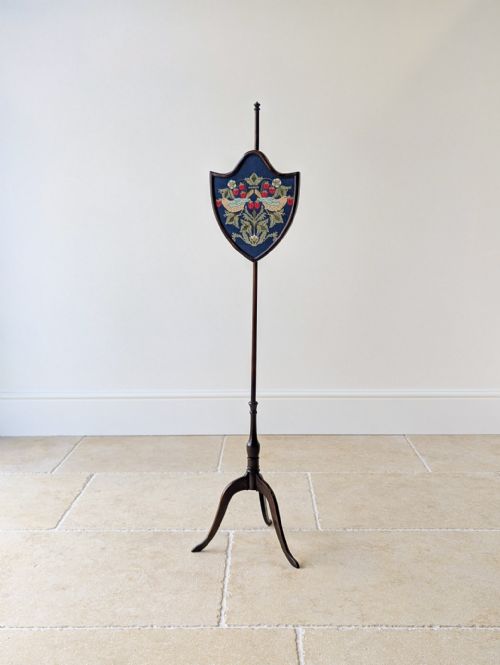
A standing needlework screen commands the fireside with embroidered wool and silk panels held aloft on timber tripod or pedestal bases.
Standing Needlework Screen
A standing needlework screen combines decorative textile panels with functional timber framing designed to deflect hearth heat or shield the face from the fire. These furnishings appear across multiple periods including Georgian, Regency, and Victorian eras, taking forms such as pole screens and cheval frames.
The primary forms found here include adjustable tripod pole screens and larger cheval panels mounted on substantial bases. Makers utilised hardwoods like mahogany, rosewood, and satinwood to support intricate wool and silk needlework, tapestry, and embroidery.
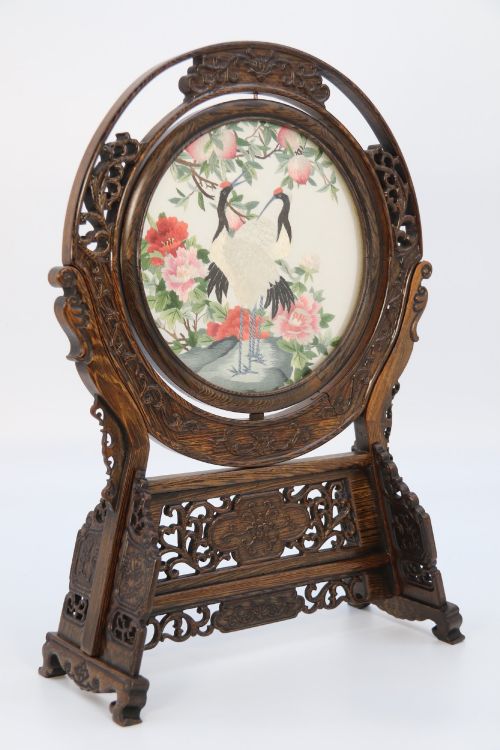
Examples range from compact table screens to grand floor-standing pieces featuring rotating displays or carved bases. Each piece reflects the domestic habits of past centuries when adjustable shielding near the fireplace was a household necessity.
Materials and construction methods
Timbers such as mahogany, rosewood, and satinwood form the structural poles, tripod legs, and sliding frames of these pieces. Cabinetmakers turned these hardwoods on lathes to create slender columns or shaped them into stable pedestal and tripod bases.
Panels are worked in wool, silk, and tapestry, often stretched over wooden frames or secured behind protective glass plates. Needlework samplers and floral embroidery form the visual centrepieces, held in place by adjustable brass or wooden mechanisms.
Some Victorian embroidery depicts remarkably stern household pets staring out from the hearthside.
Evaluating craftsmanship and proportion
Quality rests in the precision of the timber turning, the stability of the tripod or pedestal base, and the intricacy of the needlework panel. Finer examples display detailed hand-carved elements on the base and superior tension mechanisms for adjusting the height of the screen.
The relationship between the scale of the needlework panel and the slenderness of the supporting pole dictates the visual balance of the object. Condition of the textiles, preservation of the wood finish, and originality of the brass fittings further distinguish the standard of manufacture.
The Standing Needlework Screen Glossary
- Pole screen
- A vertical wooden stand featuring an adjustable sliding panel designed to block radiant heat from a fireplace. This form typically rests on a tripod base.
- Cheval screen
- A larger floor-standing frame supported by two pillars or trestle feet rather than a single central pole. These versions offer wider viewing areas for needlework.
- Needlework
- Hand-stitched decoration executed in wool, silk, or other threads on a canvas or fabric ground. These panels form the primary decorative element of the screen.
- Tripod base
- A three-legged support structure commonly utilised on pole screens to ensure stability on uneven floorboards. The legs often terminate in carved pad or claw feet.
- Reflector
- A panel variant sometimes incorporated into screen designs to bounce light or heat back into the room. These frequently utilise glass or polished surfaces alongside textiles.
Standing Needlework Screen: Frequently Asked Questions
What was the purpose of a standing needlework screen?
These screens served primarily to protect the faces of ladies from the intense radiant heat of open coal or wood fires, preventing cosmetics containing lead from melting or discolouring.
They also acted as adjustable decorative partitions in large drawing rooms, allowing occupants to manage light and warmth as needed throughout the day.
How do you adjust the height of a pole screen?
Most pole screens utilise a brass thumb screw, sliding collar, or internal friction spring mechanism fitted into the collar of the needlework panel.
By loosening this fastening, the textile panel slides vertically up or down the turned wooden pole to the desired position before being tightened again.
Are the needlework panels original to the stands?
Needlework panels were frequently updated by owners across different generations, meaning some Victorian stands house earlier Georgian needlework or vice versa.
Close inspection of the mounting grooves, stitching tension, and timber wear around the frame helps determine whether the textile and the stand share the same period.
Where should a pole screen be placed in a modern room?
While originally designed for the fireside, these pieces function effectively as decorative focal points in corners, hallways, or beside seating groups.
Their narrow footprint allows them to occupy unused vertical space without crowding contemporary furniture arrangements.