


Georgian Mahogany Tripod Screen
A georgian mahogany tripod screen offers clever adjustable heat protection, combining fine timber standards with vibrant needlework and prints.
Georgian Mahogany Tripod Screen
When you search for a georgian mahogany tripod screen, you are looking at tall stands designed to shield the face from the fierce glare of an open hearth. These pieces rise on slender turned or carved stems supported by three splayed legs, holding an adjustable vertical panel at the top.
The versions you are most likely to meet on this page date from the Georgian, Regency, and nineteenth century periods. They take the form of pole screens or fire screens, sometimes featuring converted lamp tables or paired arrangements alongside original tapestry and print panels.
Makers utilised rich timbers including mahogany and goncalo alves, pairing the structural woodwork with brass adjustments and delicate textile inserts. The forms range from simple tripod bases with carved supports to elaborate Chippendale and late George III designs.
Construction and Materials
Makers turned dense mahogany and goncalo alves on lathes to shape the slender stems and carved the three-legged tripod bases with sturdy cabriole or splayed forms. Brass mechanisms were integrated to allow the framed panels to slide up and down the vertical poles.
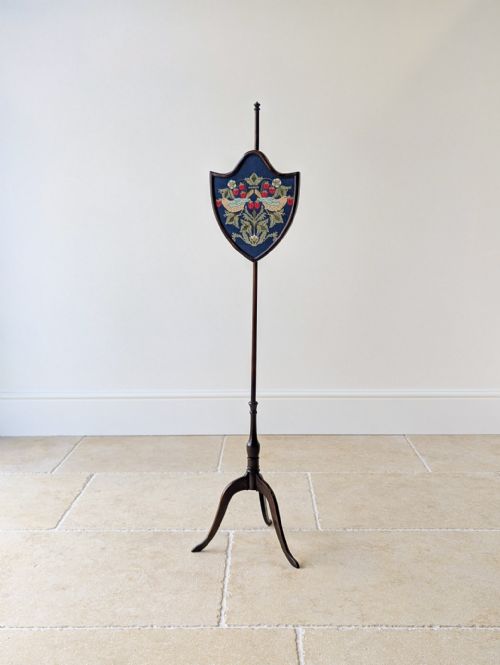
The screens themselves house various inserts, stretching silk, paper prints, or hand-worked tapestry within wooden frames. Inlaid wood details sometimes ornament the surfaces, demonstrating meticulous cabinetmaking techniques across the Georgian and nineteenth century eras.
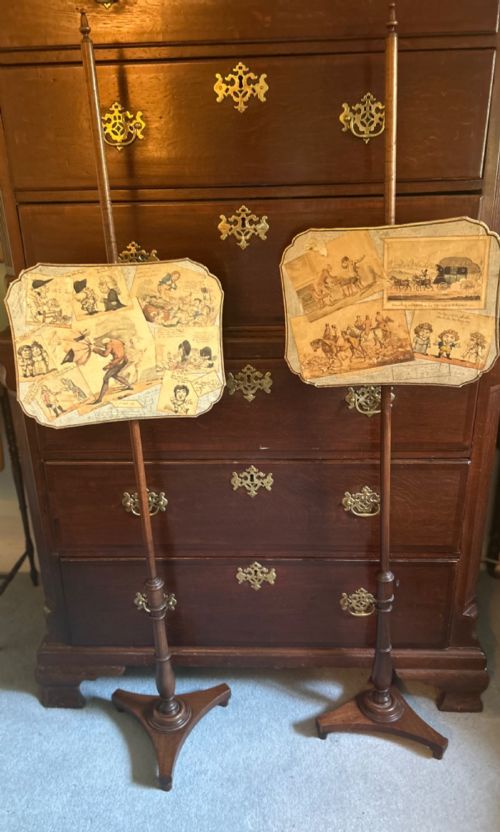
Some screens abandoned polite floral scenes entirely, choosing instead to deploy witty satirical prints guaranteed to start a fireside debate.
Judging Quality
The distinction between ordinary and exceptional examples rests upon the crispness of the carving on the tripod base and the originality of the adjustable mechanism. Pieces with finely turned shafts and substantial claw or pad feet command greater attention.
The survival of untouched textile panels, original satirical prints, or early tapestry elevates a piece significantly. Furthermore, symmetrical pairs and screens retaining their integrated brass fittings demonstrate superior workshop execution.
The Georgian Mahogany Tripod Screen Glossary
- Pole screen
- A tall vertical stand with a sliding panel used to block radiant heat from a fireplace. These stands utilise a tripod base for stability on uneven floors.
- Tripod base
- A three-legged support structure commonly found on small tables and screens from the Georgian era. The splayed legs balance the height of the central pillar.
- Needlework panel
- A decorative textile insert worked in wool or silk threads, often mounted inside the frame of a screen. These panels display botanical or pictorial scenes.
- Goncalo alves
- A dense exotic hardwood with striking figuring, utilised in fine Regency furniture production. This timber provides both strength and rich colour variation.
Georgian Mahogany Tripod Screen: Frequently Asked Questions
What is a georgian mahogany tripod screen?
It is a tall freestanding screen with an adjustable panel mounted on a three-legged wooden pillar. These items were positioned near fireplaces to protect the face from direct heat.
They combine cabinetmaking and textiles, often featuring framed tapestries, silk, or paper prints supported by sturdy mahogany standards.
How did people use them?
Homeowners placed these movable screens between their seating and the hearth to deflect the intense warmth of coal and wood fires. The adjustable panels slid up and down the central pole to suit the user's height.
They also served to display delicate needlework skills and artistic prints when the fireplace was unlit during warmer months.
How do I tell periods apart?
Georgian and George III examples often display restrained classical carving, slender turned shafts, and traditional tripod leg formations. Chippendale style variants incorporate more ornate woodwork details.
Later nineteenth century pieces and Regency designs introduce alternative timbers like goncalo alves, bolder proportions, and occasional adaptations into lamp tables.
Can I use one as a lamp table?
Some historical examples were later converted to serve as side tables or floor lamps by securing the top fixture. These modifications reflect how owners adapted functional furniture for changing domestic needs.
When examining these pieces, look closely at the central pole and panel mountings to understand their original configuration.