



Staffordshire Pottery Statuette
These staffordshire pottery statuette examples bring Victorian portrait figures, animals and literary subjects directly into your home.
Staffordshire Pottery Statuette
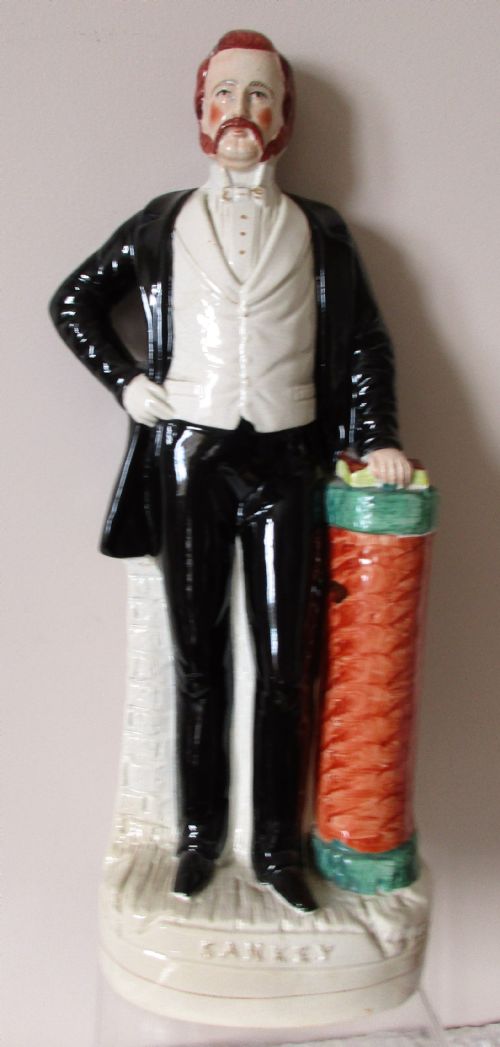
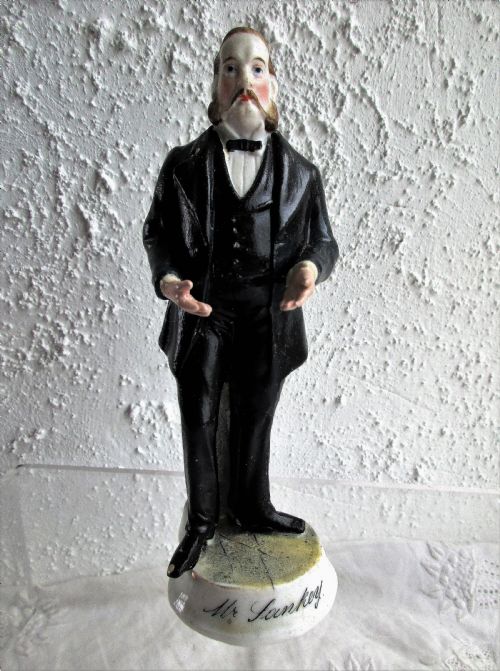
A staffordshire pottery statuette represents the rich output of nineteenth century figures, spanning the Victorian, Edwardian and Georgian periods. Collectors encounter everything from portrait subjects and theatrical personalities to literary groups and animal pairs.
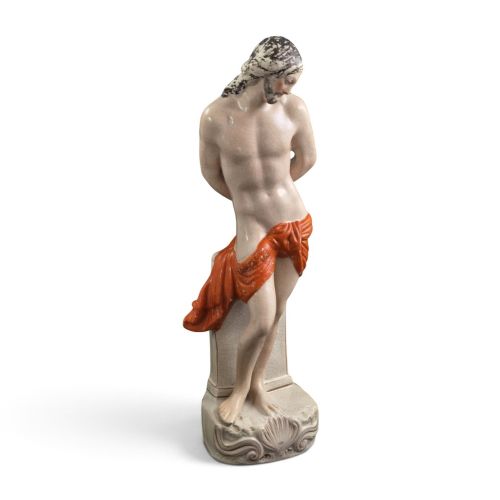
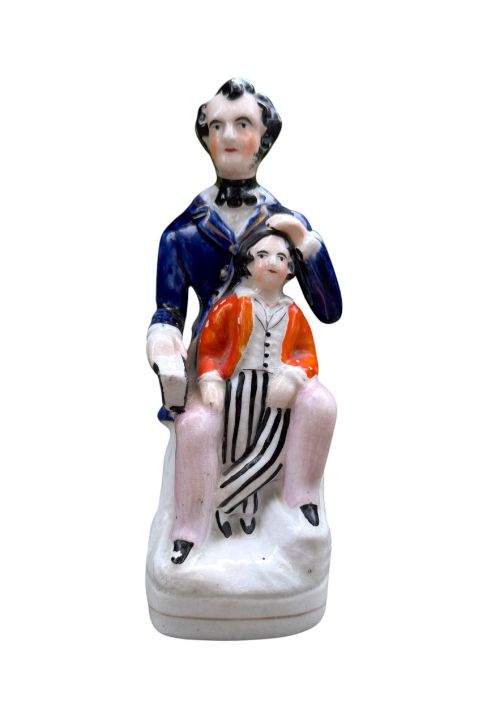
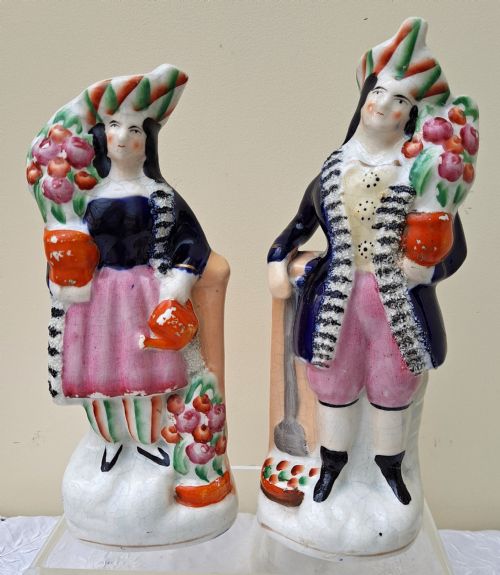
The selections include flatback figures designed for mantelpieces, quill holders, and portrait subjects depicting historical figures, military heroes and religious scenes. Earthenware and porcelain bodies dominate the forms recorded across these periods.
Materials and construction
Potters utilised earthenware and porcelain as the primary bodies for shaping these figures. Artisans applied lead glaze and enamel paint to finish the surfaces, often adding gold leaf highlights for decorative effect.
Moulds shaped the ceramic material before firing, allowing workshops to produce portrait figures, animals and theatrical groups in quantity. Hand-painting ensured that enamel colours and facial details varied across individual pieces.
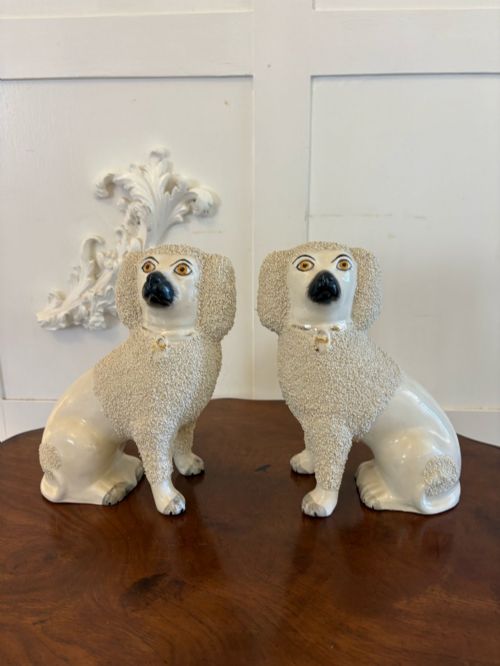
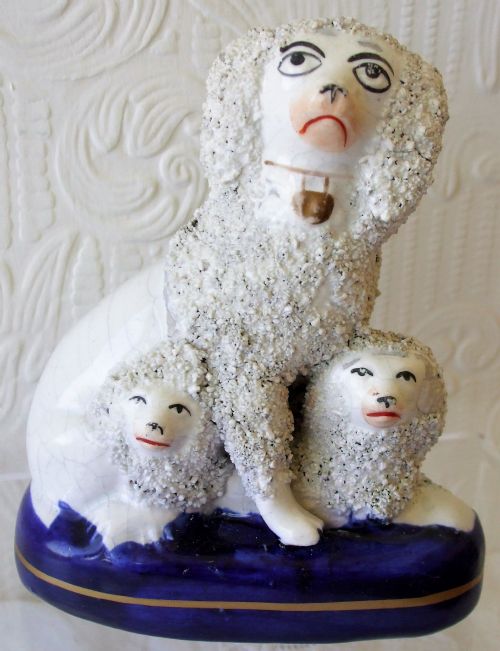
Poodles appear in pairs wearing coats of ceramic curls achieved through applied clay shreds.
Assessing quality in figures
The presence of named subjects, portrait details or well-executed pairs elevates certain figures above standard decorative items. The weight and stability of the ceramic body also distinguish superior examples.
The Staffordshire Pottery Statuette Glossary
- Flatback
- A figure moulded with a finished front and a flat, unglazed or minimally decorated rear designed for placement against a wall or mantelpiece.
- Enamel paint
- A glossy paint applied over the glaze and fired at a lower temperature to add bright surface colours to the ceramic body.
- Lead glaze
- A shiny coating applied to pottery before firing that provides a glossy waterproof finish and enhances the underlying colours.
- Quill holder
- A functional ceramic desk accessory incorporating a figure alongside a trough or rest for writing quills or pens.
Staffordshire Pottery Statuette: Frequently Asked Questions
What periods do these figures come from?
The pieces span the Georgian, Victorian and Edwardian eras, with the majority originating in the nineteenth century.
Dates range from early examples up to the early twentieth century, reflecting shifting tastes in domestic decoration.
How were staffordshire figures displayed?
Many flatback pieces stood on mantelpieces where viewers could see only the decorated front.
Others functioned as desk accessories, combining portrait subjects with practical uses like holding writing quills.
Are animals common in this pottery?
Animals appear frequently, often fashioned as pairs of poodles, lions or whippets.
Some animal figures incorporate practical elements, such as the whippet quill holders designed for writing desks.
How do I identify portrait figures?
Makers often inscribed names or titles directly onto the base or front of the ceramic body.
Subjects include military commanders, political figures, royalty and theatrical performers from the period.