




Antique Military Ceramic Figure
These antique military ceramic figures capture significant historical figures and military commanders in glazed earthenware and porcelain.
Antique Military Ceramic Figure
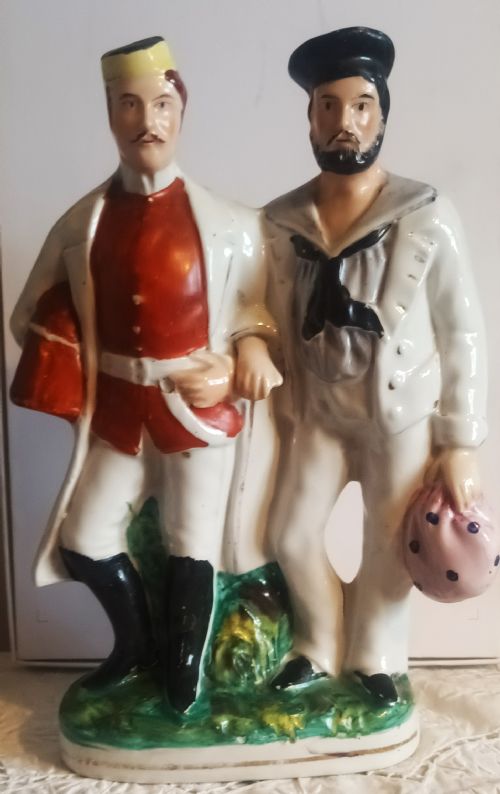
When you search for an antique military ceramic figure, you are looking at commemorative pieces depicting generals, admirals, and royalty from the nineteenth century. The examples met most often on this page are Victorian Staffordshire pottery figures produced in England during the nineteenth century, including specific portraits of commanders and allied leaders.
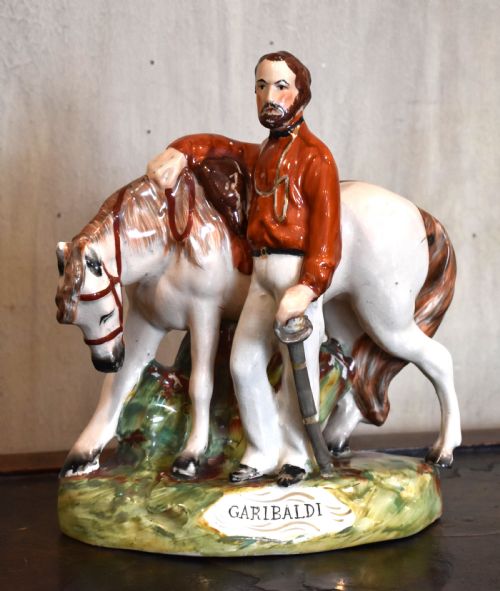
The subjects range from British naval commanders such as Admiral Sir Charles Napier and Admiral Sir James Dundas to continental figures like Napoleon III, Louis Napoleon, and Garibaldi. Alongside these portrait pieces, the selection includes themed groups such as the Companions in Arms pottery figures and larger continental porcelain works depicting historical conquests.
These decorative figurines serve as historical records of nineteenth-century historicism, capturing popular sentiment and military alliances in ceramic form. The forms vary from standard earthenware shelf pieces to detailed hard-paste porcelain figurines.
How they were made
Many examples incorporate lead glaze to create a glossy surface finish, while select pieces feature gilt highlights applied over the fired ceramic. The combination of enamel paint and glaze gave each Staffordshire pottery figure and porcelain figurine its distinct nineteenth-century appearance.
Several pieces depict nineteenth-century leaders alongside exotic animals, including Meissen elephants marching to conquer India.
What varies in quality
Modelling complexity also separates standard Staffordshire pottery figures from larger or more intricate porcelain works. Finer pieces maintain balanced proportions and detailed uniform accoutrements that reflect the skill of the original Staffordshire or continental ceramicists.
The Antique Military Ceramic Figure Glossary
- Earthenware
- A porous pottery body fired at lower temperatures, commonly used for nineteenth-century Staffordshire figures. It requires a glaze to become impermeable to liquids.
- Hard-paste porcelain
- A durable, vitrified ceramic material composed of kaolin and petuntse, fired at high temperatures. It forms the base for finer continental decorative figures.
- Lead glaze
- A glossy coating containing lead oxide applied to pottery before firing. It produces a smooth, reflective surface characteristic of many Victorian ceramic pieces.
- Enamel paint
- Vitreous pigments applied over the fired glaze and subjected to a lower second firing to fuse with the surface. This technique provides the bright uniform colours seen on portrait figures.
- Historicism
- An artistic style prevalent in the nineteenth century that draws inspiration from historical events, military campaigns, and past epochs. It heavily influences the subject matter of these commemorative figures.
Antique Military Ceramic Figure: Frequently Asked Questions
What are antique military ceramic figures?
These pieces are nineteenth-century ceramic representations of military commanders, admirals, and political leaders produced in England and on the continent. They function primarily as commemorative decorative figures.
The category encompasses both Staffordshire earthenware figures and porcelain figurines depicting specific historical events and alliances.
Who do these figures depict?
The listings feature prominent nineteenth-century figures including Admiral Sir Charles Napier, Napoleon III, Garibaldi, and General Charles George Gordon. Commemorative groups also appear under titles such as Companions in Arms.
Some continental pieces portray classical or ancient military leaders, such as Meissen elephants depicting Alexander the Great conquering India.
How were Staffordshire figures made?
Staffordshire pottery figures were typically moulded from earthenware, painted with enamel colours, and finished with a clear lead glaze. Artisans often added gilt highlights to enhance uniform details.
Porcelain equivalents utilised hard-paste ceramic bodies fired at higher temperatures to achieve a finer, more rigid structure.
How do you date these ceramic figures?
Dating relies on stylistic markers associated with the Victorian period and nineteenth-century historicism, alongside recorded historical dates for specific subjects like Garibaldi in eighteen sixty. Costume details and manufacturing materials further help narrow the production window.
Inscriptions and titled bases provide direct documentary evidence regarding the specific person commemorated.