





Staffordshire Pottery Plates
Staffordshire pottery plates bring transfer-printed scenes, pearlware bodies, and robust earthenware forms from the nineteenth century into modern dining rooms.
Staffordshire Pottery Plates
When you search for staffordshire pottery plates, you encounter an array of earthenware and pearlware dishes spanning the Georgian, Victorian, and Regency periods. The forms range from small tea plates and children's sets to large meat platters and deep chargers.
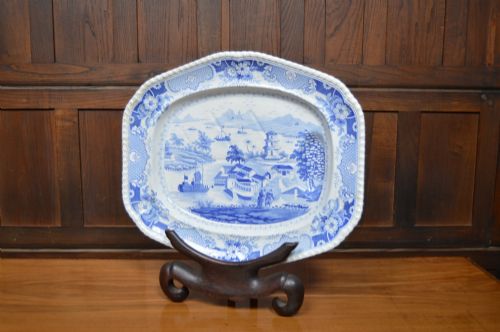
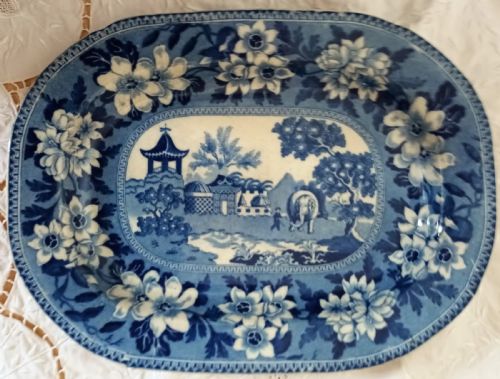
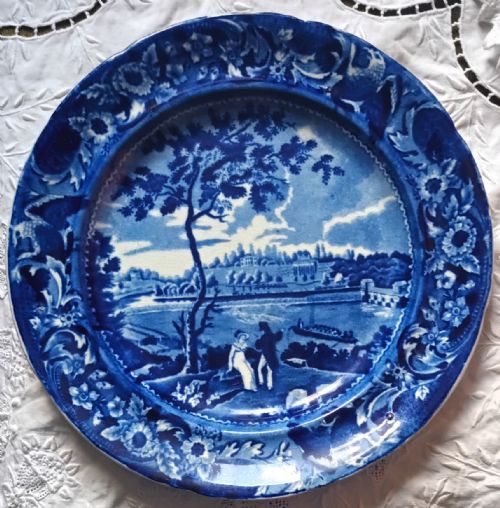
Blue and white transfer-printed designs dominate the selection, depicting topographical views, botanical studies, and romantic landscapes like the popular India Temple and Elephant patterns. These pieces record nineteenth-century tastes for exotic scenery and historical subjects.
You are most likely to meet circular blue and white printed plates alongside rectangular meat drainers and serving dishes. Many bear named patterns or topographical titles stamped or impressed on the reverse.
How they were made
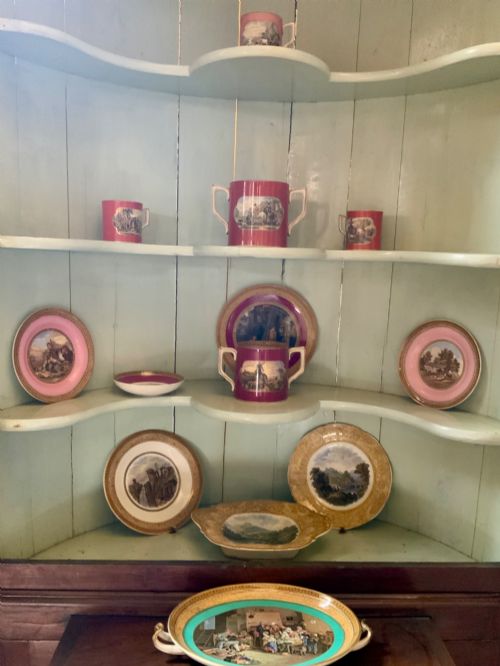
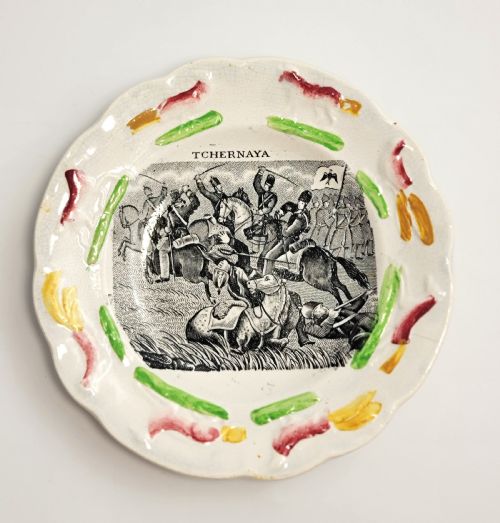
Potters shaped earthenware and pearlware bodies using local clays before applying fluid copperplate transfer prints in cobalt blue. Enamel colours and gold leaf occasionally supplement the monochrome printing on finer polychrome examples.
A glossy ceramic glaze seals the porous clay body during a high-temperature kiln firing, protecting the printed underglaze decoration from daily wear. Ironstone variants offer a denser, heavier ceramic matrix designed for durability during heavy service.
Listings feature pearlware and earthenware bodies alongside ironstone soup bowls and stoneware plates spanning the nineteenth century.
What varies in quality
The clarity and crispness of the transfer print dictate visual success, with sharp outlines and even ink distribution marking superior production. Blurred edges or smudged cobalt indicate rushed application in the pottery works.
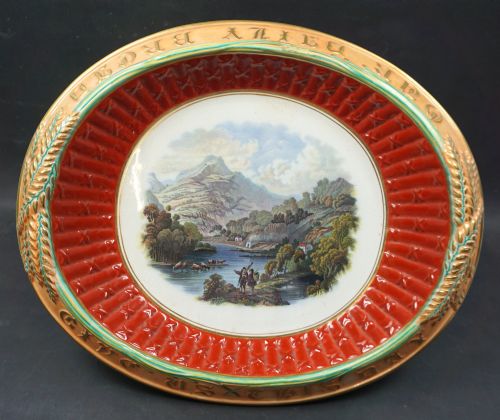
The sophistication of the moulded border and the complexity of the central pictorial subject separate standard utility wares from ambitious exhibition pieces. Hand-painted polychrome highlights over transfer printing also elevate the artistic ambition of an individual dish.
J.W.R.·John Rogers & Son·Stubbs·Booths·John Ridgway·William Adam·Elkin & Newbon·William Adams·Brameld & Co.·Minton·Davenport·John Davenport
The Staffordshire Pottery Plates Glossary
- Pearlware
- A refined earthenware featuring a subtle blue-tinted glaze over a pale body, developed in the late eighteenth century to rival Chinese porcelain.
- Transferware
- Pottery decorated by applying a printed paper design from an engraved copper plate onto the ceramic surface before glazing.
- Meat Drainer
- A perforated ceramic insert placed inside a large serving platter to catch juices beneath joints of meat.
- Imari palette
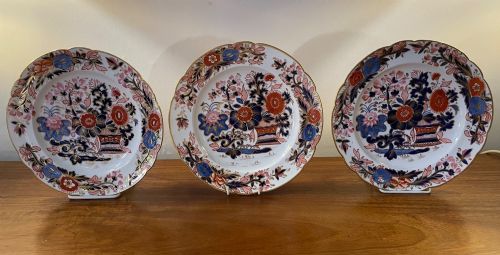
- A decorative scheme employing underglaze cobalt blue combined with iron red and gilt details, inspired by Japanese export porcelain.
Staffordshire Pottery Plates: Frequently Asked Questions
How do I date an old plate?
Examine the ceramic body, glaze colour, and printed registry marks on the reverse of the dish. Pearlware bodies and specific transfer patterns often point securely to the early nineteenth century.
Matching the named view, such as a dated historical event or topographical site, helps narrow the production window. Comparison with documented factory patterns provides further chronological certainty.
Are these plates safe for daily use?
While structurally sound, nineteenth-century earthenware and pearlware can absorb liquids through microscopic glaze crazing over time. Hand washing preserves the delicate ceramic body and historical glaze.
Modern dishwashers and harsh detergents risk damaging the nineteenth-century surface and fading underglaze colours. Gentle cleaning maintains the integrity of these antique pieces.
What is the difference between earthenware and ironstone?
Earthenware is a porous, lower-fired ceramic body that requires a complete glaze layer to remain watertight. It forms the foundation for most early nineteenth-century printed domestic wares.
Ironstone is a much denser, highly vitrified ceramic developed later in the nineteenth century for heavy service. It resists chipping far better than standard earthenware.
Why are some patterns named?
Potteries named their printed scenes to market specific topographical views, literary themes, or exotic locations to fashionable households. Titles like Fair Mount near Philadelphia appealed to transatlantic export markets.
These inscriptions frequently appear on the underside of the plate or within the printed border. They serve as primary identifiers for collectors mapping factory output.