



Staffordshire Pearlware Plate
A staffordshire pearlware plate brings sturdy early earthenware and crisp blue transfer print into daily service.
Staffordshire Pearlware Plate
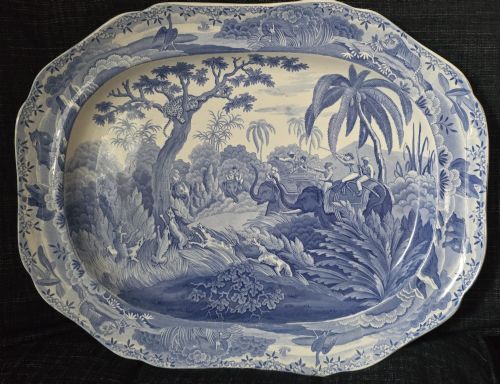
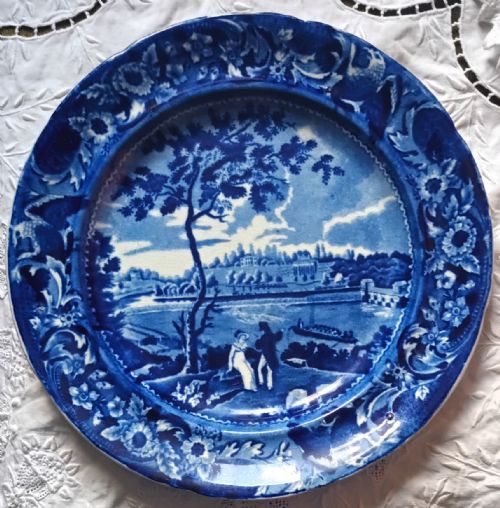
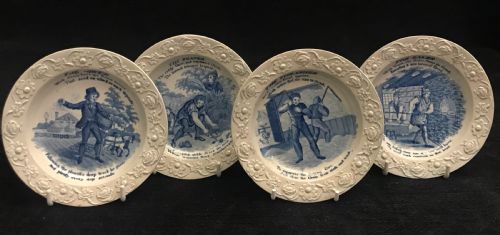
A staffordshire pearlware plate stands as a central object in early nineteenth century ceramics, produced across the Georgian and Regency periods. The forms range from standard decorative plates to larger platters and child's plates, fulfilling both display and practical dining needs. Most pieces met on this page follow the blue and white transfer printed tradition, depicting pastoral scenes, architectural views, or exotic subjects.
The material distinguishes itself from standard creamware by a subtle bluish tint pooling in the glaze, achieved through the addition of a small amount of cobalt. Potters shaped these wares across Staffordshire using earthenware bodies that display the characteristic weight and thickness of the era. Buyers encounter individual plates alongside matched sets, often dated between eighteen hundred and eighteen thirty.
How they were made
Potters formed these ceramic bodies from refined earthenware clay, which was then fired to create a durable biscuit base. Artisans applied cobalt glaze and blue transfer prints using engraved copper plates, transferring detailed topographical and figurative designs onto the damp ceramic surface.
A final clear glaze containing trace cobalt imparted the signature pearlware tone, masking the natural cream body underneath to mimic the whiteness of Chinese porcelain. Kiln firing vitrified the body and sealed the surface, fixing the printed patterns into the permanent glaze.
Listings feature earthenware and pearlware ceramic bodies finished with cobalt glaze across the Georgian and Regency periods.
What varies in quality
The clarity of the transfer print dictates much of the visual success, separating sharp, deeply inked landscapes from blurred or smudged impressions. Early examples show crisp register lines where copper plates met the clay, while finer potteries achieved more consistent glaze distribution without pooling or dry patches.
The sophistication of the subject matter and the reputation of the maker elevate certain pieces above standard domestic wares. Plates featuring named topographical views or complex figurative narratives command greater interest than generic floral borders.
Stubbs·William Adams·Brameld and Co·John Rogers and Son·John Davenport
The Staffordshire Pearlware Plate Glossary
- Pearlware
- A refined earthenware developed in Staffordshire featuring a pale blue-tinted glaze designed to resemble Chinese export porcelain. This innovation dominated ceramic production through the Georgian and Regency periods.
- Transfer printing
- A technique where an engraved copper plate applied ink to tissue paper, which was then pressed onto the unfired ceramic body. This process allowed intricate topographical and pictorial designs to be reproduced rapidly.
- Cobalt glaze
- A liquid glass suspension containing cobalt oxide used to colour pottery blue during high-temperature kiln firings. It produced the deep indigo tones characteristic of early nineteenth century blue and white ceramics.
- Feather edge
- A painted or printed border pattern resembling bird feathers, commonly applied in blue around the rim of earthenware plates. This decorative technique appeared frequently on domestic tableware around eighteen hundred.
Staffordshire Pearlware Plate: Frequently Asked Questions
How do I identify a pearlware plate?
Look for a subtle blue pooling of the glaze around the foot ring and recessed areas, which distinguishes pearlware from earlier creamware bodies.
The earthenware weight and characteristic transfer printed decoration from the Georgian era further confirm the type.
Were these plates used for dining?
Yes, these ceramics served daily dining functions in nineteenth century households, alongside larger platters designed for joint service at the table.
Child's plates were also produced in smaller dimensions for juvenile use and education.
How should I clean a staffordshire plate?
Wash these fragile earthenware pieces gently by hand in warm water using mild soap, avoiding modern dishwashers entirely.
The historic glaze and transfer prints remain sensitive to harsh detergents and abrasive scouring.
Can I date a plate from its pattern?
Specific topographical views and named patterns often connect directly to known production windows between eighteen hundred and eighteen thirty.
Stylistic shifts from Georgian chinoiserie to Regency landscapes help narrow the period of manufacture.