




Stacked Wooden Side Tables
Stacked wooden side tables deliver clever multi-tiered surface space that slides neatly away when floor space matters.
Stacked Wooden Side Tables
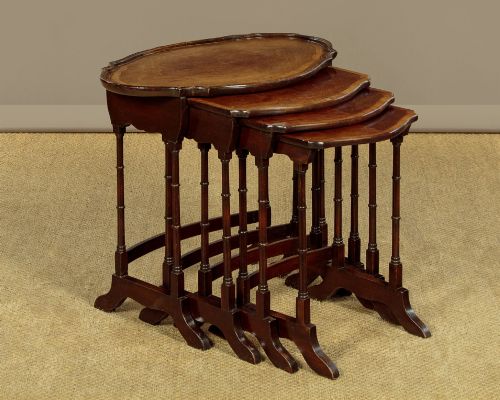
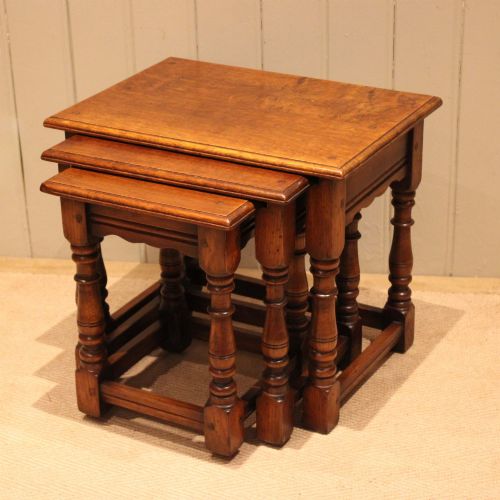
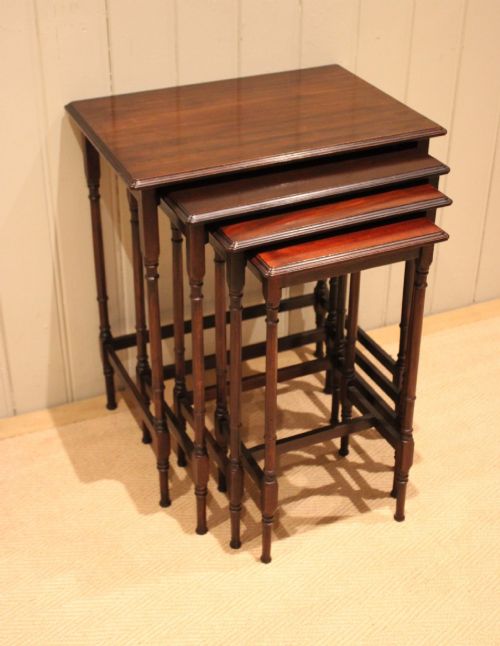
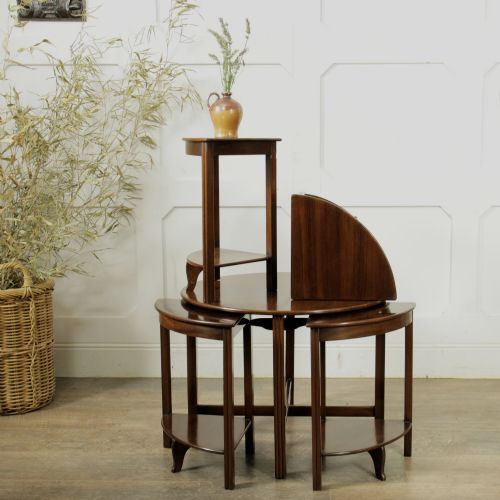
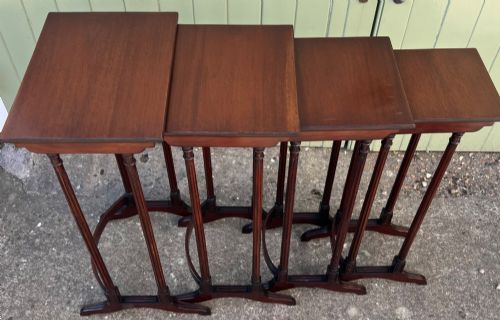
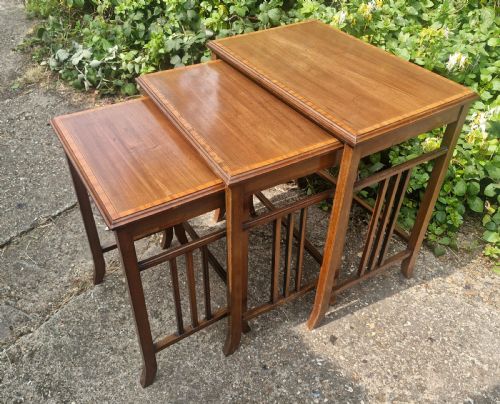
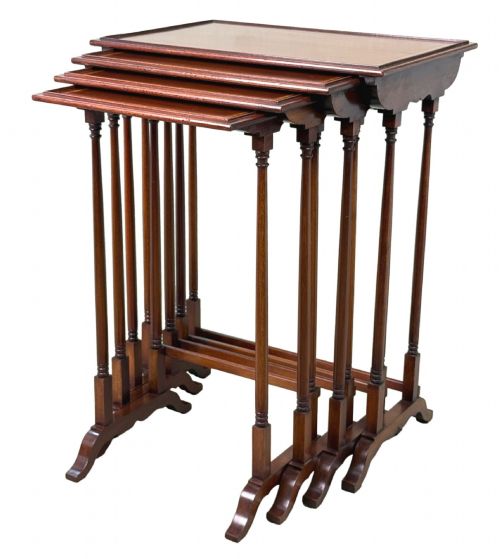
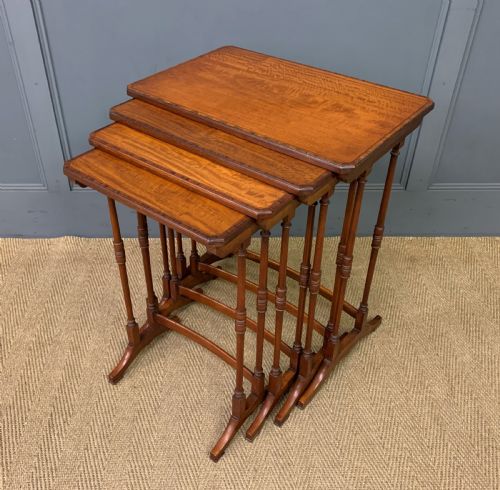
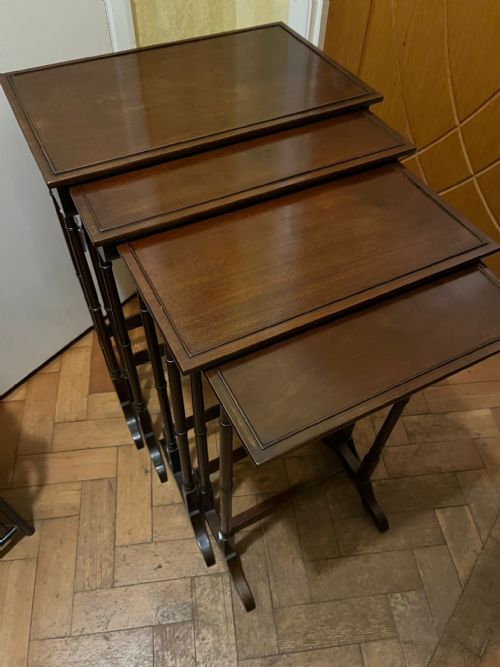
Stacked wooden side tables appear primarily as nests of tables, offering multiple surfaces that descend in size to slot neatly beneath the largest top. The listings on this page show these versatile items emerging through the Victorian and Edwardian eras, continuing into the nineteen-thirties with Art Deco examples.
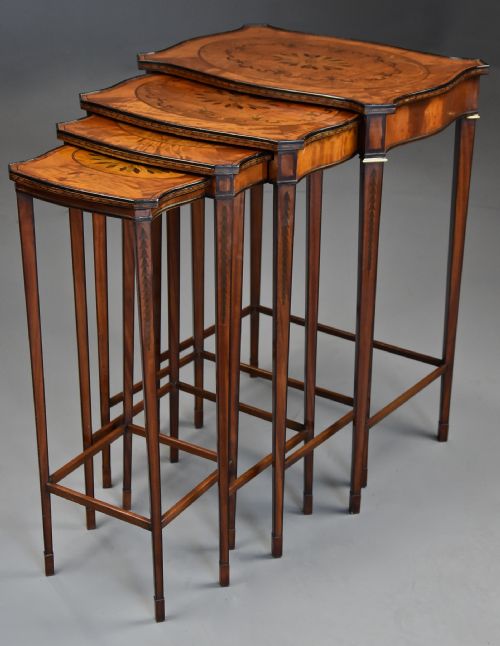
Buyers meet sets containing three or four tables most frequently, alongside occasional five-table configurations. Forms range from simple rectangular shapes to circular designs and serpentine fronts influenced by Sheraton styles.
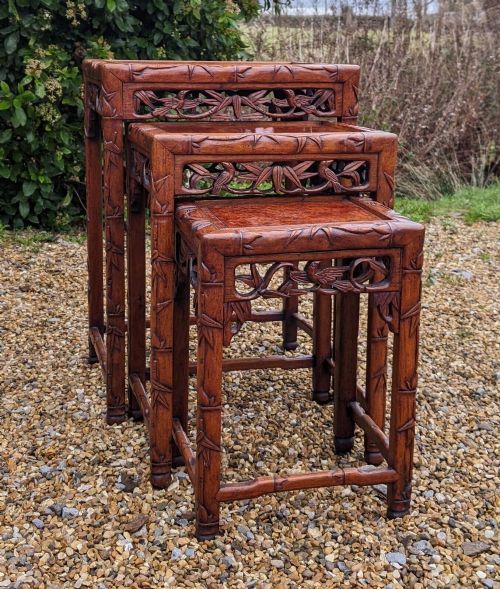
Origins span English workshops through to Chinese export pieces and French-influenced designs. Timber choices dictate the character of each set, moving from golden oak and walnut to rich mahogany and satinwood.
Materials and construction
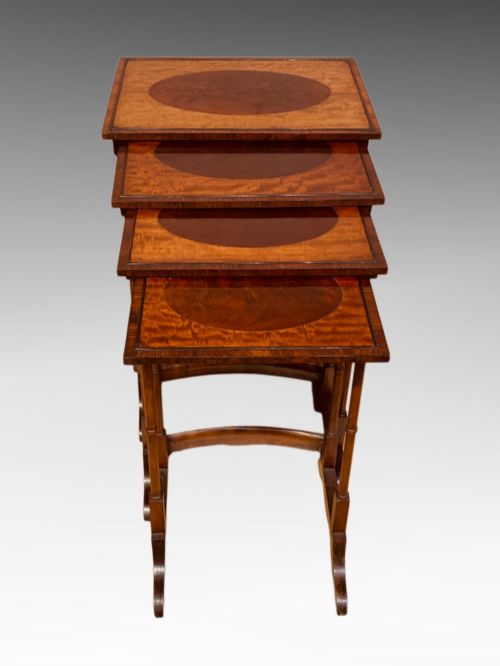
Cabinetmakers constructed these pieces using solid hardwoods like oak, walnut, and mahogany, frequently applying figured veneers to table tops for visual depth. Satinwood and rosewood appear alongside timber frames, occasionally accented with contrasting inlay or embossed leather inserts.
Techniques relied on precise joinery to ensure the smaller tables slide smoothly into their housing without binding. Inlaid details, such as satinwood banding, required careful hand-cutting to fit flush within the surrounding wood grain.
Some sets feature leather tops, ready for historic games of solitaire or an impromptu tea service.
Judging quality
Quality rests upon the crispness of the timber selection and the precision of the frame joints that bear the daily sliding friction. Superior sets maintain structural rigidity across all tiers without excessive looseness in the legs.
Refinement in secondary details elevates a set, such as finely figured grain patterns, delicate satinwood inlay, or serpentine framing. Lesser examples rely on plain timber without the careful matching of veneers visible on finer production.
Heal's
The Stacked Wooden Side Tables Glossary
- Quartetto
- A set of four tables designed to nest together. This term appears frequently in nineteenth-century and Edwardian descriptions.
- Nesting tables
- A set of graduated tables that stack inside one another to save floor space. Each table slides cleanly beneath the next largest.
- Satinwood
- A durable hardwood with a lustrous, golden-yellow sheen used extensively for cabinetmaking and decorative inlay. It contrasts sharply against darker woods like mahogany.
- Chinoiserie
- European artistic style reflecting Chinese motifs and decorative techniques. These carved pieces bring distinct oriental character to occasional furniture.
Stacked Wooden Side Tables: Frequently Asked Questions
What is a quartetto nest?
A quartetto nest consists specifically of four tables graded in size to slide one beneath another.
Cabinetmakers of the Victorian and Edwardian periods favoured this configuration for drawing rooms where surface space needed to appear quickly and vanish just as fast.
How do I care for inlaid tops?
Protect delicate satinwood inlay and polished mahogany surfaces by using coasters and avoiding direct sunlight.
Dust regularly with a dry cloth and apply a quality wax sparingly to maintain the timber's natural lustre without building up residue.
Are these tables sturdy enough for daily use?
Solid hardwood construction provides reliable support for lamps, books, and cups during everyday living.
The smaller tiers are lighter by design, so placing extremely heavy items on them remains unwise.
How do I date an Edwardian nest?
Edwardian sets typically feature lighter timbers, subtle satinwood stringing, and slender tapered legs influenced by eighteenth-century revival styles.
Construction methods inside the framing provide additional clues to their early twentieth-century origins.