
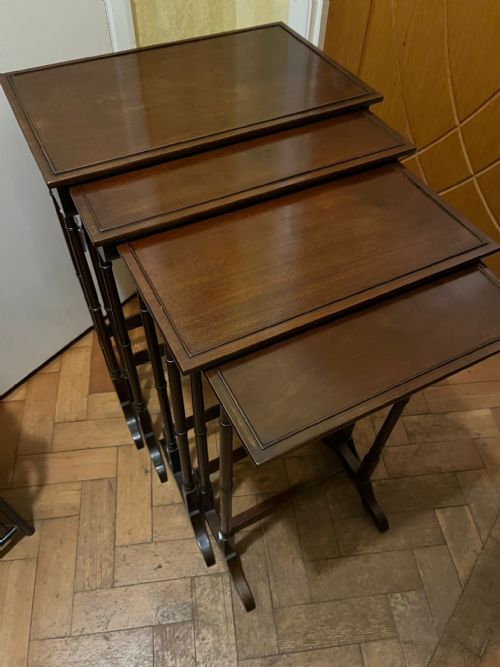


Dark Mahogany Nest
A dark mahogany nest offers a clever multi-tier surface solution that slides away neatly when floor space matters.
Dark Mahogany Nest
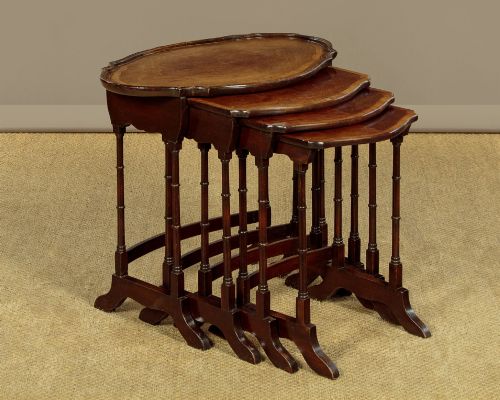
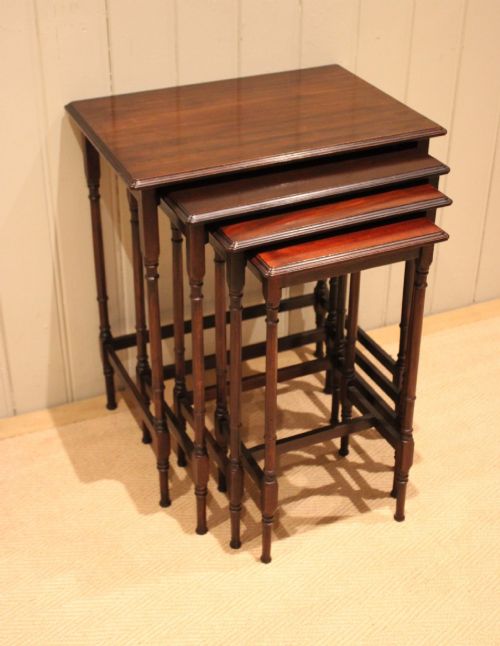
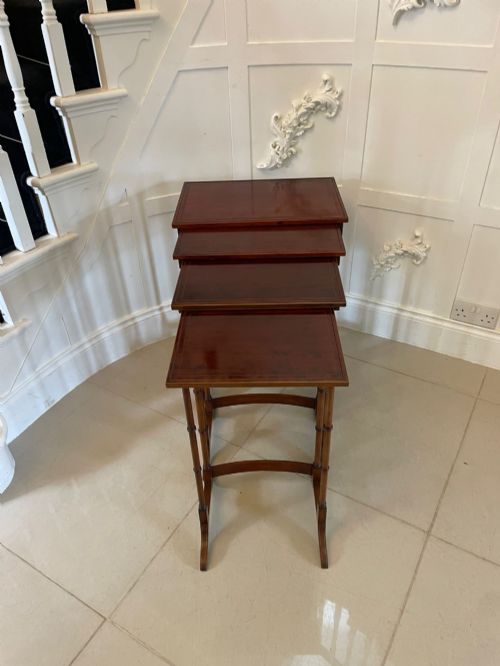
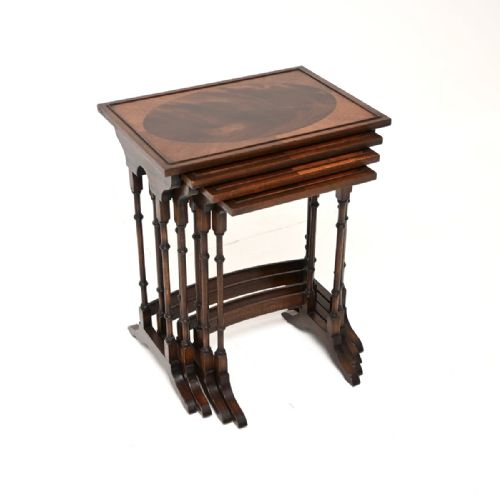
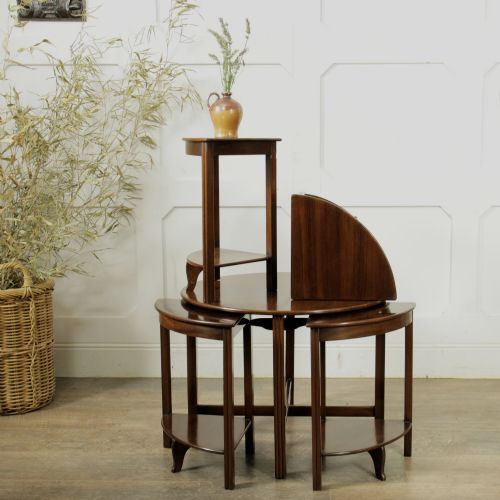
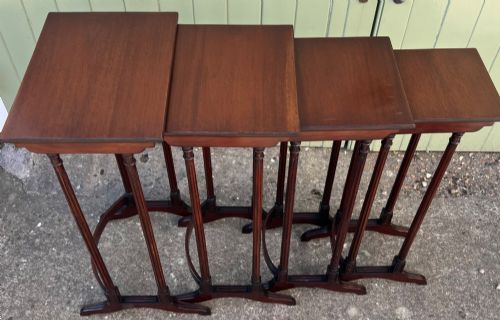
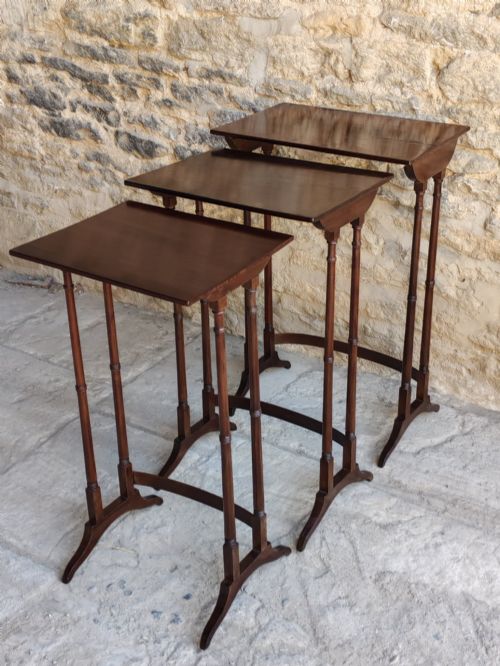
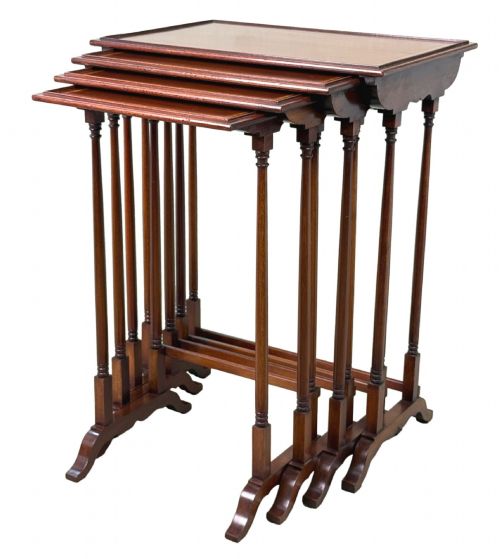
A dark mahogany nest consists of a graduated set of small tables designed to slide neatly beneath one another into the footprint of the largest single piece. These space-saving sets appear frequently across various periods, including the Victorian, Edwardian, and Georgian eras.
Most examples found on this page take the form of quartetto sets comprising four tables, alongside alternative arrangements of three or five pieces. The forms range from standard rectangular designs to circular and oval tops.
Originating as versatile occasional furniture for drawing rooms and parlours, these tables serve readily for tea, writing, or holding decorative objects. The pieces span centuries of cabinet-making, reflecting changing tastes from formal Georgian proportions to lighter Edwardian interpretations.
What separates the best from the rest
Quality reveals itself in the selection of the timber and the precision of the graduated sizing, which ensures each smaller table glides smoothly into its assigned slot without binding or excessive clearance. Superior examples display carefully matched mahogany veneers and crisp, neat boxwood inlay work rather than painted imitation details.
The integrity of the frame construction and the condition of the original polished finish dictate the standing of an individual set. Tables that retain their structural rigidity across all tiers without loose joints or excessive timber shrinkage represent the higher tier of surviving examples.
Listings feature mahogany, boxwood inlay, and satinwood across Victorian, Edwardian, and Georgian styles.
Waring & Gillow
The Dark Mahogany Nest Glossary
- Quartetto
- A set of four nested tables designed to fit one beneath another. This term appears frequently in nineteenth and early twentieth-century descriptions of nest tables.
- Boxwood inlay
- Narrow strips of pale boxwood set flush into the darker mahogany surface to create decorative borders. Cabinet-makers used this technique to add geometric contrast.
- Veneer
- A thin layer of figured mahogany applied over a secondary timber base to display decorative grain patterns. This method allowed craftsmen to utilise richly patterned wood efficiently.
- Occasional table
- A small, portable piece of furniture intended for light, intermittent use around a room. These tables form the individual tiers of a nesting set.
- Stretcher
- A horizontal wooden brace connecting the legs of a table to provide structural support. They appear frequently on Edwardian and Victorian nested designs to prevent frame wobble.
Dark Mahogany Nest: Frequently Asked Questions
How do I use a dark mahogany nest?
These tables function best spread around a room to hold drinks, books, or lamps when guests visit. They stack back into a single compact column when floor space needs to be cleared.
Their lightweight construction allows them to move easily from sitting rooms to studies as daily requirements shift.
How many tables are in a set?
Most traditional nests contain four tables, which Victorian and Edwardian cabinet-makers often called quartetto sets. You will also encounter sets comprising three or five tables.
Each descending table scales down in height and width to slide completely beneath the one above it.
What periods do these tables span?
The selection includes pieces influenced by Georgian design alongside Victorian and Edwardian production. Many examples date from the early twentieth century and the late nineteenth century.
Stylistic markers range from plain mahogany surfaces to detailed Edwardian boxwood inlay work.
Are these tables sturdy enough for daily use?
Well-constructed sets utilise traditional joinery and cross-stretchers to maintain stability despite their slender proportions. They handle everyday items like cups and books comfortably.
Care should be taken not to overload the smallest, lowest tables in the stack, as their frames are inherently delicate.