
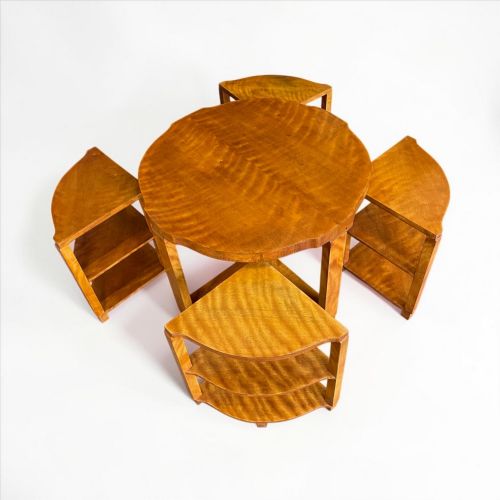


Vintage Coffee Table Nest
A vintage coffee table nest brings together utility and clever design, offering multiple surfaces that tuck neatly away when floor space matters.
Vintage Coffee Table Nest
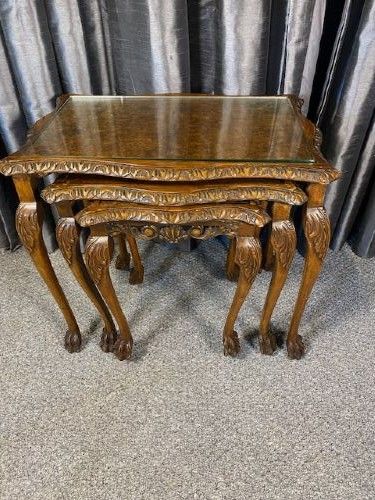
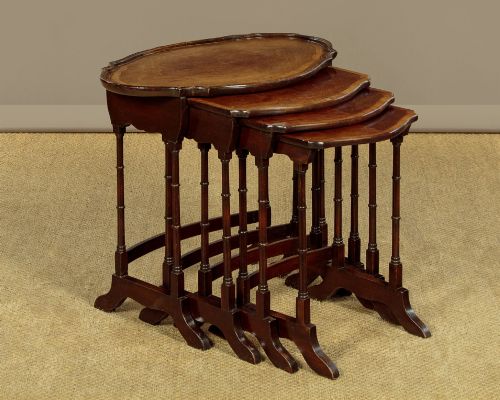
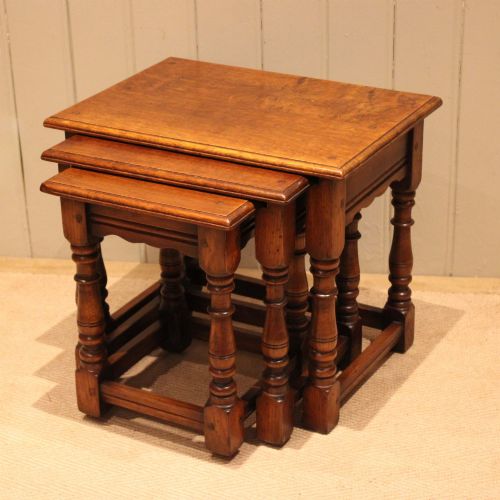
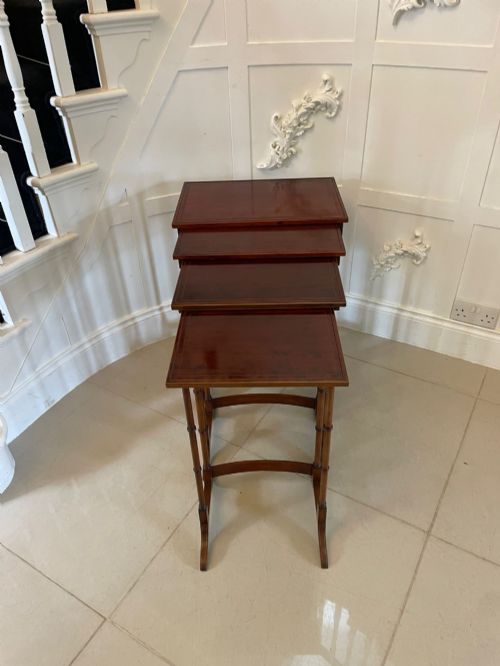
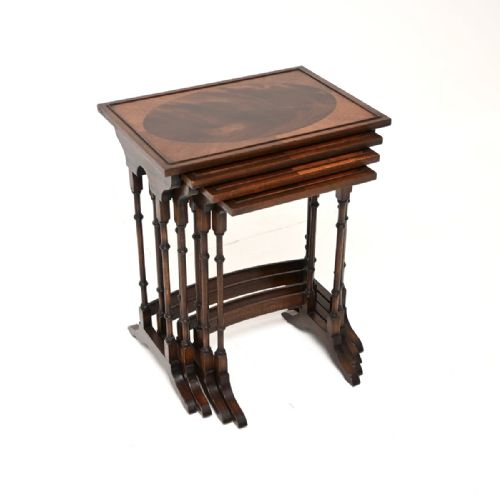
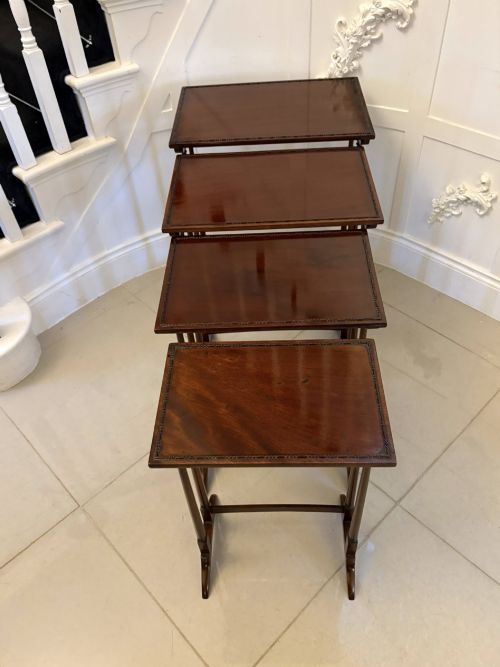
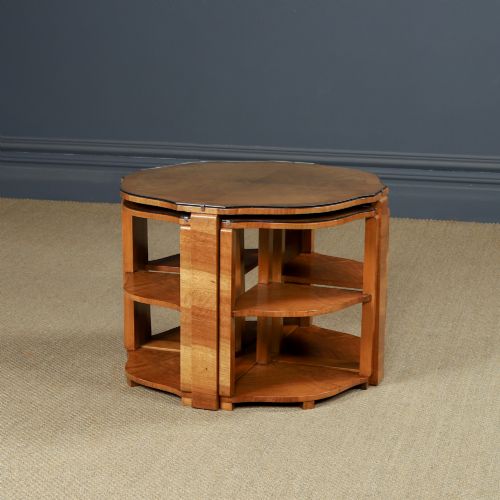
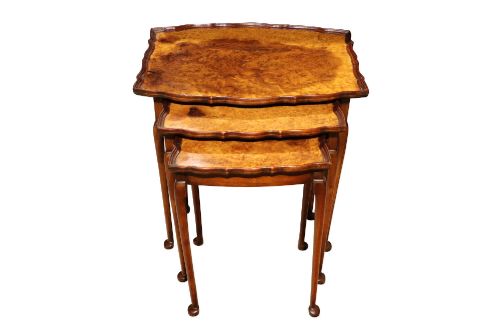
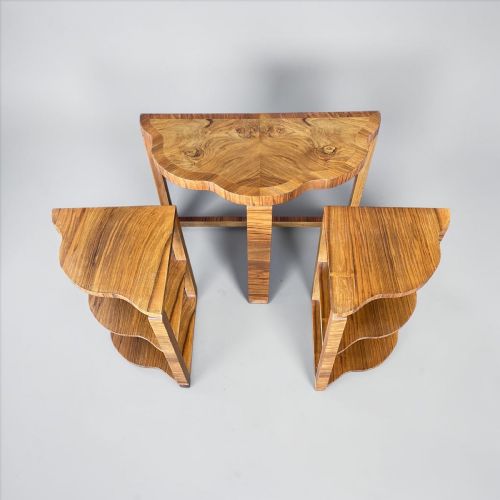
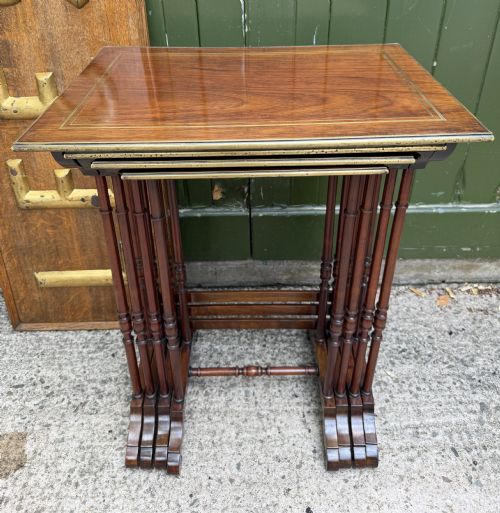
A vintage coffee table nest consists of a set of smaller tables designed to slide beneath one another into a single compact footprint. When you search for a vintage coffee table nest, you encounter forms ranging from Edwardian quartetto sets to Art Deco multi-tiered tables.
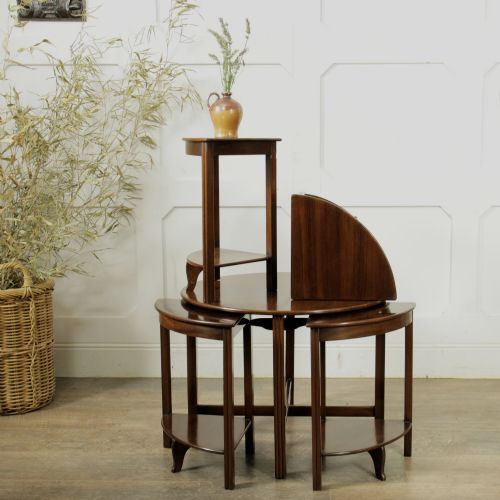
The most common versions on this page span the Edwardian era and the Art Deco period, constructed in mahogany, walnut, and oak. These sets typically include three or four individual tables, though five-table configurations and circular designs also appear.
Origins stretch from English workshops to French studios and Chinese export production. Makers utilised styles varying from clean geometric lines to Chinoiserie decoration and Queen Anne revival motifs.
How they were made
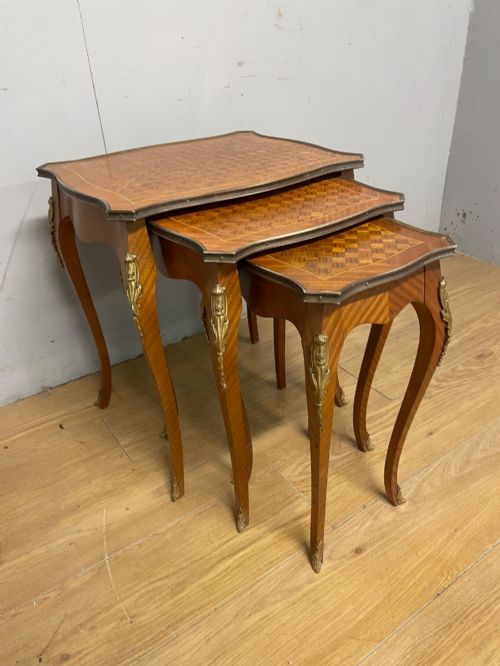
Cabinetmakers built these sets using traditional hardwoods like mahogany, walnut, oak, and rosewood, often selecting burr veneers for striking grain patterns. Satinwood stringing, brass inlays, embossed leather, and lacquered finishes provided decorative contrast.
Construction relied on precise proportioning so that each smaller table slid smoothly into the frame of the next without binding. Frames featured turned legs, shaped tops, and carved details ranging from geometric Art Deco profiles to Chinoiserie motifs.
Listings feature woods including mahogany, walnut, oak, satinwood, and rosewood across periods spanning the nineteenth century through the Art Deco era.
What varies in quality
Quality reveals itself in the selection of timbers and the precision of the joinery that allows the tables to nest with minimal clearance. Finer pieces employ figured veneers, subtle inlay work, and hand-carved details rather than printed decoration.
The integrity of the structural frame determines how well a set survives daily use over decades. Tables that retain their original polished finish and matching proportions command greater appreciation among collectors.
Harry and Lou Epstein·Heal's
The Vintage Coffee Table Nest Glossary
- Quartetto
- A matched set of four nesting tables, popular during the Edwardian period and earlier. These sets were designed for serving tea or holding small decorative items.
- Burr walnut
- A timber harvested from the burl growth of a walnut tree, prized for its swirling, highly figured grain patterns. Makers applied it as a veneer to elevate the visual appeal of table tops.
- Chinoiserie
- European decorative style reflecting Chinese artistic traditions, often featuring lacquered surfaces and painted figures. This style appears on select early twentieth-century sets.
- Satinwood
- A durable, yellowish-toned hardwood utilised for contrasting stringing and inlay work on mahogany and walnut furniture. It provides a bright, reflective border to table surfaces.
- Parquetry
- Geometric wood mosaic work used for decorative surfaces on table tops. French examples frequently showcase this technique.
Vintage Coffee Table Nest: Frequently Asked Questions
What is a quartetto nest of tables?
A quartetto nest comprises four tables scaled to fit sequentially beneath the largest member of the set. Originating in the nineteenth century, this format became especially popular in Edwardian drawing rooms.
Each table sat ready to pull out when guests required a surface for tea or books, then returned to a single compact stack.
How were nesting tables used historically?
These tables served as versatile occasional furniture for entertaining in smaller drawing rooms and parlours. Servants or hosts moved the individual tiers around the room as needed.
By stacking them together against a wall or beside a chair, households reclaimed valuable floor space when the entertaining finished.
How do I identify an Art Deco nest?
Art Deco nests rely on clean geometric forms, circular tops, and stepped profiles rather than traditional carved ornamentation. They frequently feature materials like teak, chrome accents, or highly figured walnut.
Set sizes often expand to five tables, reflecting the modernist appetite for functional, streamlined household design.
Are Edwardian nests different from Victorian sets?
Edwardian examples generally favour lighter timbers like satinwood and inlaid mahogany with slender, graceful legs. Victorian pieces often present darker, heavier figured mahogany and sturdier proportions.
Both periods embraced the quartetto form, but the decorative vocabulary shifted from heavier revival styles toward refined Edwardian elegance.