




Splayed Leg Side Table
A splayed leg side table is a compact surface defined by angled supports, offering steady balance and refined proportions.
Splayed Leg Side Table
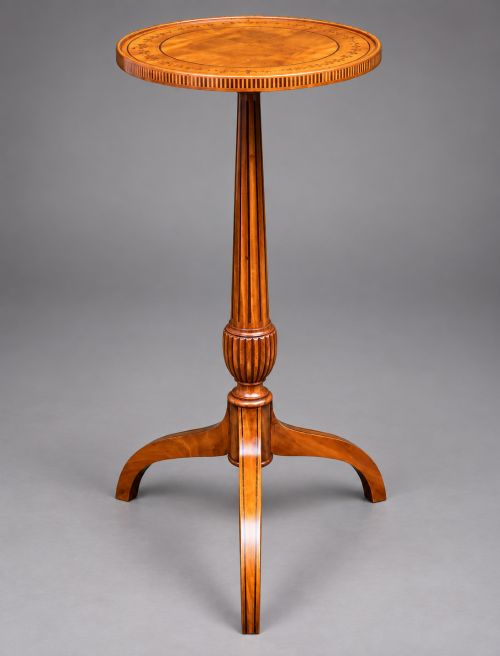
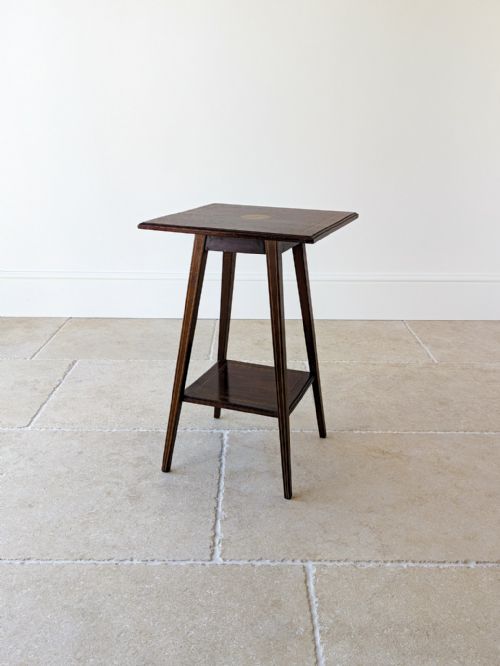
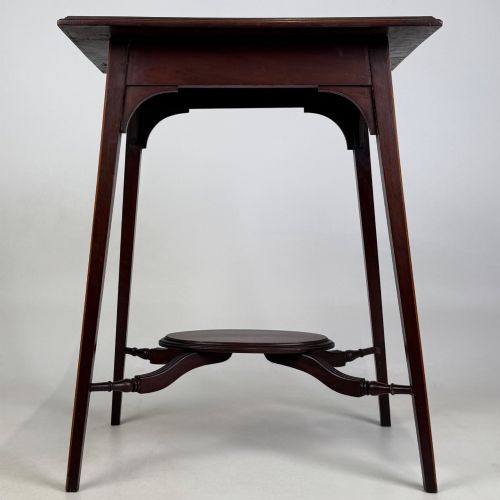
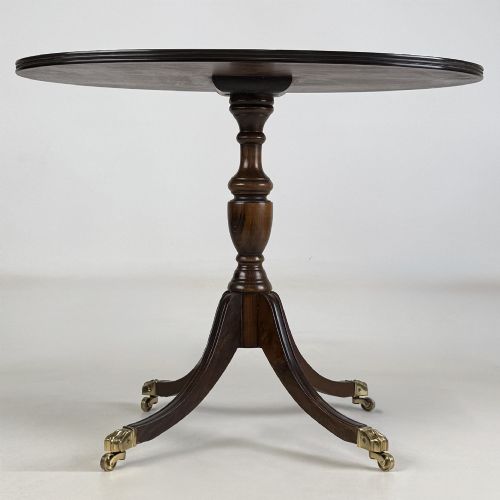
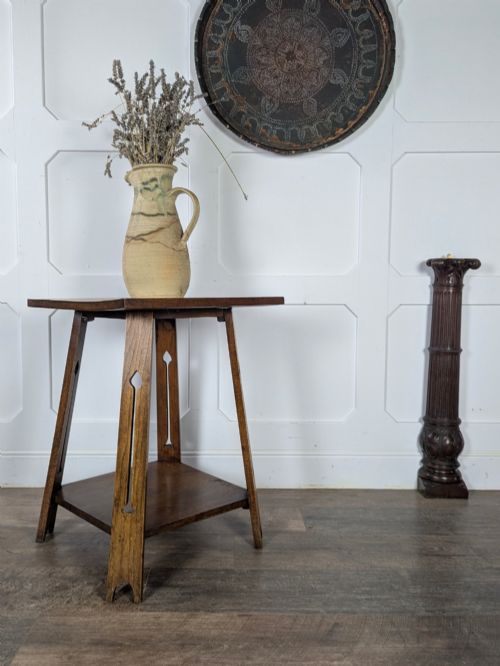
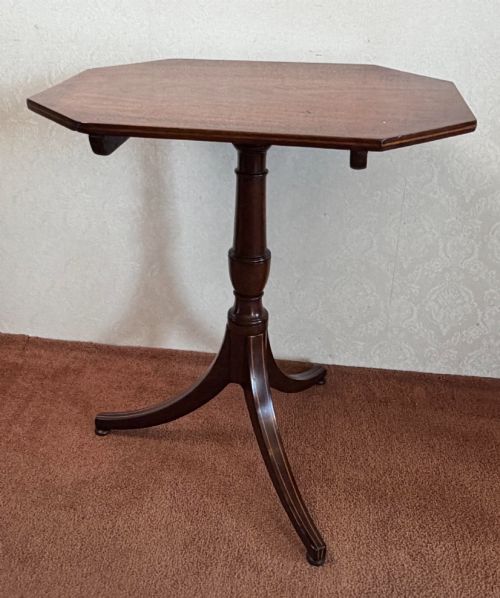
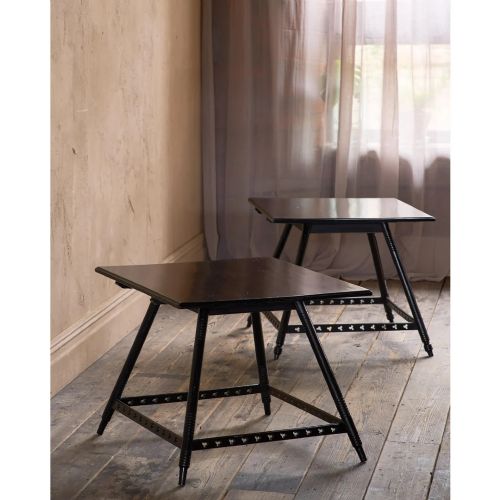
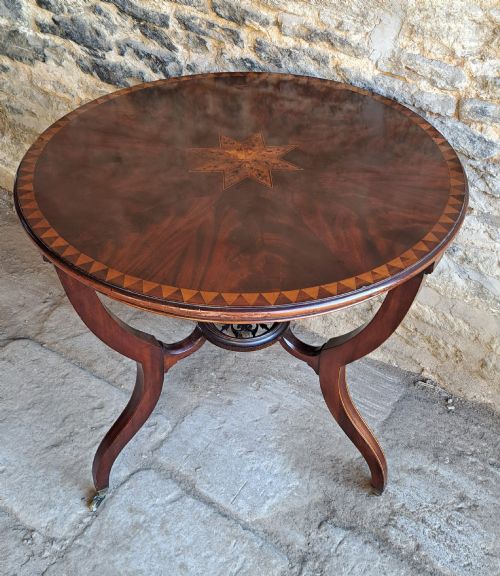
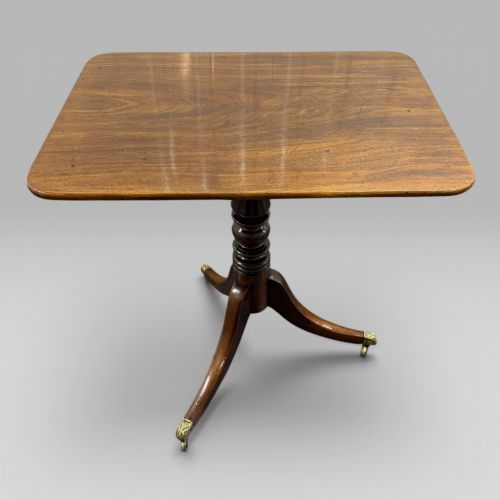
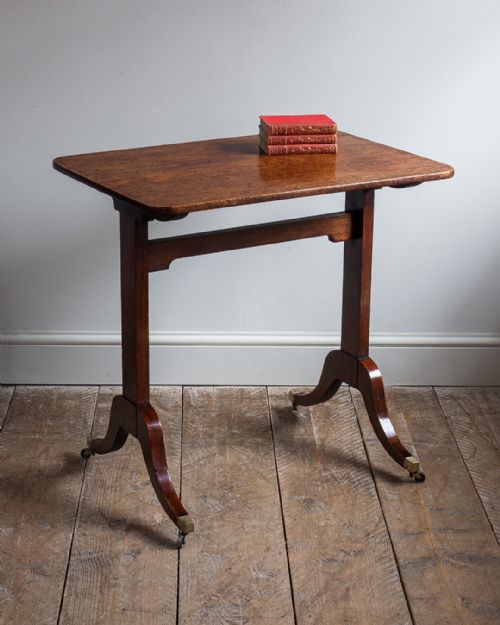
A splayed leg side table brings together a compact top and outward-slanting supports for practical use in smaller spaces. These pieces appear frequently across Georgian, Regency, and Edwardian periods, taking forms such as occasional tables, sofa tables, and Pembroke tables.
The evidence shows these tables emerging primarily in mahogany, oak, and birch, often enhanced with boxwood or satinwood inlay. Buyers encounter examples ranging from simple tripod designs to sophisticated pedestal and drum tables.
How they were made
Joiners built these tables using solid hardwoods like mahogany and oak, frequently applying fine veneers over secondary woods for decorative surfaces. Inlaid details in boxwood and satinwood required precise hand-cutting to fit flush into channels carved within the table top.
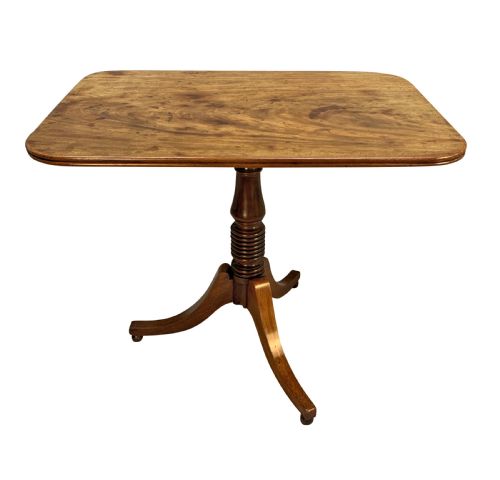
Structural stability relied on sturdy turnings, central pedestals, or tripod bases secured with traditional joinery. Brass casters frequently appeared on Regency and Georgian examples to allow easy movement across the floor.
Splayed Leg Side Table Retail Price Guide 2026
Typical asking prices for splayed leg side table among the pieces listed under this phrase on Sellingantiques today, from the lower quarter to the upper quarter. They describe what is for sale here now, not the wider market.
Listings feature woods such as mahogany, oak, satinwood, and ebonised wood across periods from the eighteenth century to the Edwardian era.
What varies in quality
The standard of a splayed leg side table rests upon the choice of timber and the crispness of its construction. Well-figured mahogany or burr oak displays deep natural grain patterns that elevate the visual weight of a modest footprint.
Refined craftsmanship shows in the neatness of wood inlay and the smooth integration of drop leaves or tilt-top mechanisms. Tables finished with hand-turned pedestals and original brass hardware demonstrate a higher level of cabinet-maker skill.
The Splayed Leg Side Table Glossary
- Splayed leg
- A support angled outward from the vertical centre of the piece. This formation provides a wider footprint for stability.
- Tilt-top
- A hinged table top that pivots to a vertical position when not in use. This mechanism allowed tables to be stored flat against a wall.
- Satinwood
- A dense, yellowish timber prized for its lustrous grain. Cabinet-makers used it extensively for contrasting inlay and veneering.
Splayed Leg Side Table: Frequently Asked Questions
Where should I place a side table?
These pieces fit naturally beside a sofa or chair to hold lamps, books, or drinks without cluttering the room. Their compact footprint also suits hallways and small landings.
Because many examples feature finished backs and detailed inlay, they work well freestanding in the centre of a room rather than pushed exclusively against a wall.
How do I care for antique wood?
Protect the surface by avoiding direct sunlight and excessive heat sources that dry out old timber. Regular dusting with a soft, dry cloth preserves the finish.
Applying a traditional beeswax polish occasionally helps maintain the natural lustre of mahogany and oak without building up a heavy, cloudy residue.
What is a Pembroke table?
A Pembroke table is a versatile drop-leaf design with folding side flaps supported by hinged brackets. This allows the surface area to expand or contract according to need.
Originating in the eighteenth century, these tables frequently served as breakfast desks or light writing surfaces in private parlours.
How do I identify a Georgian piece?
Georgian tables typically display dense Cuban mahogany, hand-cut dovetails, and restrained proportions. Details like subtle boxwood stringing reflect the tastes of the period.
Examining the underside reveals hand-planed secondary woods and traditional construction methods that distinguish eighteenth-century work from later revivals.