


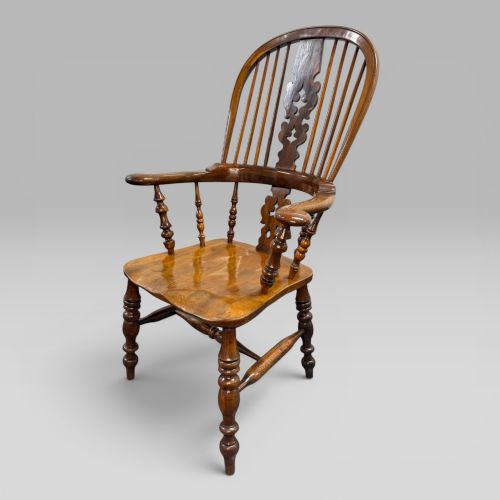
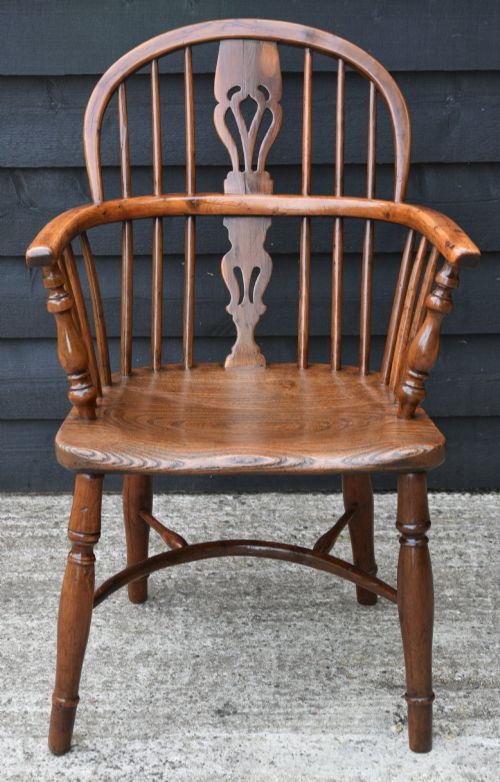
Splat Back Windsor Armchair
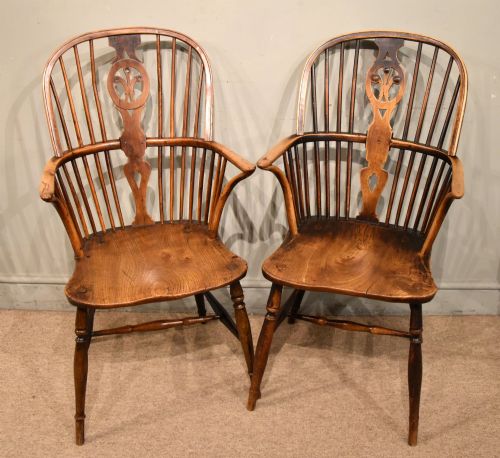
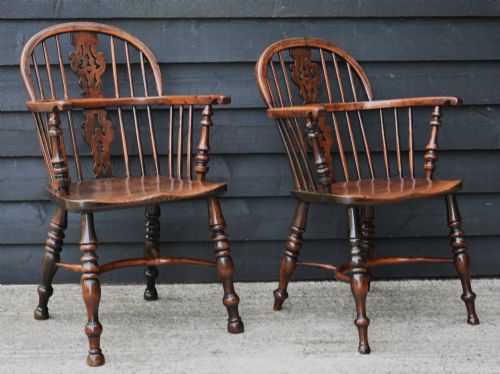
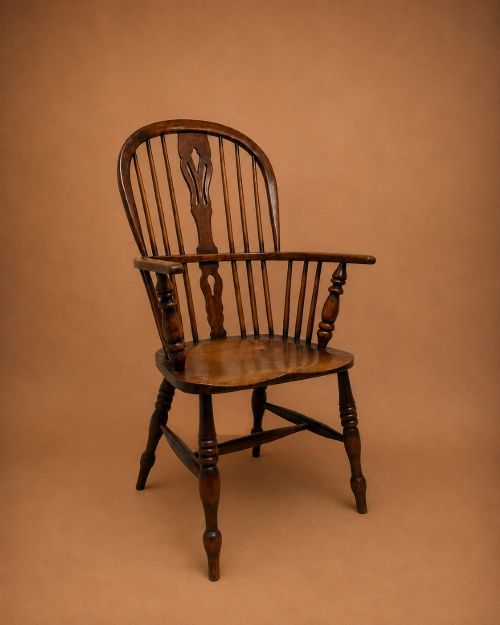
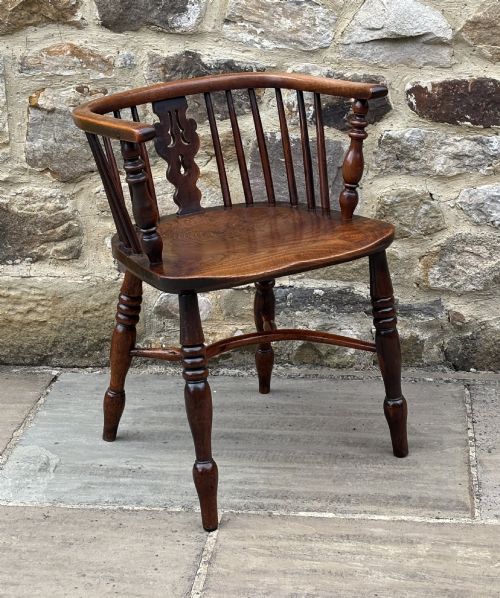
A splat back windsor armchair brings vernacular seating tradition into a room through a pierced central slat.
Splat Back Windsor Armchair
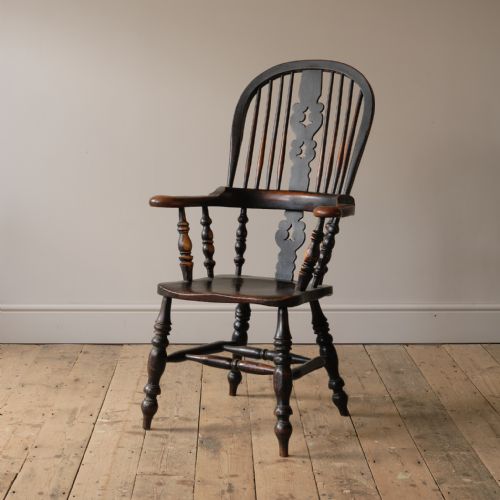
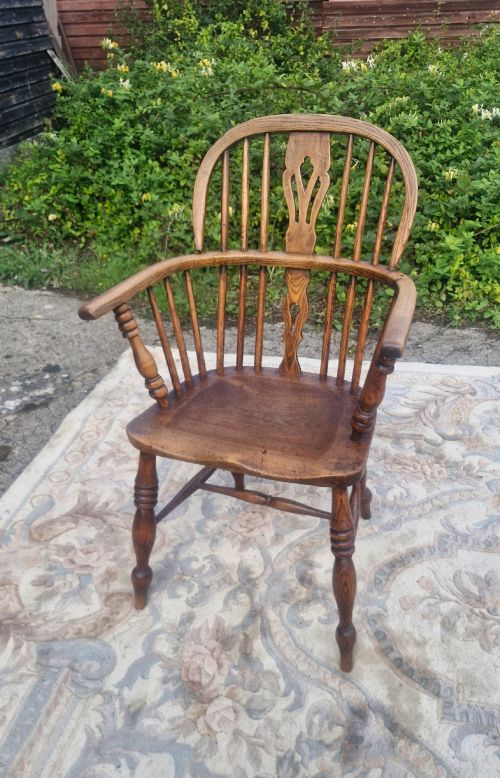
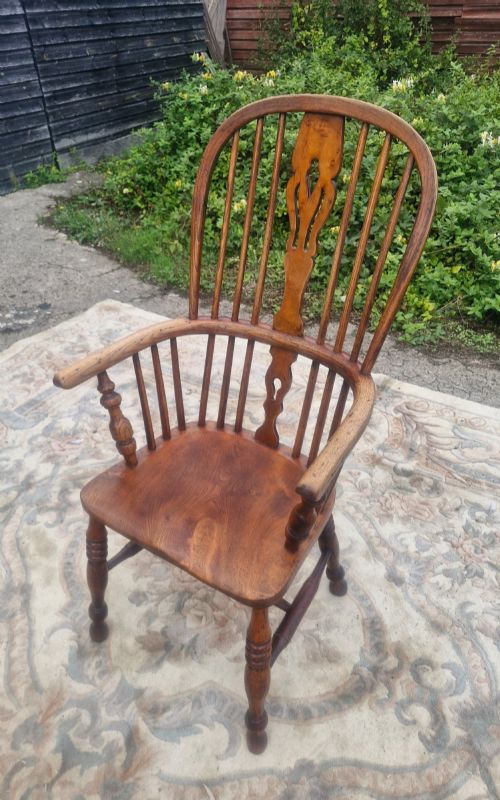
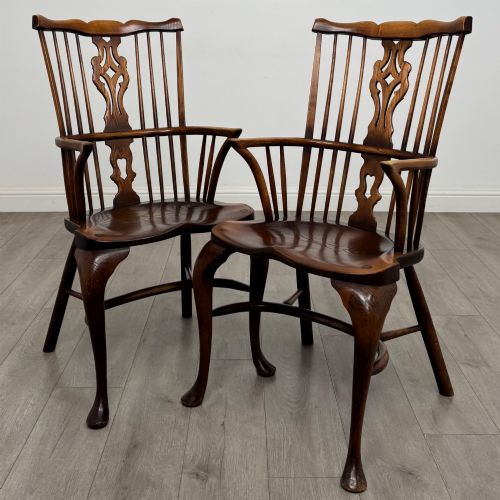
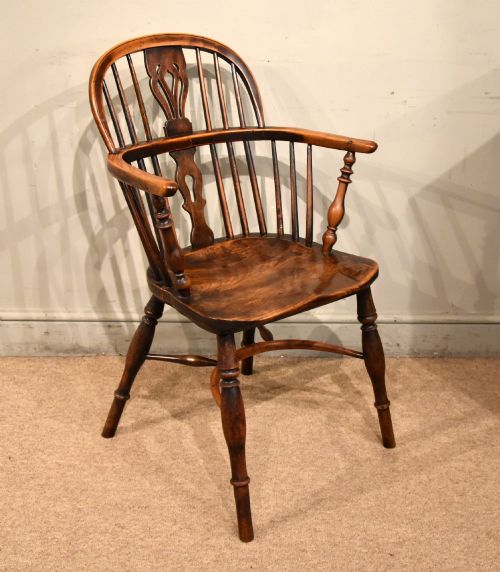
A splat back windsor armchair combines the traditional stick-built construction of country seating with a central wooden splat in the upper section. The pieces on this page emerge from 18th Century, Georgian, 19th Century, Victorian, and Edwardian periods, demonstrating enduring domestic utility.
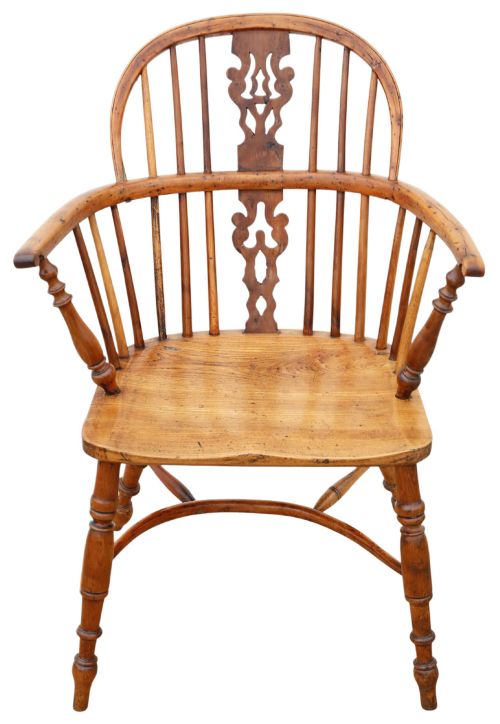
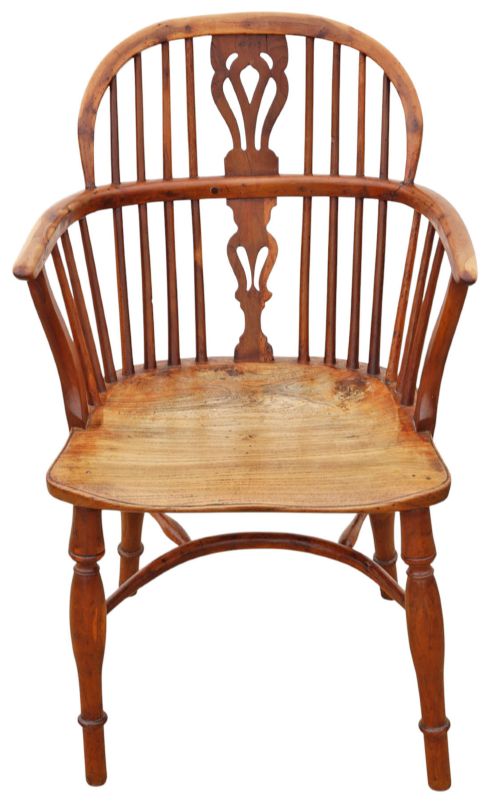
Makers shaped these armchairs across English regions, utilising regional variations in back profiles and underframe stretchers. The version most commonly met on this page pairs a shaped wooden seat with a central splat flanked by spindles.
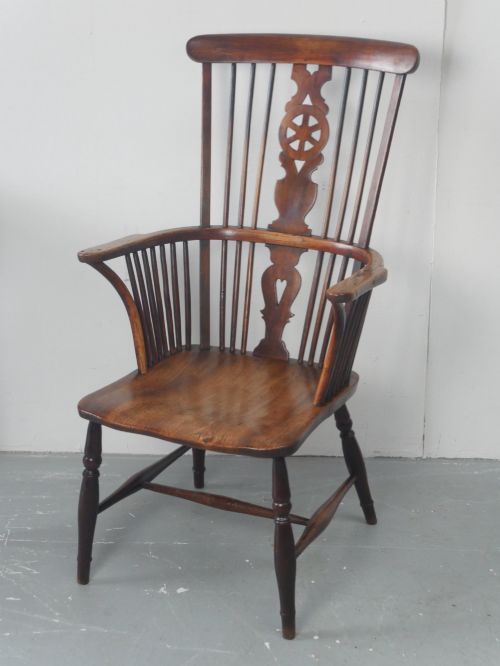
Domestic settings across English country houses and farmhouses relied upon these chairs for everyday seating. Their forms span low backs, high backs, and rocking variants designed for sitting beside hearths.
Materials and construction
Craftsmen built these chairs by turning legs and spindles from denser timbers like beech, ash, or fruitwood, and adzing seats from solid elm blocks. Yew timber appears frequently for its rich figuring and warm tone, often combined with elm seats.
The distinctive pierced splat was fitted directly into a solid wooden seat alongside steam-bent hoop backs or rigid comb backs. Underframes commonly incorporate crinoline stretchers to brace the turned legs beneath the seat.
Listings feature elm, ash, yew, beech, and fruitwood across Georgian and Victorian periods.
Judging quality in windsor seating
Quality rests upon the selection of timber contrasts, such as yew wood backs paired with deeply grained elm seats. The crispness of turning on spindles and legs dictates the refinement of the piece.
Proportion and stance separate standard examples from finer commissions. A well-balanced rake to the legs and a carefully shaped arm bow indicate superior regional craftsmanship.
Gabbitass Workshop
The Splat Back Windsor Armchair Glossary
- Windsor
- A chair constructed with upright spindles and legs socketed directly into a solid carved seat. This vernacular style developed deep roots in English rural workshops.
- Crinoline stretcher
- An arched underframe connecting the legs of a chair. This circular or bowed brace provides additional structural stability.
- Hoop back
- A continuous curved wooden rail forming the upper back and armrests of an armchair. Steam-bending allowed makers to shape this single piece into a fluent arc.
- Elm
- A durable hardwood utilised extensively for solid chair seats. Its interlocking grain resists splitting under the stress of socketed legs.
Splat Back Windsor Armchair: Frequently Asked Questions
What is a splat back windsor armchair?
A splat back windsor armchair is a traditional wooden seat featuring a rigid central slat flanked by spindles within a stick-built frame. These chairs rely on solid carved wooden seats into which legs and back components are socketed.
Makers produced them across various English regions using domestic hardwoods like elm, ash, and yew. They served as sturdy seating in country houses, farmhouses, and domestic kitchens.
How do I date a windsor chair?
Dating relies upon examining the timber species, construction methods, and tool marks visible beneath the seat. Earlier examples from the eighteenth century often display simpler turning and heavier proportions compared to later Victorian models.
Regional styles also assist in establishing age and origin. Comparing the profile of the splat and the configuration of the underframe stretchers points toward specific decades of manufacture.
Which woods were used for these chairs?
Makers selected timbers based on their specific structural properties and availability. Elm provided a tough, crack-resistant material for the solid saddle-shaped seats.
Ash, beech, and fruitwood supplied strong timber for turned legs and spindles. Yew wood was frequently chosen for its decorative grain in the upper back assembly.
Where should I place a windsor chair?
These armchairs suit studies, living rooms, and dining spaces where traditional wooden seating adds character. Their sturdy construction makes them practical for daily use around a table or beside a fireplace.
Allowing sufficient space around the chair highlights its turned underframes and expansive arm bows. Pairing them with contrasting furniture emphasises their vernacular origins.