
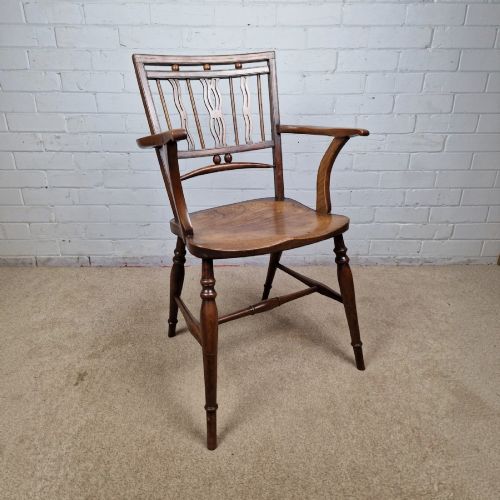
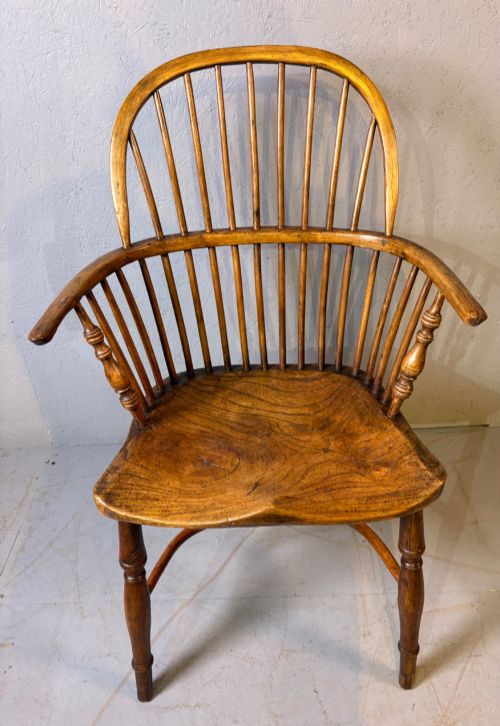


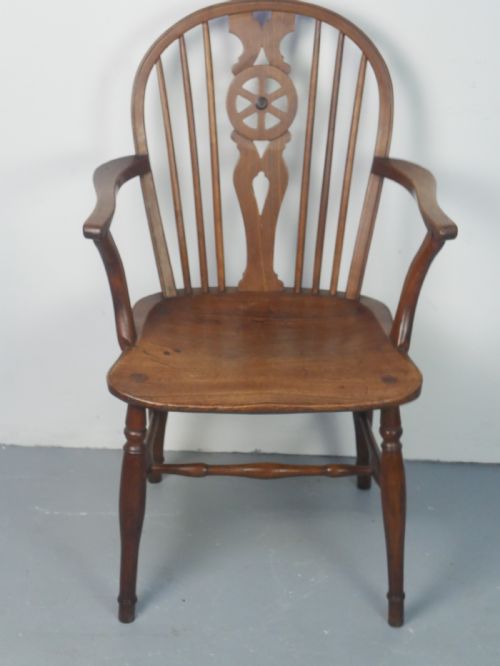


Fruitwood Windsor Armchair
These fruitwood windsor armchair examples combine vernacular comfort with regional timber craft, offering sturdy seating built to endure.
Fruitwood Windsor Armchair
A fruitwood windsor armchair is a traditional form of seating defined by its wooden seat into which the legs and back spindles are directly wedged. The examples found here span the eighteenth and nineteenth centuries, taking various regional shapes from farmhouse styles to specific local patterns.
You will encounter pieces originating from English regional workshops, including Mendlesham and Thames Valley designs. These chairs display distinctive back constructions, ranging from stick backs and hoop backs to comb backs and primitive lobster pot designs.
The materials vary across these utilitarian forms, frequently combining fruitwood with elm, yew, laburnum, or ash. Such timber combinations reflect the local availability of wood to country makers rather than strict adherence to a single botanical species.
Materials and construction methods
Makers constructed these chairs by boring holes directly into solid wooden seats, usually made of elm, to secure the legs beneath and the spindles above. This saddle-seat technique provided robust jointing without requiring complex framing.
Turned components such as legs and arm supports were shaped on a lathe, while bentwood parts like hoops and bows utilised the natural flexibility of timbers like ash or fruitwood. Timber selection depended heavily on what was locally accessible to the regional workshop.
Some provincial makers incorporated lobster pot backs, naming their chairs after fishing traps.
Assessing quality in country seating
The distinction between ordinary and superior pieces rests on the harmony of timber selection and the elegance of the turning. Better examples exhibit thoughtful combinations of contrasting woods like yew, fruitwood, and elm within a single frame.
Godfrey Workshop
The Fruitwood Windsor Armchair Glossary
- Stick back
- A chair back formed of simple vertical wooden spindles inserted directly into the seat. This construction is typical of many vernacular regional designs.
- Comb back
- A chair back featuring an extended top rail resembling the teeth of a comb, often supported by additional vertical spindles. This style provides high-backed support.
- Broad arm
- A chair featuring significantly widened wooden arms designed for writing or comfort. These generous proportions are characteristic of specific English regional traditions.
- Lobster pot
- A primitive chair back style constructed with convergent spindles resembling the geometry of a traditional fishing trap. It is associated with early vernacular pieces.
- Patina
- The surface sheen and colour developed by aged wood through handling and exposure over centuries. It indicates genuine age and use.
Fruitwood Windsor Armchair: Frequently Asked Questions
What is a fruitwood windsor armchair?
A traditional wooden seat featuring a solid saddle base with legs and spindles inserted directly into bored holes.
These chairs were produced by regional makers across Britain during the eighteenth and nineteenth centuries.
How do I identify regional styles?
Regional styles are distinguished by specific back constructions such as the Mendlesham splat, Thames Valley shaping, or Yorkshire proportions.
Local timber choices also hint at the geographic origin of the workshop.
Where were these chairs used?
They served as robust everyday seating in farmhouses, cottages, and provincial homes throughout the English countryside.
Their sturdy construction suited heavy domestic use in kitchens and parlours.
How should I care for timber?
Maintain stable indoor humidity levels and avoid placing the furniture near direct heat sources to prevent wood splitting.
Apply traditional wax sparingly to preserve the natural surface finish.