




Oak Childs Armchair
An oak childs armchair is a miniature domestic seat made for the nursery, and collectors value these small pieces for their remarkable survival and honest vernacular construction.
Oak Childs Armchair
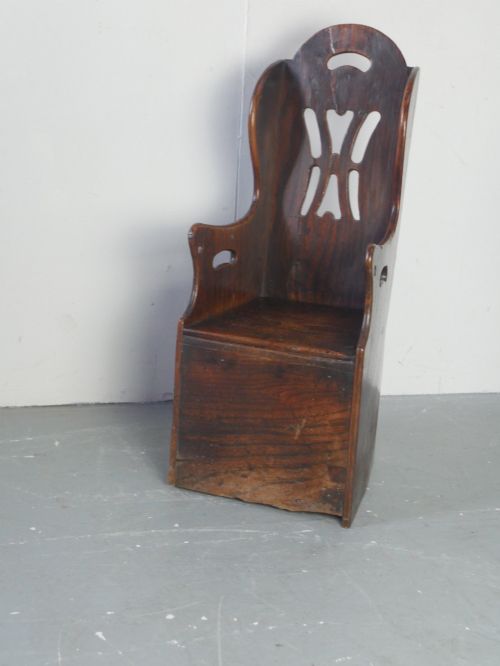
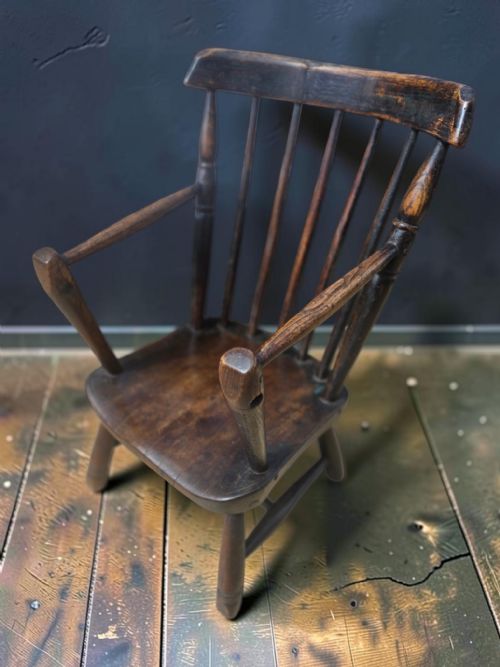
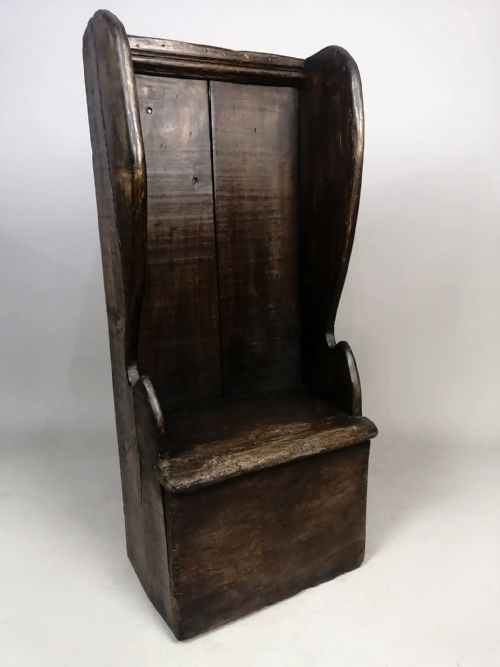
An oak childs armchair appears in various traditional forms, ranging from sturdy country stick-backs and Windsors to formal wainscot and lambing designs. The evidence shows these functional seats originating across the seventeenth, eighteenth, and nineteenth centuries, with later examples extending into the twentieth century.
Regional vernacular pieces feature prominently among these listings, including Welsh stick chairs and West Country variants. Buyers frequently encounter solid wood armchairs alongside rocking versions, high chairs, and cane-seated bergere models.
Makers adapted full-size furniture styles for smaller occupants, producing scaled-down Windsor hoops, ladderbacks, and joined oak armchairs. This domestic seating reflects the changing domestic life and nursery customs of past centuries.
Materials and construction
Makers utilised solid oak as the primary timber, often combining it with alternative woods such as elm, ash, and fruitwood for specific structural components. Traditional joinery methods, including pegging, mortise and tenon joints, and turned spindles, ensure the durability of these small frames.
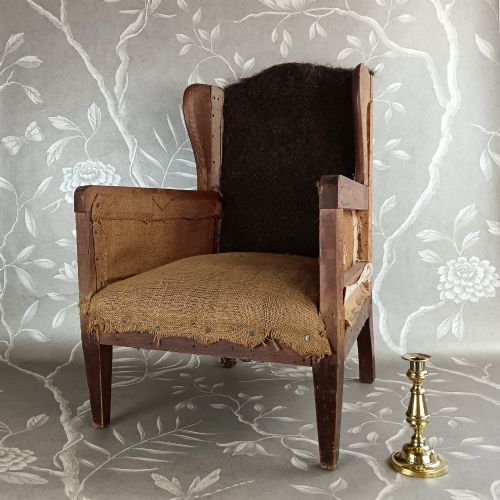
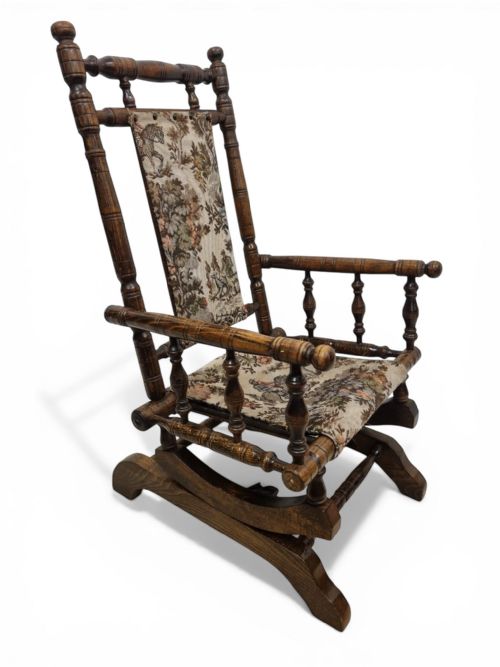
Seating areas incorporate woven rush, natural cane, solid timber planks, and upholstered pads covered in hessian, leather, or tapestry. These natural materials support the daily use these miniature chairs endured in historical households.
Oak Childs Armchair Retail Price Guide 2026
Typical asking prices for oak childs armchair among the pieces listed under this phrase on Sellingantiques today, from the lower quarter to the upper quarter. They describe what is for sale here now, not the wider market.
The inventory records oak, elm, ash, and fruitwood alongside seating in rush, cane, hessian, and tapestry.
Distinctions in craftsmanship
Quality rests in the proportion of the scaling and the integrity of the original construction rather than mere decorative elaboration. Early joined examples display crisp carving and substantial timber thickness, whereas later versions often rely on simpler turned stick-back construction.
The survival of original seating surfaces, such as hand-woven rush or early cane panels, elevates a piece. Altered underframes or replaced stretchers distinguish heavily restored examples from those retaining their initial form.
James Shoolbred
The Oak Childs Armchair Glossary
- Wainscot chair
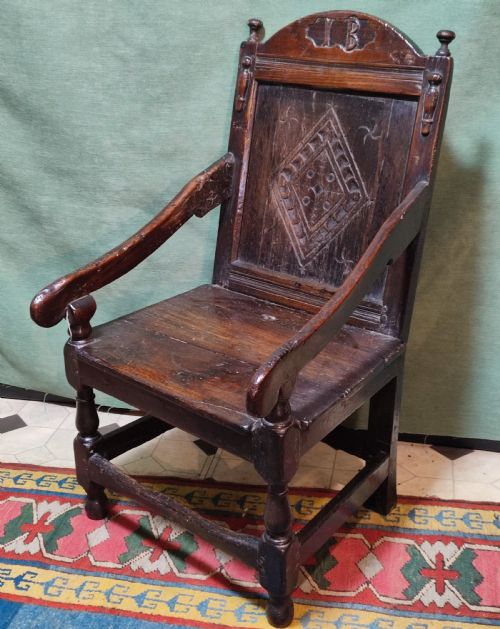
- An early wooden armchair constructed with panelled backboards and solid seat frames. These pieces typically date to the seventeenth and eighteenth centuries.
- Lambing chair
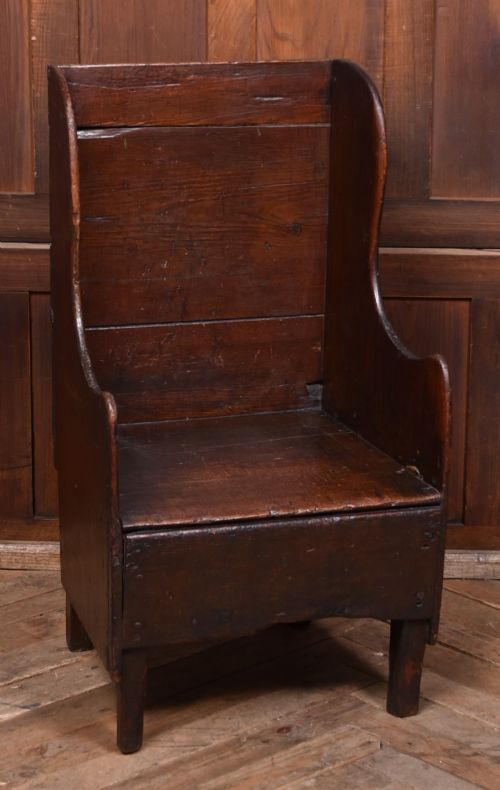
- A hooded or winged armchair traditionally designed to shelter the occupant from draughts. Miniature versions provide enclosed seating for children.
- Windsor chair
- A seat built with a solid wooden saddle-shaped seat into which the legs and back spindles are directly fitted. Stick-backs and hoop-backs are common variations of this form.
- Crinoline stretcher
- A curved hoop-shaped stretcher connecting the legs of a chair to provide rigidity. This structural feature frequently appears on eighteenth-century Windsor chairs.
- Bergere
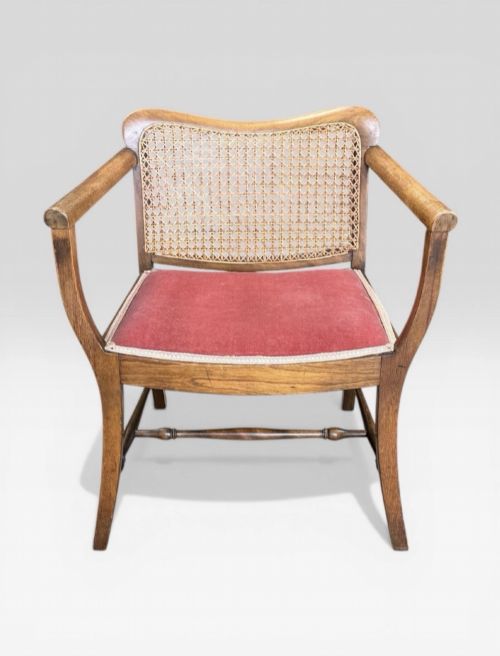
- An enclosed armchair with cane-work panels set into the back and sides. This refined style appears in nineteenth-century examples.
Oak Childs Armchair: Frequently Asked Questions
What age are these chairs?
The pieces span from the late seventeenth century through the Victorian era and into the early twentieth century. Listings include dated examples from the seventeen hundreds alongside later vernacular work.
Exact dating relies on construction techniques, timber patination, and stylistic markers specific to each period.
Were these chairs actually used by children?
These miniature seats served practical domestic purposes in nurseries and parlours for historical families. Many retain the robust construction necessary for everyday use by young occupants.
Their survival in small sizes demonstrates careful preservation by households over successive generations.
How should I care for an oak childs armchair?
Keep the timber away from direct heat sources and sudden temperature shifts to prevent wood splitting. Gentle dusting and occasional application of appropriate wax maintain the finish.
Protect rush or cane seating surfaces by avoiding excessive weight or damp environments.