

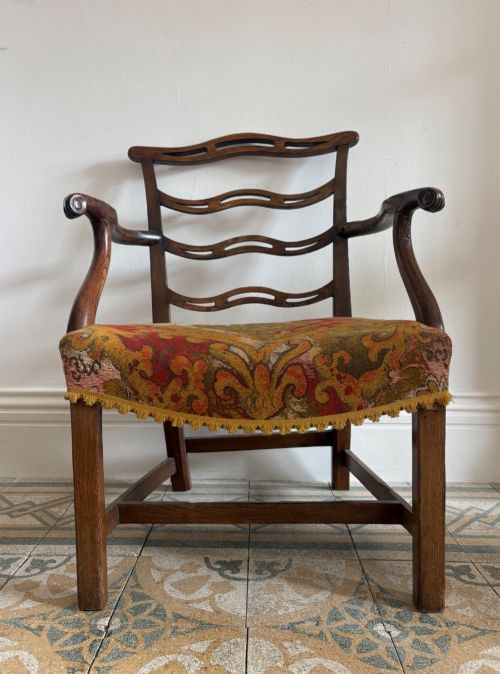
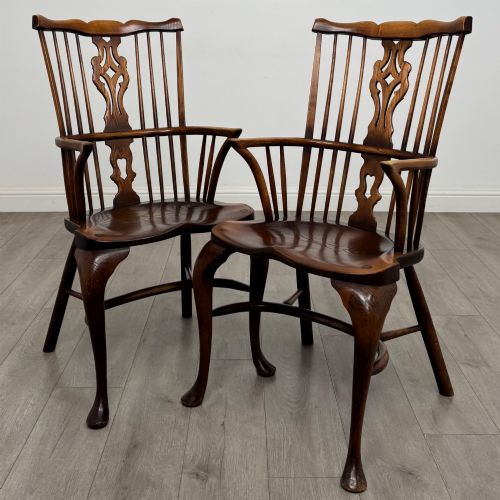
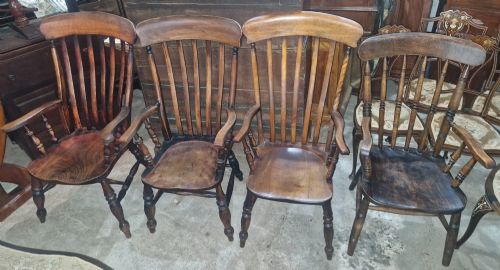
Country Carver Armchair
A country carver armchair brings honest vernacular woodwork and time-worn timber directly into a living room or kitchen.
Country Carver Armchair
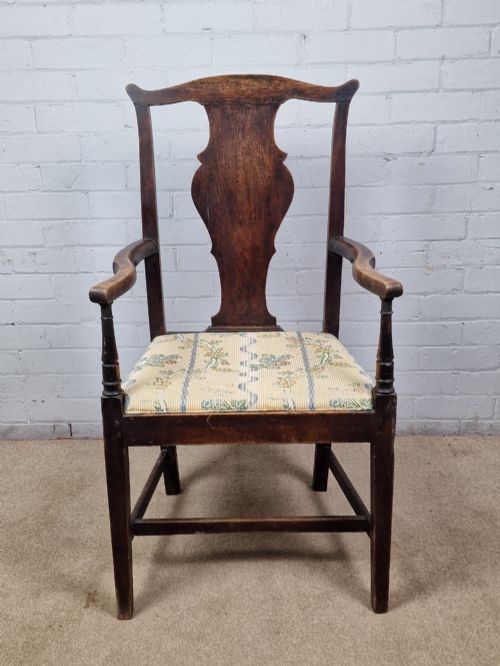
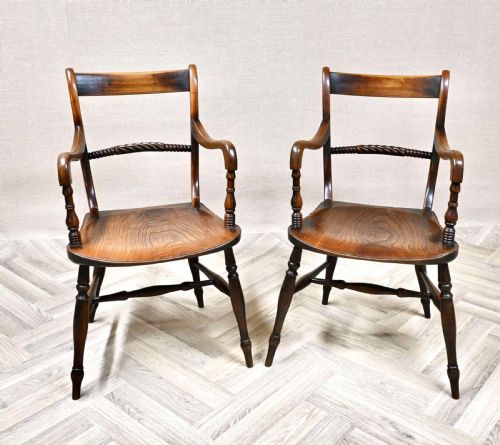
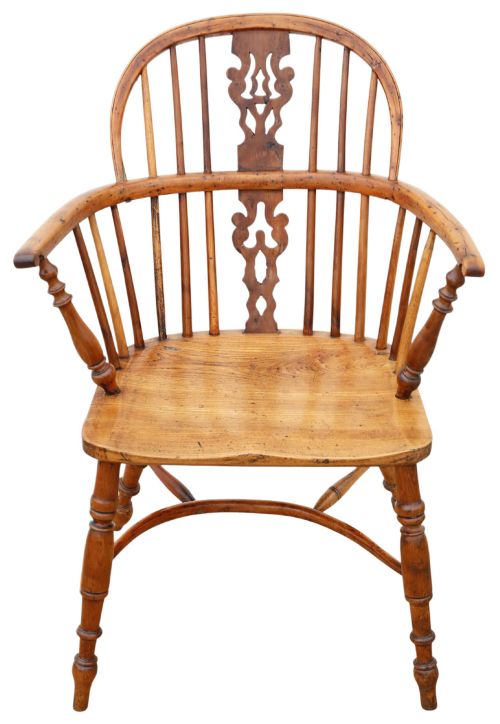
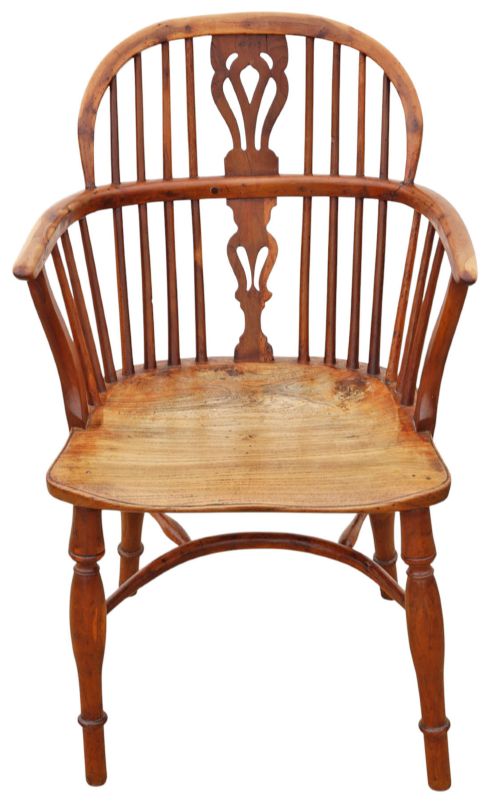
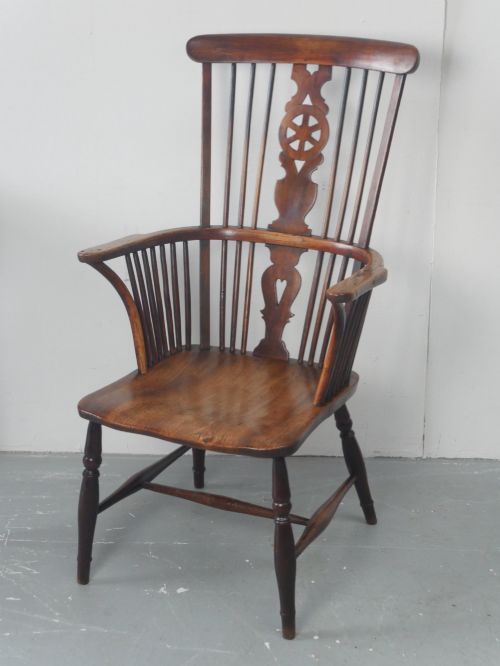
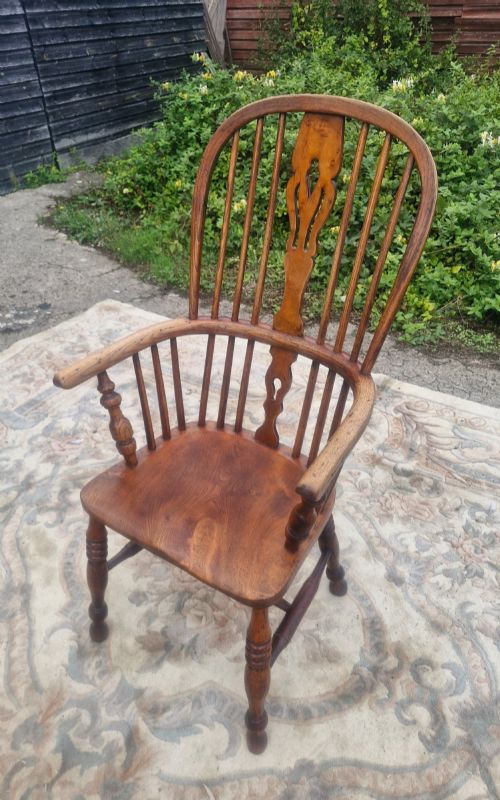
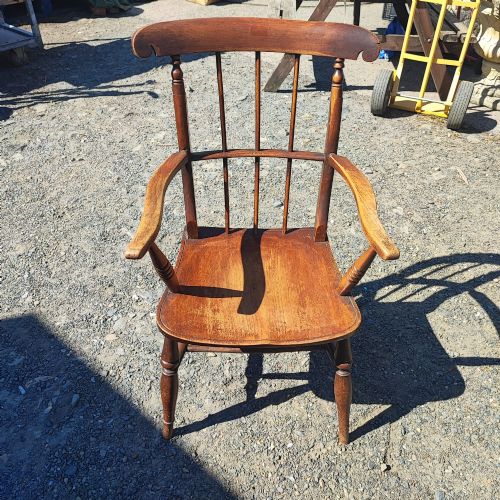
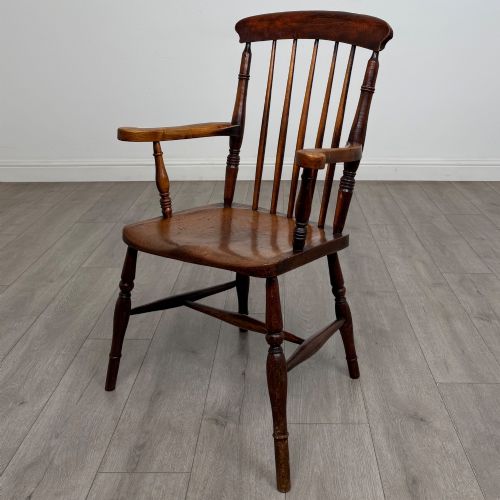
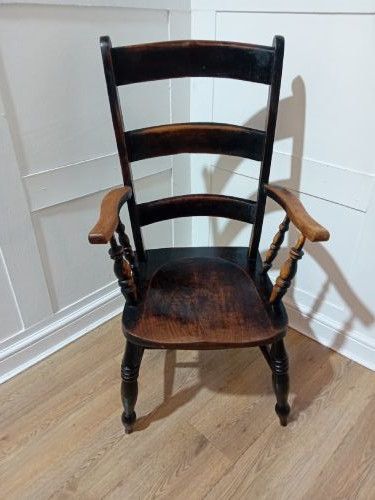
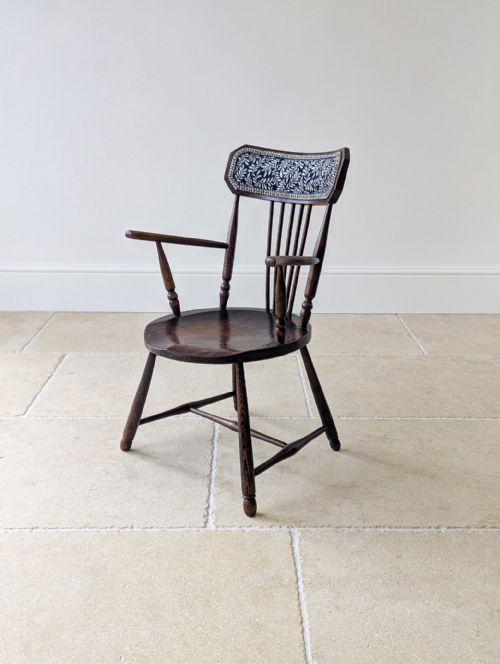
A country carver armchair is a sturdy wooden seat with armrests, built by regional makers for everyday domestic use rather than grand formal salons. You will most frequently encounter nineteenth-century windsor models, ladder-backs, and stick-backs shaped from native British timbers.
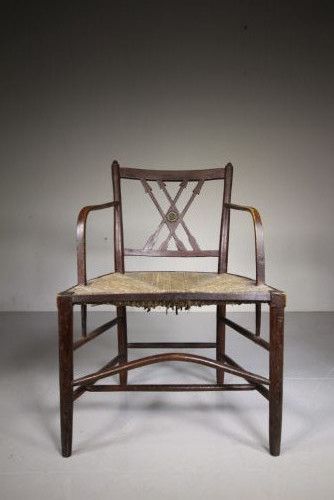
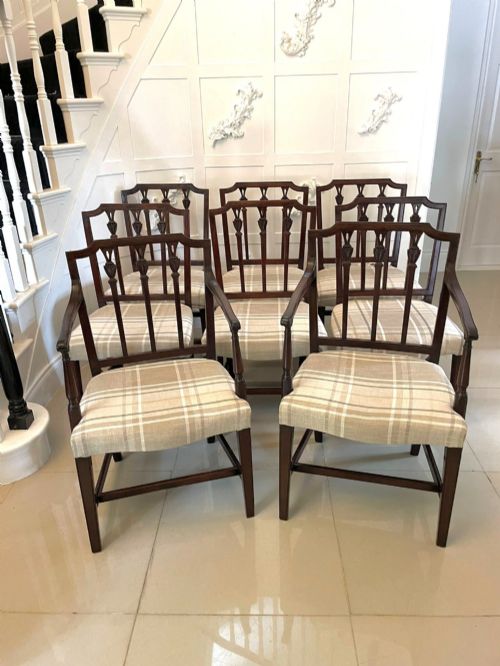
The selection spans vernacular forms originating from distinct regional traditions, including Thames Valley, Lancashire, and Macclesfield workshops. These range from high-back farmhouse kitchen seats to elegant George III examples with open arms and tapestry or rush bases.
How they were made
Local craftsmen built these chairs using a combination of turned spindles and solid timber planks, frequently pairing dense woods like elm for seats with flexible ash or beech for bow frames and legs. Many pieces incorporate yew or fruitwood to provide striking grain patterns and durable structural strength.
Seats were often hollowed out into a comfortable saddle shape using an adze, while rush or leather inserts provided resilient seating surfaces. Finish was applied through traditional methods, leaving visible tool marks and original painted or waxed surfaces intact.
The listings here demonstrate a strong presence of nineteenth-century elm and ash Windsor chairs alongside eighteenth-century Georgian ladder-backs.
What varies in quality
The distinction between ordinary and exceptional examples lies in the harmony of the timber selection and the elegance of the spindle turning. Chairs constructed with contrasting woods, such as a rich yew wood bow above an elm seat, demonstrate superior craftsmanship.
Preservation of original surface finishes and structural integrity without intrusive modern repairs elevates certain pieces above standard vernacular utility. Subtle variations in comb-back sweeps and arm scrollwork reveal the individual skill of the regional maker.
Philip Clissett
The Country Carver Armchair Glossary
- Carver
- An armchair designed with open wooden elbow supports, traditionally used at the head of a dining table or beside a hearth.
- Windsor
- A chair style featuring a solid wooden saddle seat into which the legs and back spindles are directly wedged and secured.
- Vernacular
- Objects built by regional craftsmen following local traditions rather than strict academic architectural designs.
- Rush
- Dried marsh grass twisted into cords and woven tightly to form a supportive, flexible seating platform.
- Ladderback
- A chair back constructed with horizontal arched wooden slats stacked vertically between two upright posts.
Country Carver Armchair: Frequently Asked Questions
What is a country carver armchair?
A country carver armchair is a sturdy wooden seat with armrests, traditionally built by regional makers for everyday domestic use in farmhouses and cottages.
These chairs rely on native British timbers like elm, ash, and oak, utilising traditional joinery such as turned spindles and saddle seats.
How do I identify a Windsor chair?
A Windsor chair is defined by a solid wooden seat into which the legs and back spindles are independently bored and wedged.
They appear in various regional forms, including stick-back, hoop-back, and comb-back designs from the eighteenth and nineteenth centuries.
How should I care for a rush seat?
Rush seating requires a stable indoor environment with consistent humidity to prevent the natural marsh grass from drying out and becoming brittle.
Keep these chairs away from direct heat sources and damp spaces to preserve the integrity of the woven fibres.