

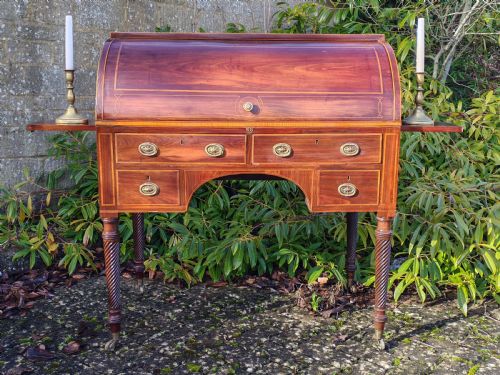


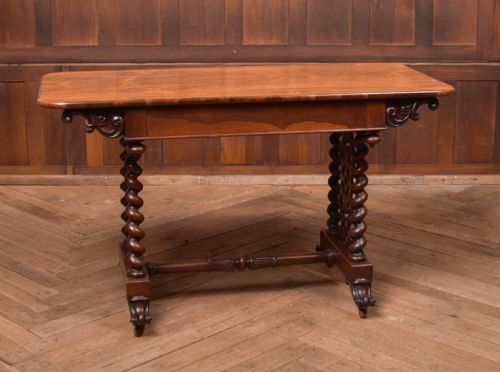
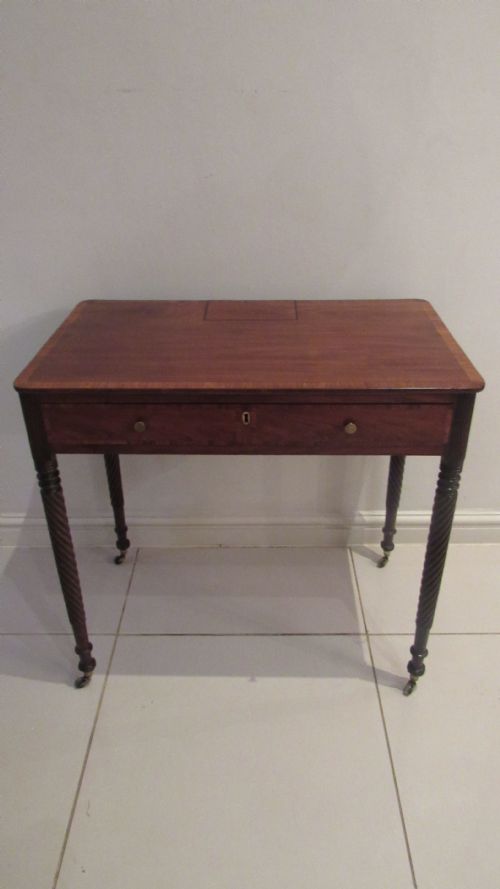

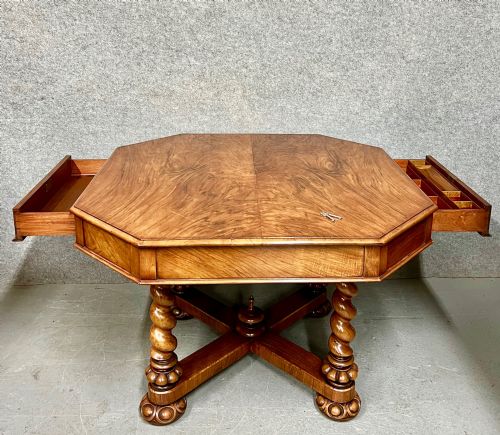


Spiral Leg Writing Desk
These spiral leg writing desks are sturdy timber workspaces built to last, offering a grand period surface for your study or library.
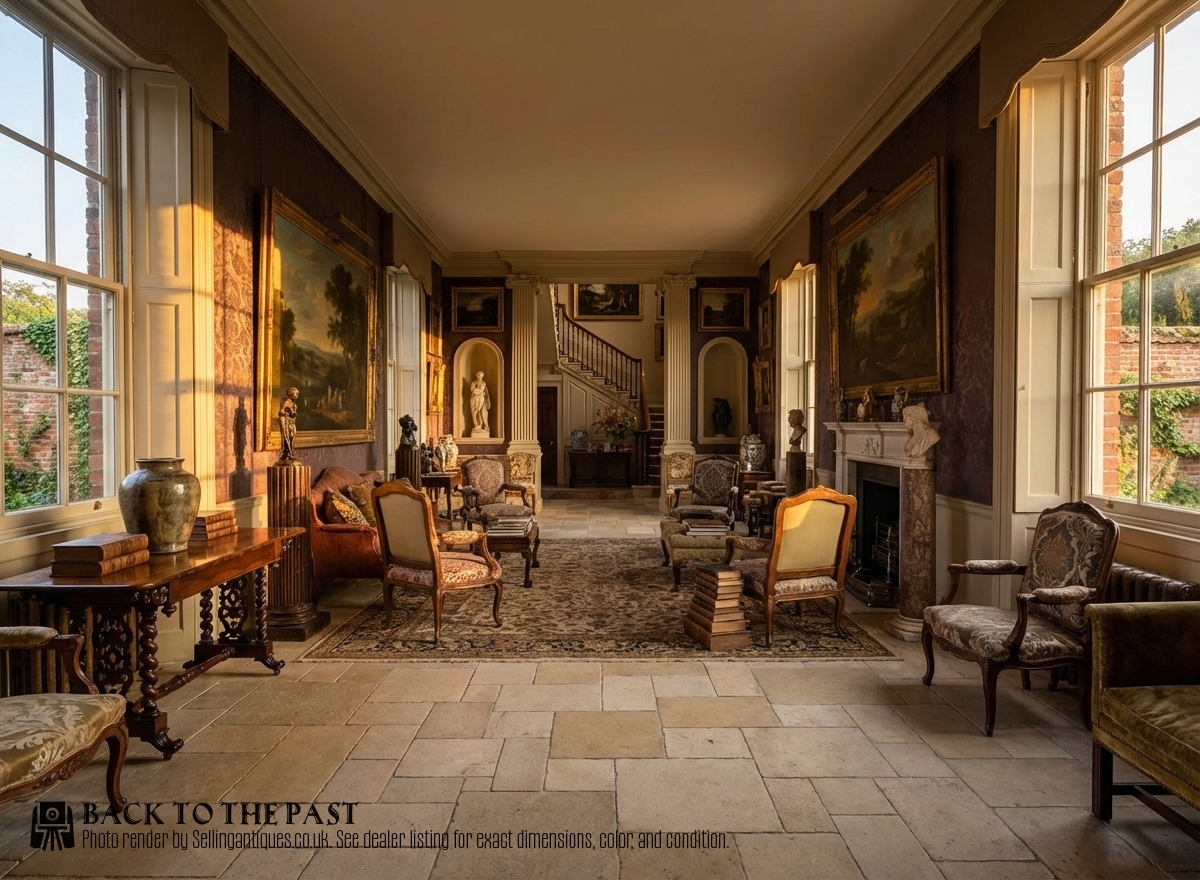
Spiral Leg Writing Desk
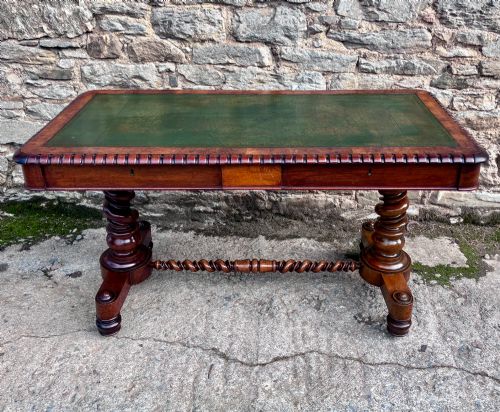
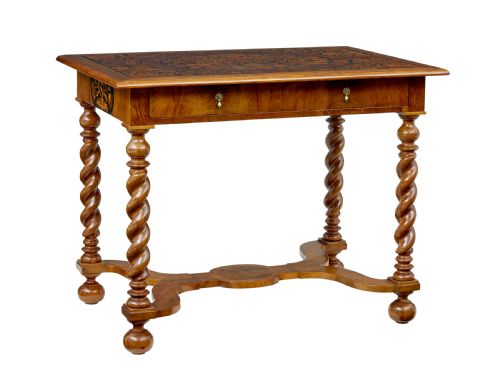
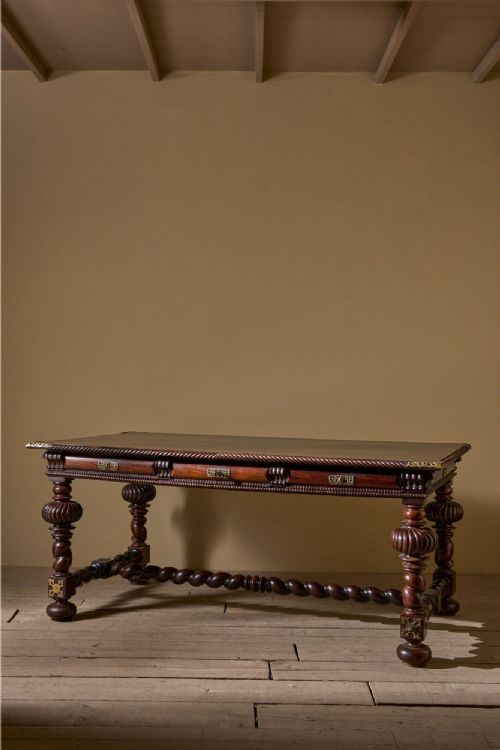
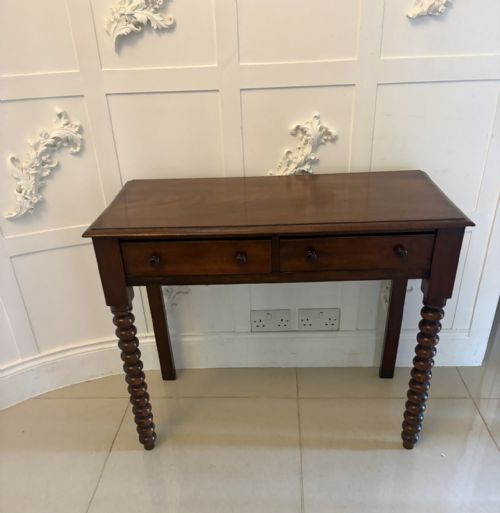
A spiral leg writing desk brings practical writing space and historic joinery together in one room, taking the form of library tables, side tables, and cylinder top desks. You are most likely to meet Victorian and Georgian examples on this page, alongside earlier pieces originating from the seventeenth century.
The timber varies from rich mahogany and walnut to dense goncalo alves and figured rosewood, often paired with leather writing surfaces. Workshops built these tables for study, correspondence, and daily administrative work in period homes.
How they were made
Cabinetmakers shaped dense hardwoods like mahogany, oak, and walnut by hand, turning timber into barley twist supports and sturdy uprights. Joinery relied on traditional framing methods to secure heavy tops and drawers without modern adhesives.
Surface decoration included intricate marquetry, satinwood inlay, and carved detailing on the structural timbers. Brass mounts and leather inserts completed the functional writing compartments.
Spiral Leg Writing Desk Retail Price Guide 2026
Typical asking prices for spiral leg writing desk among the pieces listed under this phrase on Sellingantiques today, from the lower quarter to the upper quarter. They describe what is for sale here now, not the wider market.
The forms range from compact chamber tables and side tables to large library drum tables and cylinder desks.
What varies in quality
The refinement of the timber grain and the crispness of the turned barley twist legs separate standard utilitarian pieces from finer workshop productions. Heavy rosewood, goncalo alves, and figured mahogany indicate a higher grade of material selected by the cabinetmaker.
Intricate decorative elements such as marquetry panels and satinwood inlay demonstrate superior craftsmanship. The integration of functional drawers and stable end supports also marks the distinction between everyday tables and exceptional library desks.
The Spiral Leg Writing Desk Glossary
- Barley twist
- A turned wooden leg shaped in a helical spiral resembling a twisted rope. This decorative turning appears frequently on seventeenth and nineteenth century furniture.
- Goncalo alves
- A dense exotic hardwood with striking contrasting grain patterns utilised in fine nineteenth century furniture. It provides exceptional durability and a distinctive dark finish.
- Marquetry
- The art of applying pieces of veneer to a structure to form decorative patterns and pictures. Craftsmen employed contrasting woods to create elaborate table tops.
- Cylinder top
- A curving roll-top enclosure that conceals the writing surface and pigeonholes when closed. It protects correspondence and paperwork within the desk body.
Spiral Leg Writing Desk: Frequently Asked Questions
Where should I put a spiral leg writing desk?
These tables fit well in a home study, library, or drawing room where a sturdy surface is useful for daily writing and correspondence.
Position the desk away from direct sunlight and radiators to protect the antique timber and leather writing inserts from drying out.
How do I care for the timber surface?
Dust the wood regularly with a soft, dry cloth and avoid using modern silicone polishes that build up a greasy film over time.
Feed the polished hardwood occasionally with traditional beeswax to maintain the natural lustre and protect the grain.
Can I use it for daily computer work?
These historical writing tables provide a solid platform for laptops and paperwork, though drawer depths vary according to the period.
Ensure that you check the internal dimensions of any writing compartment if you intend to store modern office equipment.
How do I identify the age of the desk?
Examine the secondary timbers inside the drawers, the hand-cut joinery, and the style of the turned barley twist legs.
Victorian and Georgian pieces display different proportions and wood selections compared to earlier seventeenth-century marquetry examples.