
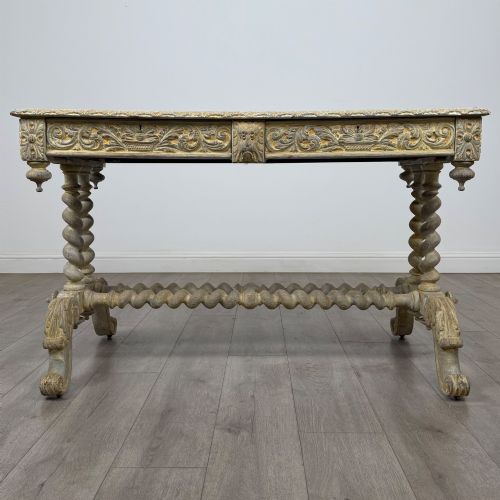

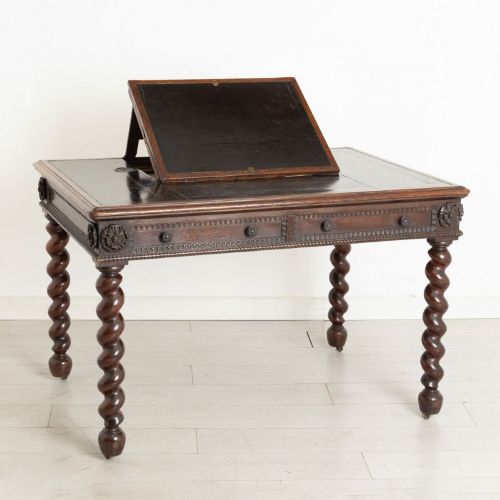
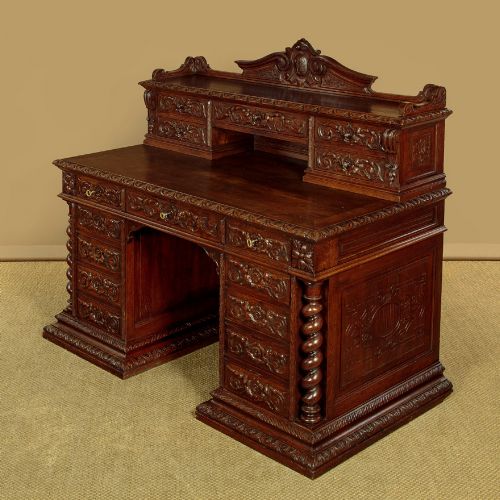

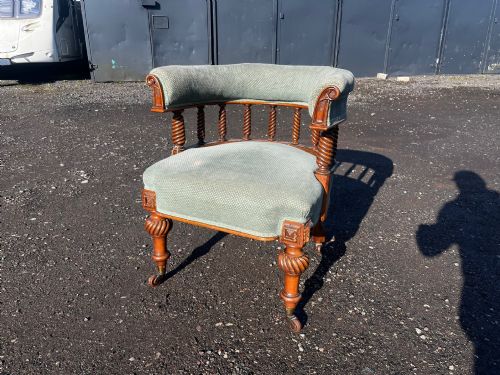


Victorian Barley Twist Desk
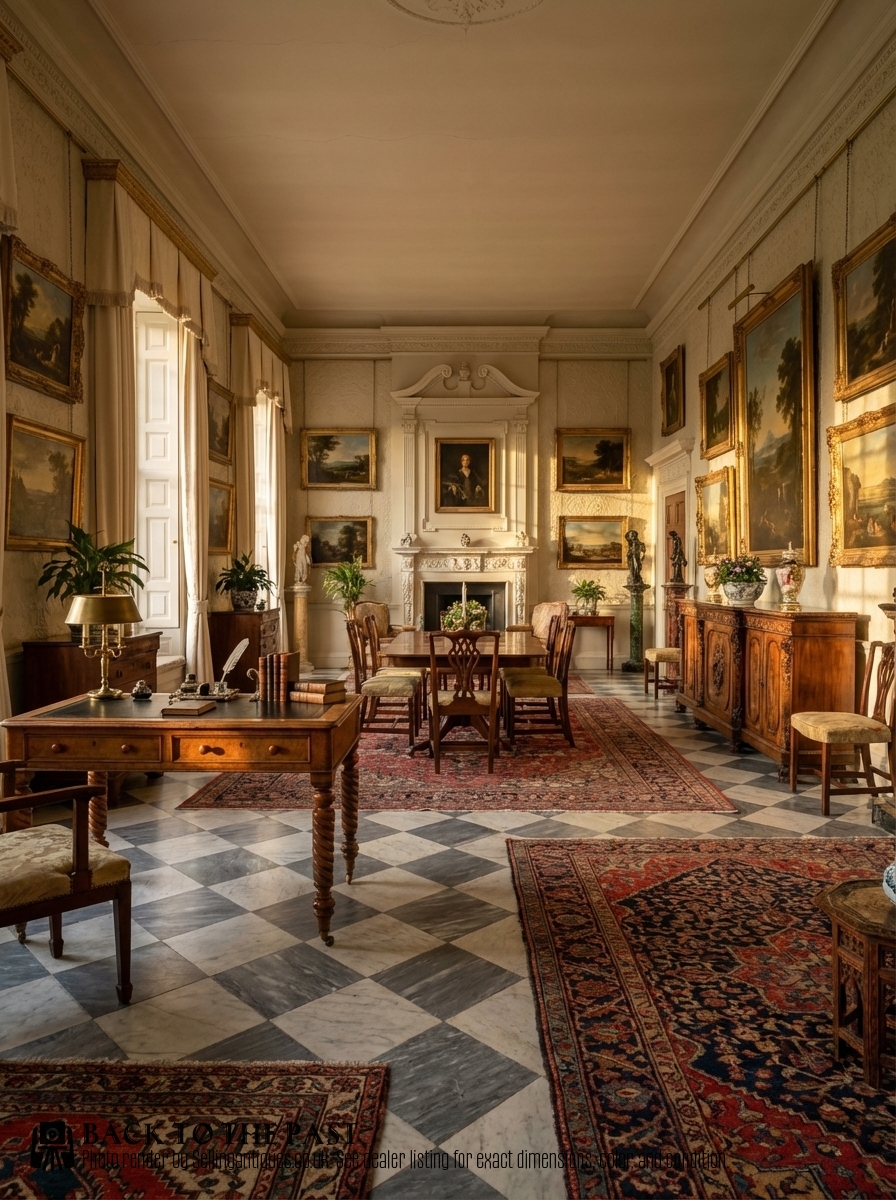
A victorian barley twist desk brings tactile warmth to a study through turned timber legs and fitted writing surfaces.
Victorian Barley Twist Desk
A victorian barley twist desk combines the practical writing surfaces of the nineteenth century with the distinctive spiral turnings inspired by earlier Jacobean design. Buyers searching for a victorian barley twist desk encounter substantial writing tables, kneehole desks, and architectural pieces produced across the period from eighteen-fifty to eighteen-ninety.
The survival of these pieces reflects a strong preference for durable timbers that could handle intensive daily correspondence and study. Oak predominates among the surviving examples, often accompanied by walnut, mahogany, and rosewood, establishing a rich palette of dark woods suited to traditional interiors.
Materials and Technique
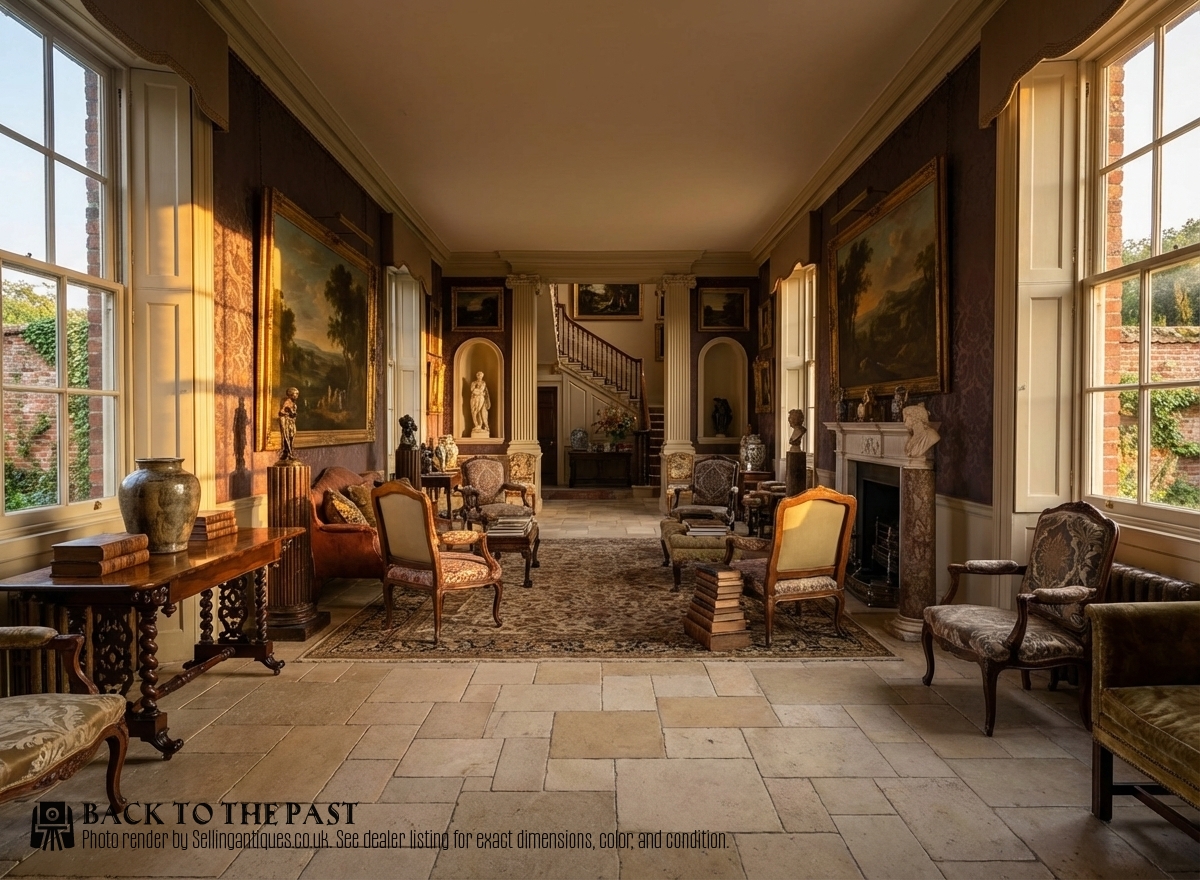
Cabinet makers utilised dense hardwoods like oak, walnut, and mahogany, turning structural elements on lathes to create the characteristic spiral profiles. These turned components support heavy writing surfaces often inset with tooled leather or fabric panels.
Joinery relied on traditional mortise and tenon construction, paired with hand-carved decorative details that aligned with Gothic Revival and Neo-Jacobean tastes. Brass hardware and fittings appeared regularly on drawers, complementing the darker tones of the timber.
The listings show oak as the predominant timber, alongside walnut, mahogany, and rosewood.
Judging Quality
Quality rests upon the crispness of the spiral turning and the depth of the hand-carved ornamentation integrated into the frame. Superior examples display tight, uniform twists executed in solid timber rather than applied veneer.
The integrity of the writing surface and the smoothness of the drawer construction distinguish exceptional pieces from standard utilitarian furniture. Choice of secondary timbers and the retention of original brass fittings further elevate a desk's standing.
C. Hindley & Sons
The Victorian Barley Twist Desk Glossary
- Barley Twist
- A form of wood turning resembling a spiral rope or column. It gained popularity during the seventeenth century and saw a major revival during the Victorian era.
- Kneehole Desk
- A freestanding desk featuring a central recess for the user's legs, flanked by pedestals containing multiple drawers.
- Neo-Jacobean
- A nineteenth-century revival style that reinterprets seventeenth-century English design, often featuring heavy carving and dark oak.
- Davenport Desk
- A compact Victorian desk featuring a sloping, hinged writing surface above a set of side drawers.
- Library Table
- A large freestanding table designed to be placed in the centre of a room, often fitted with drawers and finished on all sides.
Victorian Barley Twist Desk: Frequently Asked Questions
How were these desks used?
These desks served for correspondence, study, and administrative tasks in nineteenth-century homes and libraries. Fitted drawers held writing materials, paper, and personal records.
Many designs allowed the desk to sit freestanding in the middle of a room rather than against a wall.
How do I care for a Victorian wood desk?
Protect the timber and leather surfaces by keeping the desk away from direct sunlight and sudden temperature changes. Regular dusting with a dry cloth maintains the finish without moisture damage.
Condition leather inserts periodically with appropriate specialist balms to prevent cracking.
How can I tell the period of a desk?
Dating relies on timber selection, construction methods, and stylistic details such as hardware and carving motifs. Victorian pieces frequently employ solid oak, walnut, or mahogany with hand-cut dovetail joints.
Revival styles often incorporate specific historical references that help narrow down the decade of production.