

Spindle Back Wooden Armchair
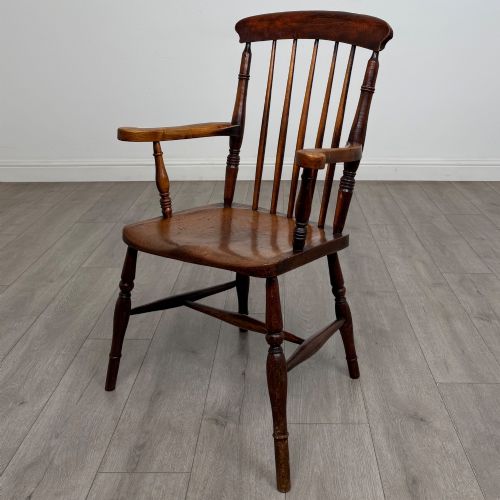
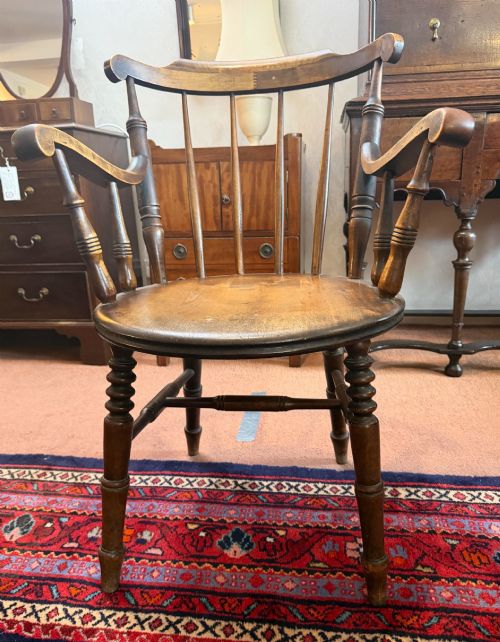
A spindle back wooden armchair brings robust vernacular craftsmanship and organic timber character straight into a modern interior.
Spindle Back Wooden Armchair
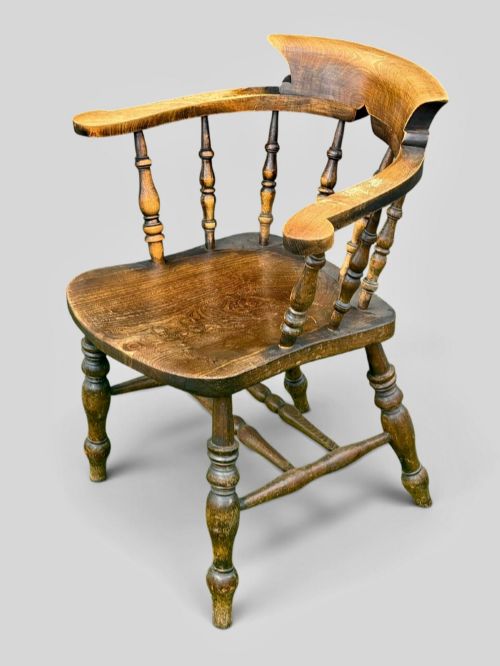
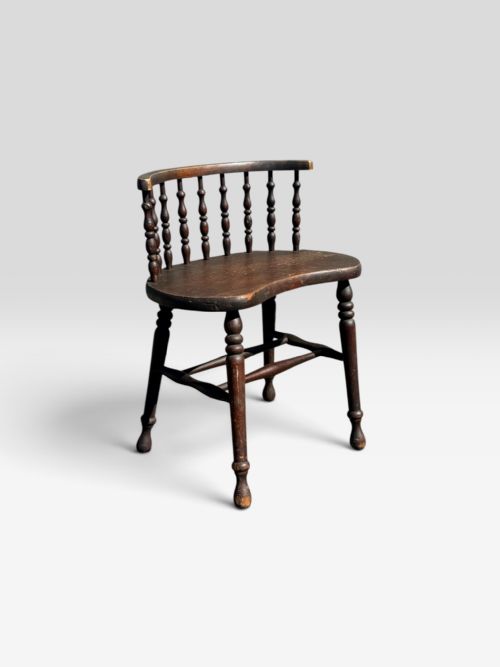
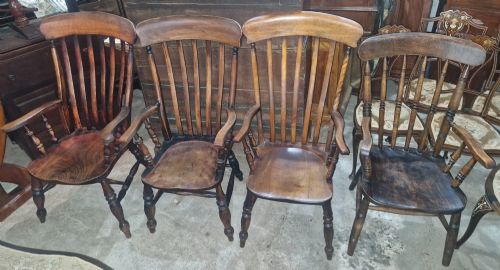
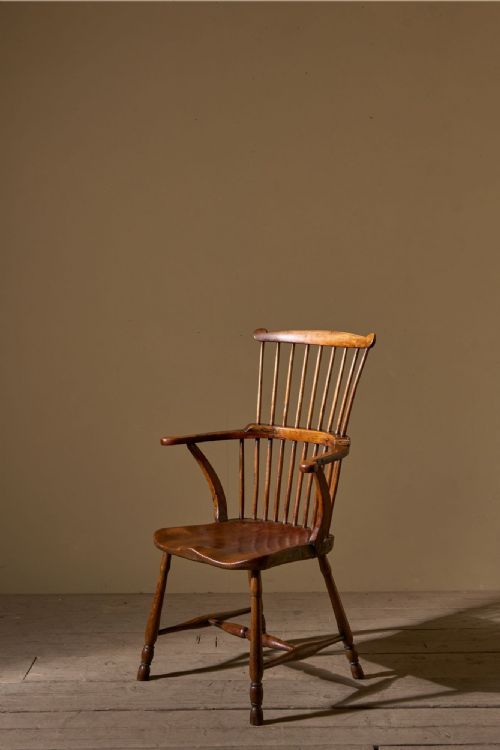
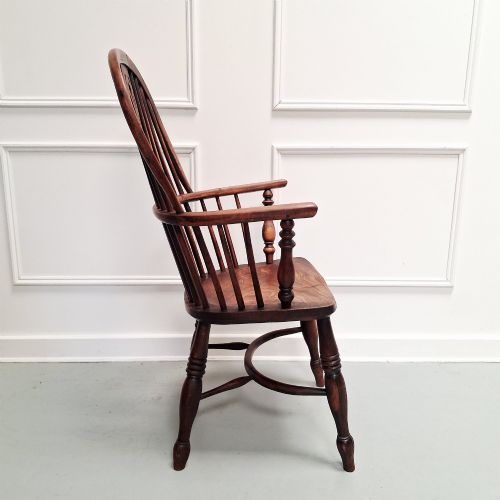
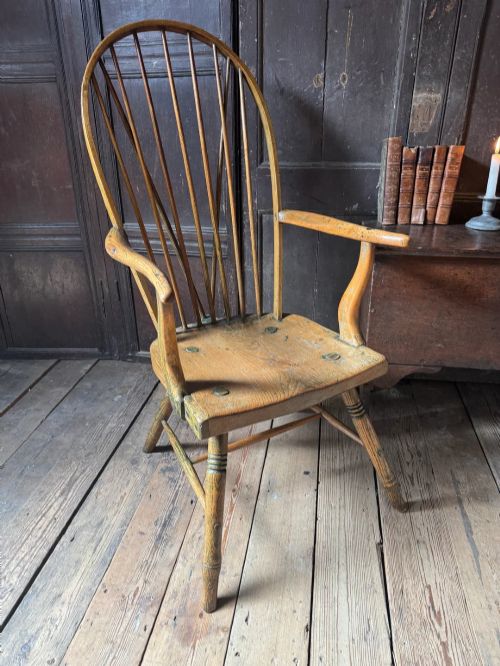
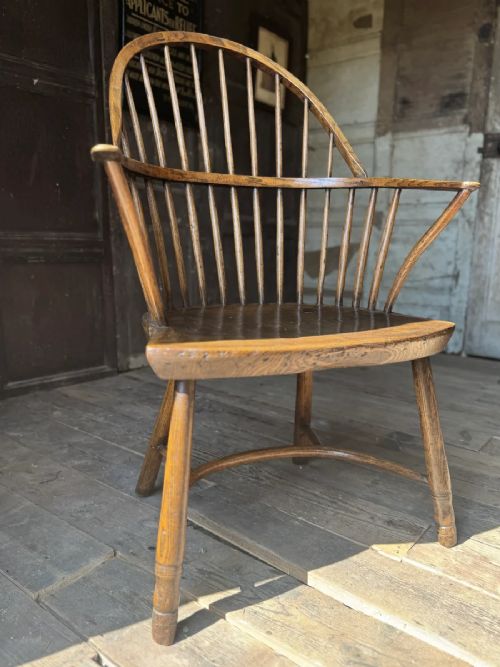
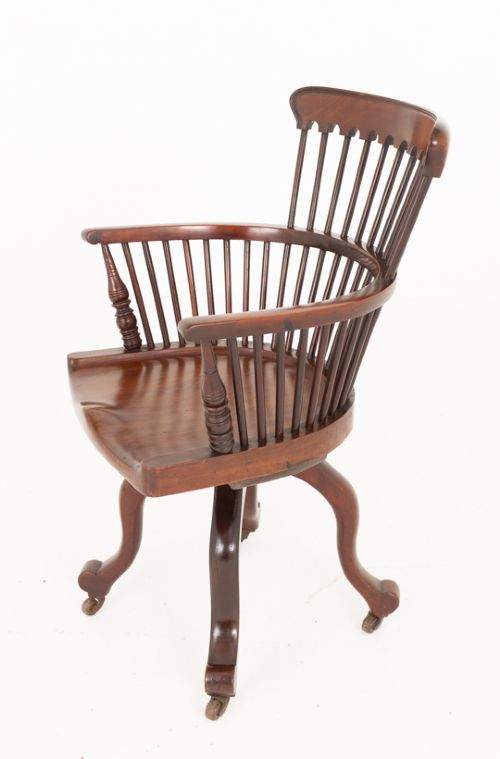
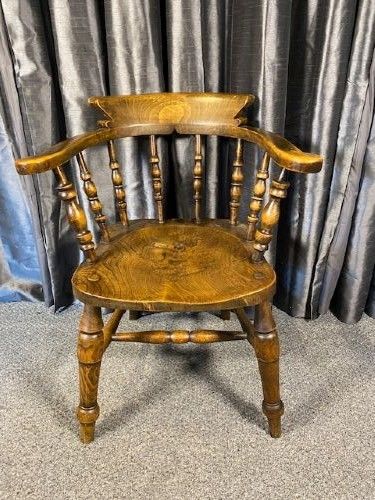
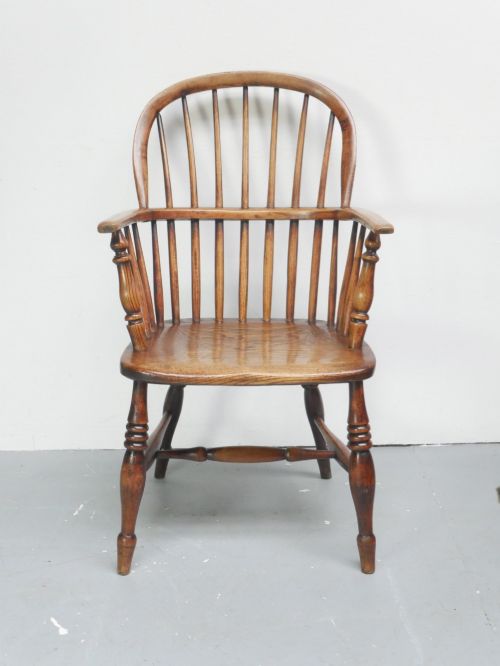
A spindle back wooden armchair provides a sturdy seating option shaped by English country and vernacular traditions across the eighteenth, nineteenth and early twentieth centuries. These pieces appear frequently as Windsor, Captain's, farmhouse and office desk chairs, often combining different timbers within a single frame.
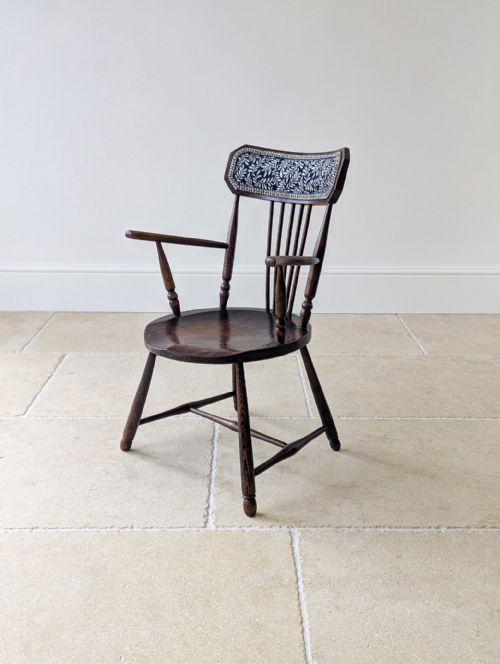
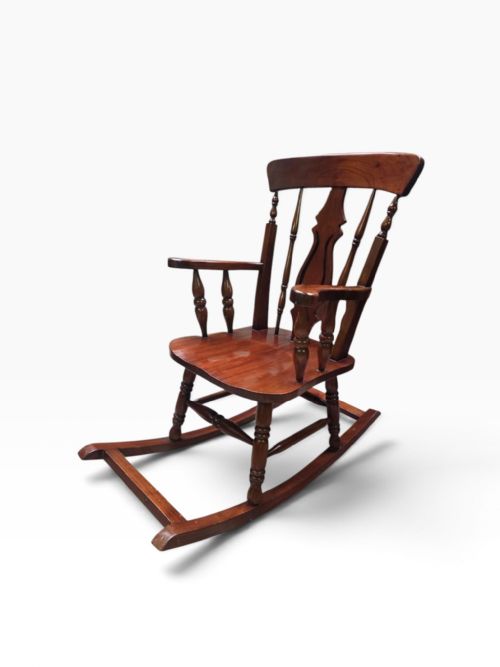
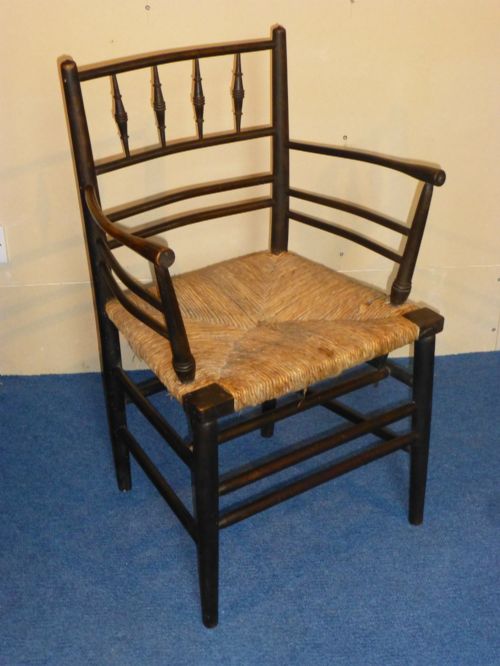
The selection ranges from early Georgian comb-back and high hoop-back designs to late Victorian rocking chairs, smoker's bows and Arts & Crafts seating. Most examples rely on combinations of ash, elm and beech, occasionally featuring rush seats or turned supports.
How they were made
Maker construction relies on traditional Windsor and vernacular woodworking techniques, utilising steam-bent wood for curved backs and armrails alongside turned spindles. Seats are typically carved from solid elm or fitted with woven rush inserts.
Makers paired contrasting native hardwoods like ash for legs and stretchers with elm for solid saddle seats, ensuring structural resilience. Frames use wedged tenon joints and pegged construction rather than modern metal fasteners.
The inventory includes forms spanning standard armchairs, desk chairs, rocking chairs, dining chairs, corner chairs, high chairs and side chairs.
What varies in quality
Quality depends on the harmony of timber selection, such as striking grain figure in an elm seat matched to well-turned ash spindles. Proportions, arm scrollwork and the retention of original surface patination distinguish finer country vernacular pieces from standard utilitarian seating.
Structural integrity rests on the tightness of joints and the retention of original components like crinoline stretchers or turned bobbin frames. Pieces retaining authentic surface wear and unblemished timber grain command greater appreciation.
Morris & Co·Philip Webb·J Spencer
The Spindle Back Wooden Armchair Glossary
- Windsor chair
- A chair built with a solid wooden seat into which the legs, back and arms are independently inserted. This method creates a robust framework typical of English country furniture.
- Crinoline stretcher
- An arched underframe connecting the legs of a chair to provide additional structural rigidity. It earned its name from a perceived resemblance to nineteenth-century hooped crinoline petticoats.
- Smoker's bow
- A low-backed Windsor armchair featuring a continuous curved armrail supported by turned spindles above a thick wooden seat. These chairs were common in provincial inns and farmhouses.
- Rush seat
- A seating surface woven from dried marsh rushes around a wooden frame. It yields a textured, resilient pad found on various vernacular and Arts & Crafts chairs.
Spindle Back Wooden Armchair: Frequently Asked Questions
What is a crinoline stretcher?
A crinoline stretcher is a curved, hooped wooden brace linking the legs of a chair beneath the seat. It reinforces the underframe and adds distinctive aesthetic detail to the piece.
This structural element appears frequently on eighteenth and nineteenth-century vernacular seating. It prevents the legs from splaying under heavy daily use.
Where were these armchairs originally used?
These armchairs served various practical functions in farmhouses, country cottages, provincial offices and inns. They provided durable seating for kitchens, firesides and writing desks.
Their robust construction made them suitable for everyday domestic labour. Over time, their utility transitioned into decorative and functional seating within period and modern homes alike.
How do I care for a wood and rush chair?
Preserving these chairs involves maintaining stable indoor humidity to prevent timber cracking and natural rush drying. Gentle dusting and occasional application of appropriate wood wax protect the surface finish.
Keeping rush seats dry avoids moisture damage to the woven plant fibres. Placing chairs away from direct heat sources ensures the wood and joints remain stable.