

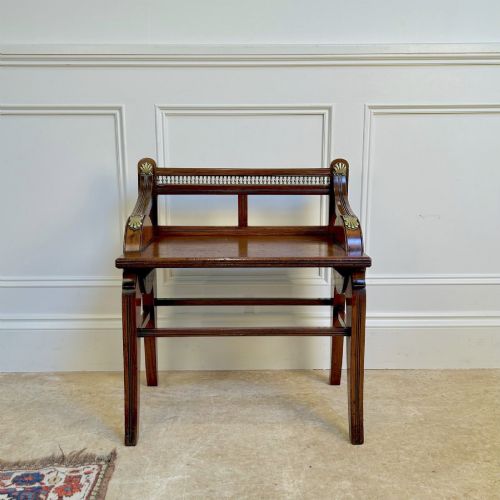
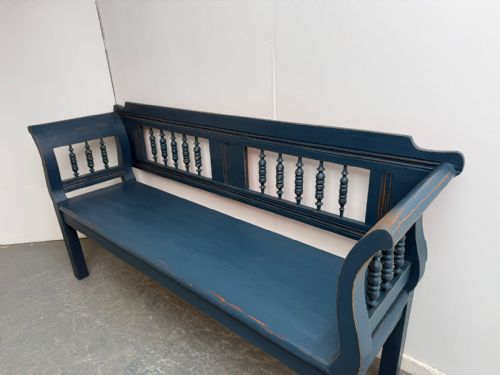
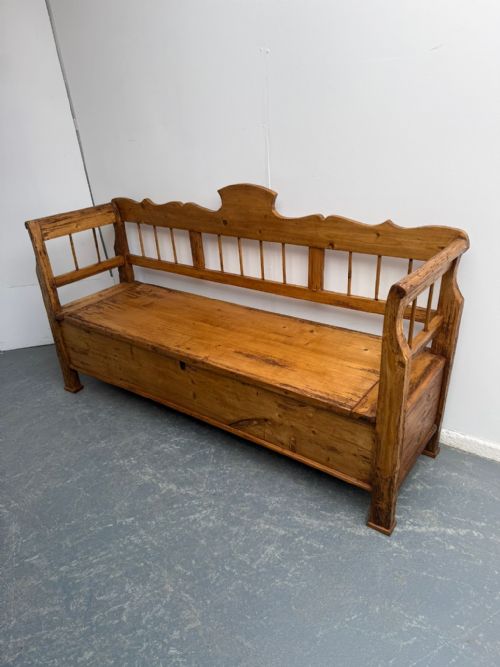


Spindle Back Bench Seat
A spindle back bench seat brings country character and honest woodwork into a room, offering practical seating shaped by European provincial traditions.
Spindle Back Bench Seat
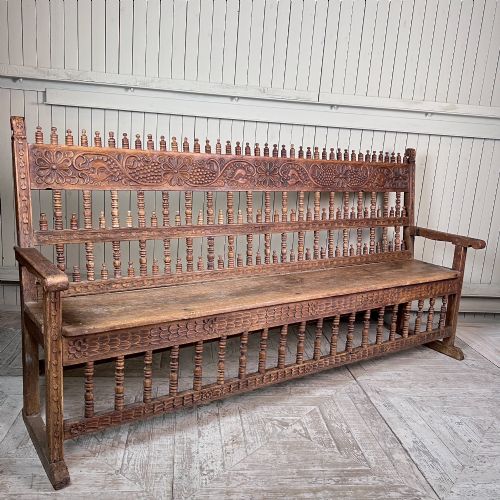
When you search for a spindle back bench seat, you encounter long seating forms rooted in European country traditions, spanning the eighteenth and nineteenth centuries. These pieces encompass regional variations including Hungarian folk art, rustic Swedish painted pine, and Spanish colonial hardwood.
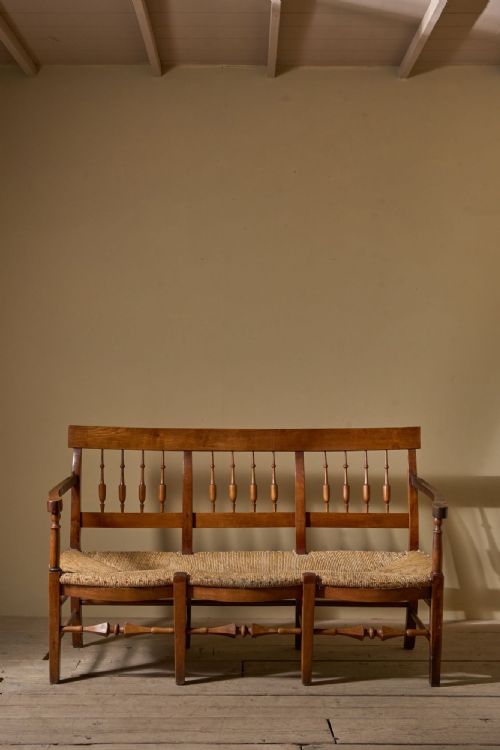
The versions most frequently met on this page include nineteenth-century pine benches and settlement forms featuring waxed or painted surfaces. They range from simple two-seater configurations to larger three-seater examples, often incorporating rush seating or box settles.
Makers drew on vernacular styles such as Gustavian, rustic farmhouse, and French provincial to construct functional seating for halls, bedrooms, and living spaces. The construction prioritises sturdy utility combined with simple decorative spindles supporting the backrest.
How they were made
Makers utilised solid timbers including pine, fruitwood, hardwood, and chestnut, shaping them with hand tools to build robust frames and supportive spindle backs. Surfaces were frequently finished with natural wax, historical paint layers, or left in a bleached state.
Joinery relied on traditional pegging and mortise and tenon construction to ensure structural stability across long spans. Additional materials such as rush for seating weaves and iron fastenings appear on specific regional examples.
Spindle Back Bench Seat Retail Price Guide 2026
Typical asking prices for spindle back bench seat among the pieces listed under this phrase on Sellingantiques today, from the lower quarter to the upper quarter. They describe what is for sale here now, not the wider market.
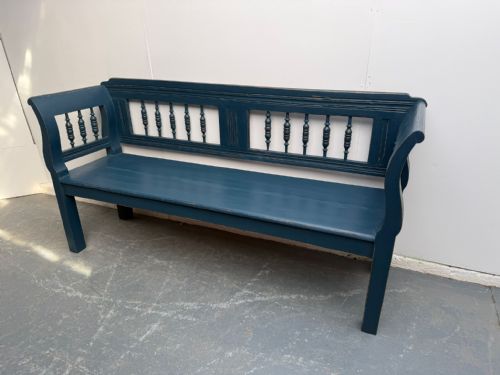
Several pieces arrive wearing cheerful blue paint applied generations ago in Hungarian farmhouses.
What varies in quality
The integrity of the original timber and the survival of early or untouched paint surfaces largely determine the character of each piece. Superior examples retain their original structural joinery without excessive timber replacement.
Proportion and the fineness of the turned spindles separate straightforward utility items from finer provincial workshop production. The balance between the backrest design and the seat proportion dictates the visual weight of the bench.
The Spindle Back Bench Seat Glossary
- Settle
- A wooden bench with a high back, solid arms, and often a storage box beneath the seat. This form provided draught protection in traditional interiors.
- Rush
- Dried marsh grass twisted into cords and woven to form flexible, supportive seats. It appears frequently on provincial chair and bench frames.
- Gustavian
- The Swedish interpretation of French neoclassical style, characterised by restrained carving and pale painted finishes. This style dates from the late eighteenth century onwards.
- Fruitwood
- Dense timber harvested from fruit-bearing trees such as pear, apple, or cherry, chosen for close grain and smooth turning qualities. Makers utilised it for structural and decorative elements.
Spindle Back Bench Seat: Frequently Asked Questions
Where should I place a spindle back bench seat?
These benches suit entrance halls, long corridors, or foot-of-the-bed placements where their narrow profile provides useful seating without blocking movement.
In living areas, they function well against plain walls, allowing the turned spindles and painted or waxed timber surfaces to stand out.
How do I care for a waxed pine bench?
Apply a natural beeswax periodically using a soft cloth to nourish the old timber and maintain a gentle sheen. Avoid placing the wood near direct heat sources to prevent shrinkage.
Clean surfaces with a dry cloth and avoid modern liquid polishes that can build up a sticky residue over the historic finish.
Are painted finishes on these benches original?
Many nineteenth-century pieces retain their early or original paint layers, often showing natural wear and softening over time. Examination of the surface reveals craquelure and pigment depth consistent with age.
Later overpainting sometimes occurs, so inspecting layers under natural light helps determine the chronological depth of the finish.