
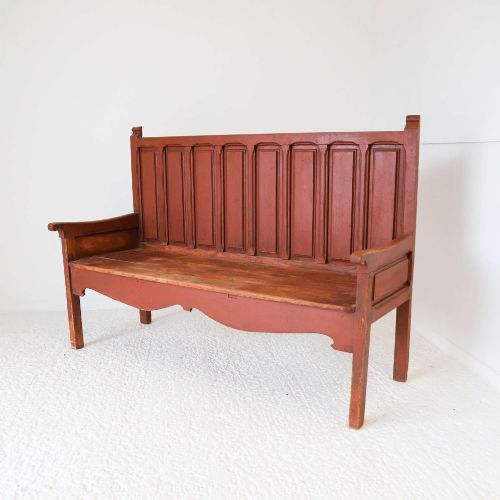
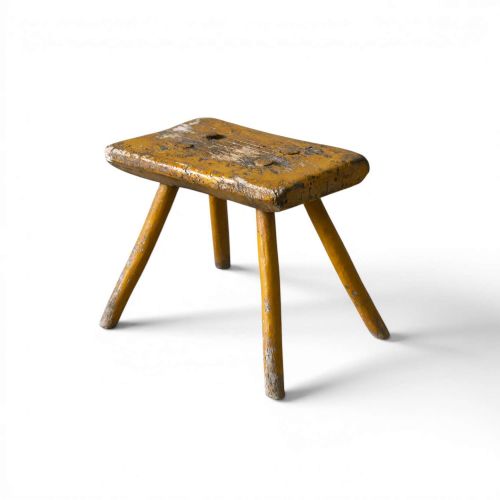
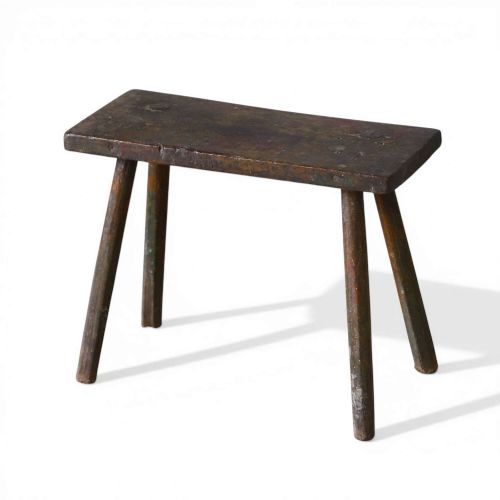
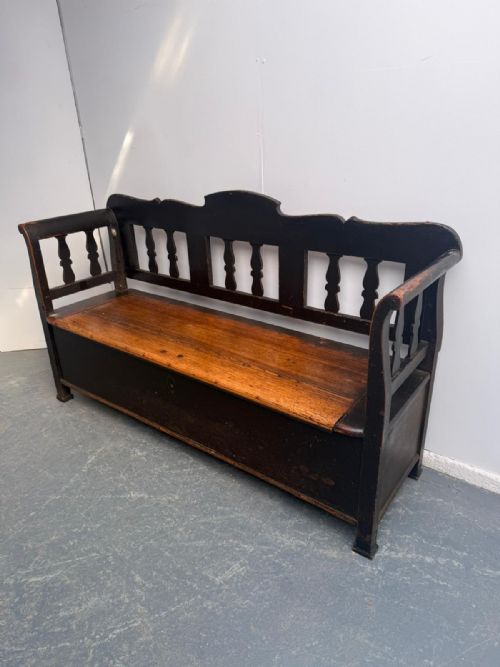
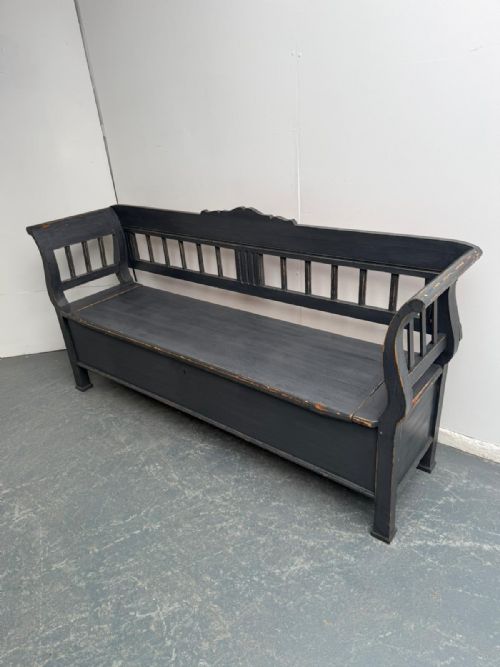

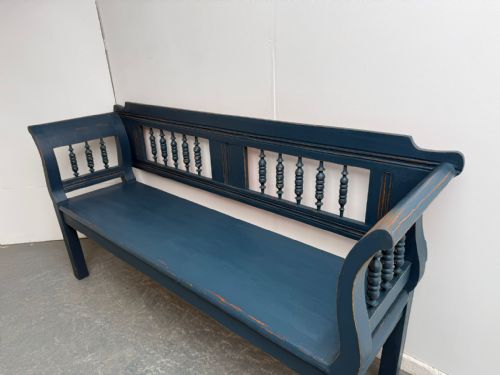

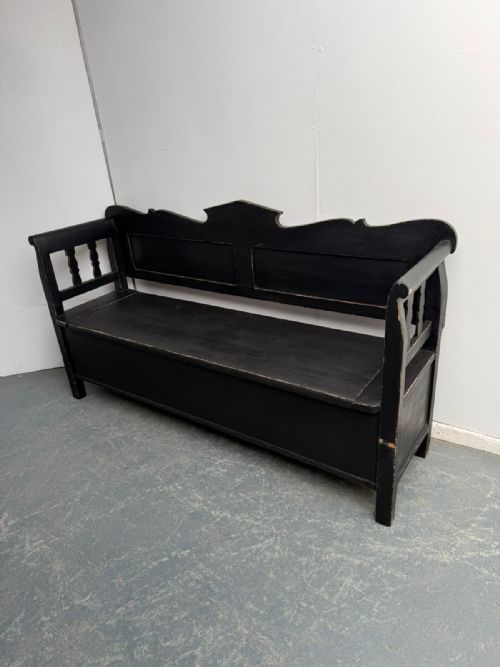

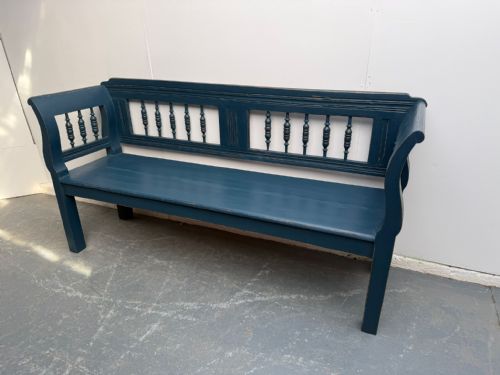

Painted Pine Bench Seat
A painted pine bench seat brings rustic charm and practical utility to a hallway or kitchen, offering enduring folk character.
Painted Pine Bench Seat
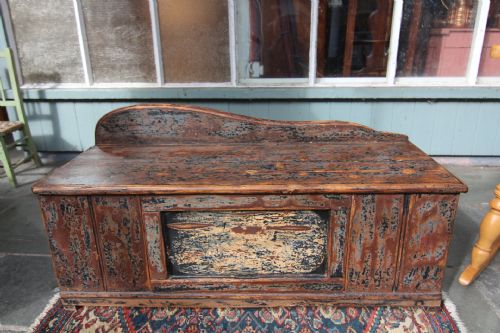
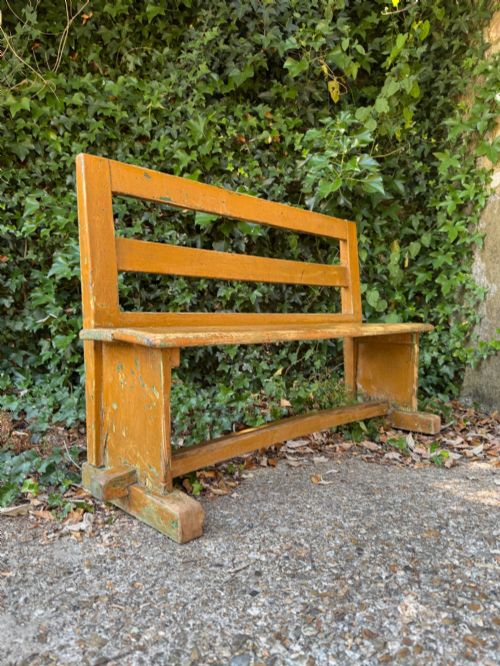
A painted pine bench seat combines vernacular timber construction with decorative surface pigment, serving domestic seating needs across rural Europe and Britain. These pieces range from simple window seats and tavern settles to long dining benches and storage boxes.
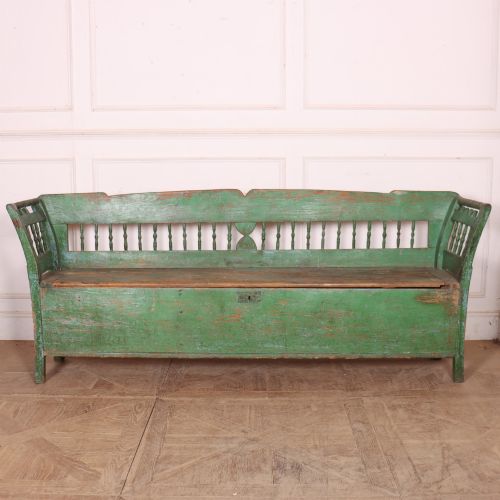
Hungarian and Scandinavian examples frequently appear on this page, often featuring original blue, grey, black, or green paint. Buyers also encounter English, Welsh, Spanish, and Austrian variants spanning the eighteenth and nineteenth centuries.
How they were made
Makers utilised native softwoods, principally pine and timber, joining boards with pegged mortise and tenon joints suited to robust daily use. Surfaces received coats of oil- or water-based paint, sometimes finished with ochre, scumble, or hand-painted folk art details.
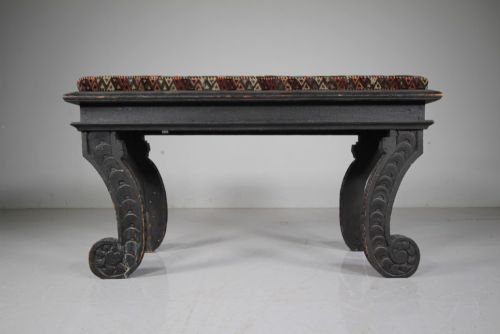
Structural elements occasionally incorporate iron fixings or ceramic components, while some examples include textile additions for cushioning. Scratch-built and vernacular construction methods ensure each item displays individual carpenter marks and localized building traditions.
Geographic origins represented on this page include England, Wales, Sweden, Hungary, Austria, France, and Spain.
What varies in quality
The survival of original surface paint largely defines the character and desirability of each piece, distinguishing honest historic patination from later redecoration. Traces of early blue, green, grey, or ochre pigments contribute significantly to visual appeal.
Proportion and form also determine distinction, separating standard utility furniture from more ambitious Gustavian-inspired designs, barrel back settles, or intricately panelled Welsh and Hungarian examples.
The Painted Pine Bench Seat Glossary
- Pine
- A softwood timber commonly used in vernacular furniture making due to its availability and workability. It takes paint finishes readily.
- Settle
- A wooden bench with a high back, solid arms, and often a storage box beneath the seat. It historically protected occupants from draughts.
- Scumble
- A translucent or broken colour glaze applied over a base coat to imitate grain or create textured decorative patterns on timber.
- Box settle
- A form of seating featuring a hinged lid beneath the seat base for storing household goods. It maximises utility in small rural rooms.
- Vernacular
- Everyday furniture built by local carpenters using regional traditions and available materials rather than following high-style academic designs.
Painted Pine Bench Seat: Frequently Asked Questions
Where should I place a painted pine bench seat?
These pieces suit narrow hallways, boot rooms, or farmhouse kitchens where they provide convenient seating and occasional storage.
They also sit comfortably against dining tables or beneath windows to make effective use of domestic space.
How do I care for original painted surfaces?
Protect the finish by keeping the timber away from direct heat sources and strong sunlight that can cause drying or fading.
Dust gently with a dry or barely damp cloth and avoid harsh chemical cleaners that might strip historic pigment.
What is the difference between a bench and a settle?
A standard bench offers open seating without a high protective backrest or integrated sides.
A settle includes a high back, solid arms, and sometimes an enclosed box base designed to block cold draughts in older homes.
How can I identify regional styles?
Regional characteristics often appear in the paint colour choices, moulding profiles, and construction joints employed by local makers.
For instance, Hungarian and Scandinavian pieces frequently display distinct blue, grey, or green painted finishes with folk art motifs.