



Painted Pine Box Settle
A painted pine box settle combines robust seating with concealed storage, offering enduring rustic utility and folk character.
Painted Pine Box Settle
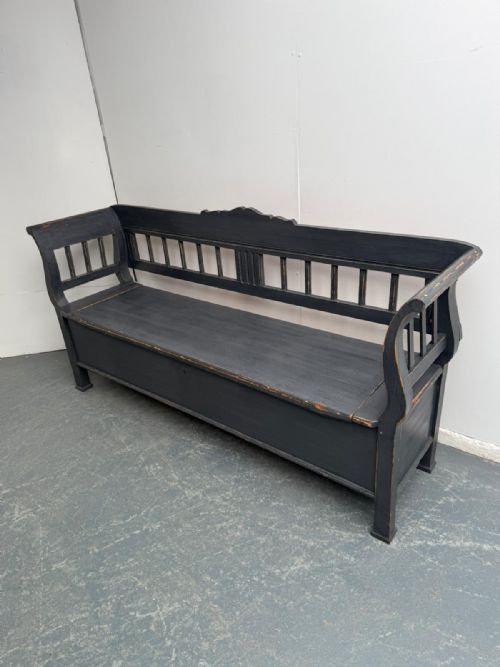
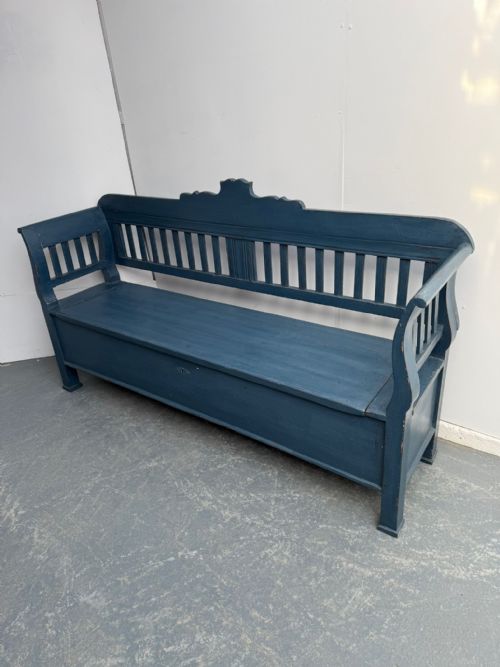
A painted pine box settle is a traditional seating form incorporating a high back, solid arms, and a hinged seat lid that opens to a storage compartment beneath. These pieces serve as practical dual-purpose furniture designed to maximise domestic space in period interiors.
The selection centres heavily on nineteenth-century examples, spanning Victorian British pieces and continental European regional types including Hungarian, Swedish, and Austrian country variants. Most items function as multi-seater benches accommodating between two and four people.
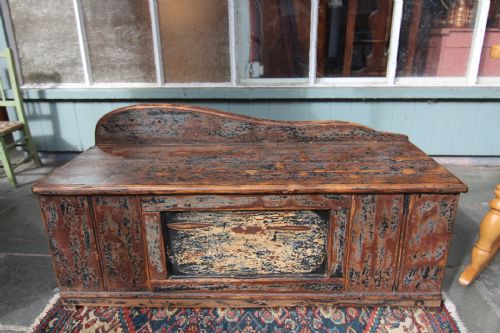
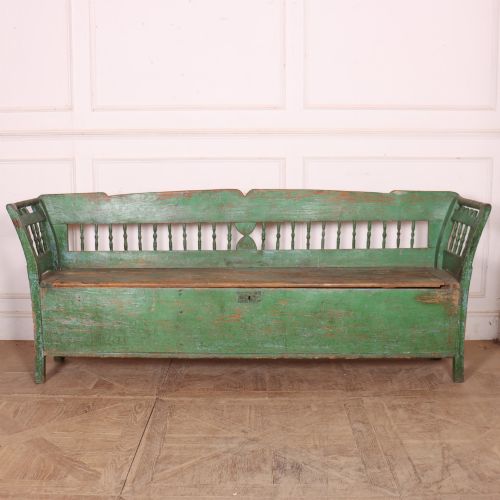
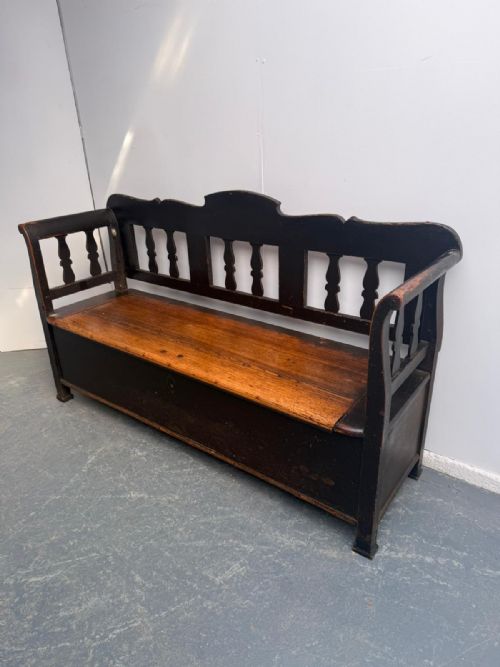
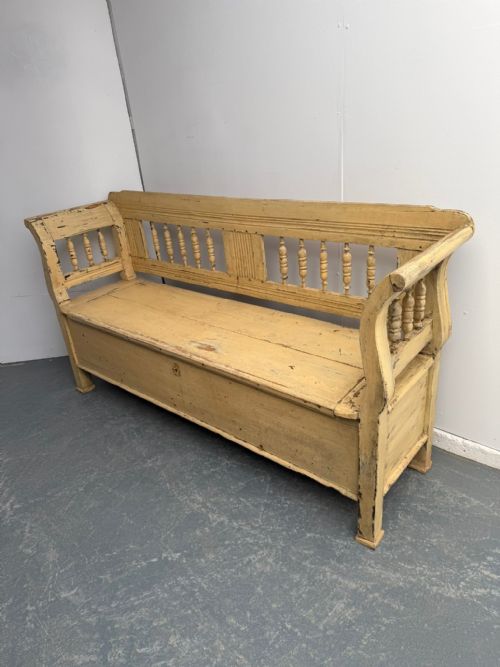
The surface finishes define the visual character, with surviving original paint schemes ranging from subdued greys and creams to polychrome folk decoration and deep black grounds. The underlying material is consistently pine, shaped into sturdy box seats and storage benches for everyday use.
How they were made
Makers constructed these settles using solid pine boards joined with traditional carpentry methods to build the high backs, panelled sides, and deep storage boxes. Iron and metal fixings, such as strap hinges and latches, secure the lifting lids and reinforce the structural joints.
Surfaces received layers of lead-based or oil paints, often applied in flat country hues or decorative folk motifs that aged through natural wear. Some variants integrate minor ceramic or metal elements within their hardware or decorative trim.
Painted Pine Box Settle Retail Price Guide 2026
Typical asking prices for painted pine box settle among the pieces listed under this phrase on Sellingantiques today, from the lower quarter to the upper quarter. They describe what is for sale here now, not the wider market.
Hungarian farm families trusted these heavy painted boxes to safely hide winter boots and spare pillows from wandering livestock.
What varies in quality
The survival of original paint surfaces dictates the primary distinction between standard utility items and exceptional folk art pieces. Retained historical pigment layers with honest patination hold greater integrity than later overpainting.
Proportion and construction depth separate simpler regional work from more resolved Gustavian or formal country cabinetmaking. Well-balanced proportions, intact original hardware, and solid structural timber preserve the enduring utility of the settle.
The Painted Pine Box Settle Glossary
- Box settle
- A high-backed wooden bench with a hinged seat revealing a storage cavity underneath. This design kept living areas tidy while providing draught-proof seating near the hearth.
- Polychrome
- Decorated in multiple colours. This technique appears on folk art pieces featuring hand-painted floral or geometric motifs.
- Gustavian
- The Swedish interpretation of French neoclassical style adapted during the late eighteenth and nineteenth centuries. It typically employs lighter painted finishes and restrained classical detailing.
- Folk art
- Utilitarian objects created by self-taught or regional craftspeople within a local tradition. These pieces emphasise functional design combined with vernacular decoration.
Painted Pine Box Settle: Frequently Asked Questions
What is a box settle?
A box settle is a wooden bench featuring a high back and a hollow base beneath the seat. The hinged lid allows users to store blankets, garments, or household goods inside.
Historically placed in kitchens and halls, the high back shielded occupants from cold draughts while the enclosed base kept rooms orderly.
How old are these settles?
The examples here date primarily from the nineteenth century, encompassing Georgian survivals, Victorian pieces, and late nineteenth-century country workshops. Dates generally range from the late seventeen-nineties through to eighteen-nineties.
Earlier pieces show regional British construction, while continental examples reflect specific Scandinavian and Central European folk traditions from the same eras.
Are the paint finishes original?
Many listings specify original painted surfaces, showing genuine wear, patination, and layered pigments accumulated over generations of use. Regional finishes include muted greys, creams, blues, and polychrome folk decoration.
Original paint contributes significantly to the character and historical integrity of country furniture, preserving the aesthetic intentions of the original makers.
Where were these benches made?
Production locations span Britain, notably Wales and England, alongside continental regions including Sweden, Austria, and Hungary. Each area developed distinct stylistic traits in its furniture construction.
Swedish pieces often lean toward lighter Gustavian or rustic painted aesthetics, while Hungarian and Austrian variants frequently display vibrant folk art palettes.