

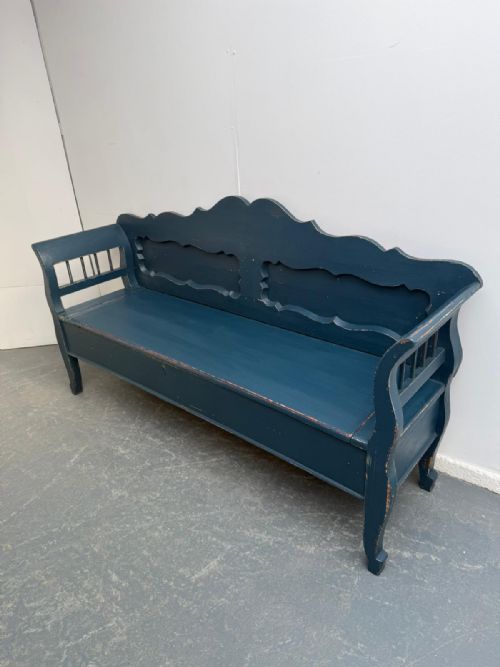


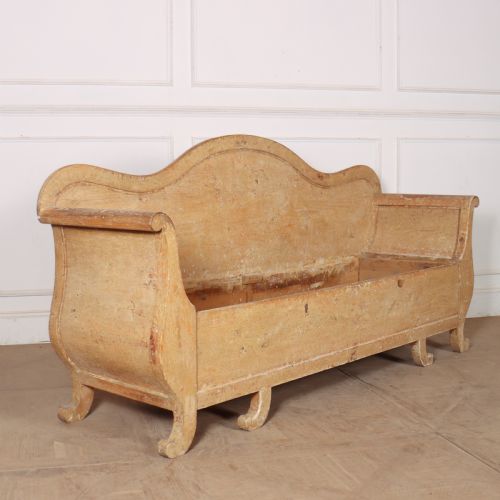
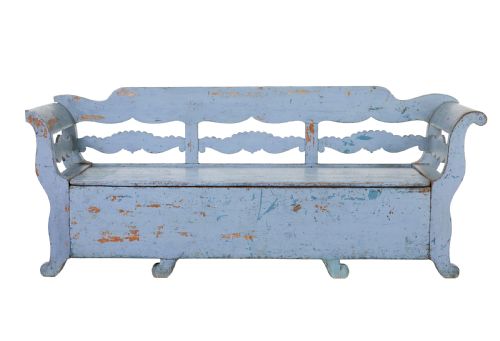


Scandinavian Country Settle
A Scandinavian country settle brings rustic form and painted charm to an interior, offering robust seating built for historic homes.
Scandinavian Country Settle
When you search for a Scandinavian country settle, you encounter utilitarian seating designed for warmth and utility in historic domestic interiors. These pieces take the form of wooden benches and storage benches intended for everyday rural life.
The selections on this page span the eighteenth and nineteenth centuries, including Georgian and Gustavian inspired examples. You meet original painted Swedish benches alongside Hungarian painted pine three seater benches and children's beechwood benches.
Most examples hail from Sweden or Hungary, showing the distinct regional traditions of European folk art. They function as robust seating or storage solutions, often finished in period paint that highlights their vernacular origins.
How they were made
Carpenters constructed these settles primarily using solid pine, occasionally turning to beechwood for smaller pieces like children's benches. Planks were joined to create sturdy backs and seats, with storage compartments built beneath the seating in specific variants.
Surfaces received coats of paint, creating the characteristic painted wood finishes seen across Swedish and Hungarian examples. This paint layer protected the softwood beneath while contributing the vibrant colour associated with European folk art traditions.
Scandinavian Country Settle Retail Price Guide 2026
Typical asking prices for scandinavian country settle among the pieces listed under this phrase on Sellingantiques today, from the lower quarter to the upper quarter. They describe what is for sale here now, not the wider market.
Listings span the eighteenth and nineteenth centuries, featuring pine, beechwood, and fabric materials within Scandinavian country and Gustavian styles.
What varies in quality
The distinction between standard vernacular work and finer pieces rests in the handling of the painted surface and the proportion of the woodwork. Original period paint surfaces retain an authentic patina that elevates the visual impact of the furniture.
Proportion and scale also dictate distinction, ranging from modest children's chairs to large mid nineteenth century benches designed for substantial halls. Construction integrity in the joints and the preservation of the original timber determine the enduring character of each settle.
The Scandinavian Country Settle Glossary
- Settle
- A wooden bench with a high back and solid arms, often featuring a box compartment beneath the seat for storage. It provided protection from drafts in historic rooms.
- Gustavian
- The Swedish interpretation of French neoclassical style, characterised by restrained elegance and pale painted finishes. It emerged during the late eighteenth century.
- Pine
- A softwood commonly utilised in vernacular furniture making throughout Northern Europe. It accepts paint readily and forms sturdy, practical domestic objects.
- Folk Art
- Artistic work produced from an indigenous cultural tradition, encompassing the painted decoration and utilitarian forms found in rural European furniture.
Scandinavian Country Settle: Frequently Asked Questions
How do I date an antique settle?
Dating relies on examining the construction methods, tool marks on the timber, and the composition of the paint layers. Eighteenth century examples show different joinery techniques compared to mid nineteenth century pieces.
Stylistic cues, such as Gustavian neoclassical details or regional folk art motifs, also help assign a period to the furniture.
Where were these settles made?
These benches originate primarily from Sweden and Hungary, reflecting specific regional carpentry and decorative traditions. Swedish examples often display Gustavian influence or rustic nineteenth century charm.
Hungarian pieces bring alternative folk art painted finishes to the same utilitarian bench form.
How do I care for painted pine?
Preserving painted pine requires keeping the furniture away from direct sunlight and maintaining stable indoor humidity. This protects the historic paint surface from flaking or fading.
Dust the wood gently with a dry cloth and avoid harsh chemical cleaners that can damage the antique finish.