


Spelter Female Statue
These spelter female statue pieces bring kinetic figures and atmospheric lighting from the late nineteenth and early twentieth centuries straight into your room.
Spelter Female Statue
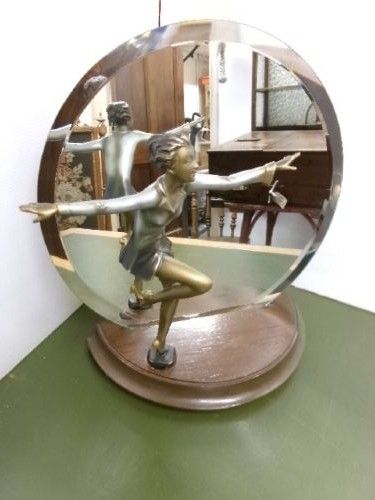
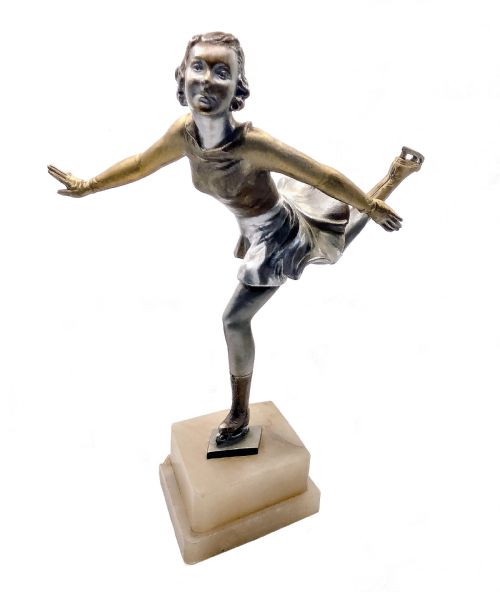
A spelter female statue typically depicts dancers, ice skaters, or allegorical figures created during the Art Deco, Art Nouveau, and Neo-Classical movements. You are most likely to meet figures produced in France around the nineteen-thirties, capturing the dynamic energy of dancers and musicians.
The forms extend beyond standalone sculptures to include table lamps, table lighters, and figural groups paired with architectural mounts. Figures often interact with animals, mirrors, or torchere shades, reflecting the decorative ambitions of their period.
Originating largely from French workshops, these sculptures range from modest cabinet figurines to tall lamps designed for prominent placement. The aesthetic shifts from the flowing botanical lines of Art Nouveau to the geometric angularity of Art Deco.
Materials and construction methods
Spelter forms the primary metal body of these sculptures, cast to capture intricate details of drapery, hair, and facial expressions. Because spelter is a softer alloy, makers frequently relied on cold paint finishes to add colour and definition to the surface.
Sculptures and lamps are mounted onto substantial bases of onyx, marble, alabaster, or wood to provide stability and visual contrast. These stone and metal elements are joined with threaded rods or fasteners concealed beneath the base.
Some figures double as functional table lighters, proving that nineteen-thirties elegance was fully prepared to assist with your evening cigarette.
Assessing quality and execution
The distinction between tiers rests upon the crispness of the casting and the preservation of the original cold paint surface. Finer examples retain complex polychrome details on the garments and skin, whereas lesser pieces show smoothed contours and plain metallic finishes.
The choice of integral base material marks a division in ambition, with dense onyx or Verdi green marble elevating the status of a figure. The integration of functional elements such as lamp fittings or table lighters also dictates the complexity of the piece.
Josef Lorenzl·Geo Maxim
The Spelter Female Statue Glossary
- Spelter
- A zinc-based alloy used as an economical alternative to bronze in decorative sculpture. It accepts patination and cold painting readily.
- Cold paint
- Paint applied to a metal object after casting, without subsequent firing in a kiln. It is susceptible to flaking if handled improperly.
- Onyx
- A banded variety of chalcedony often used for decorative clock cases and sculpture bases. Its translucent layers provide a polished contrasting mount.
- Torchere
- A tall ornamental stand or lamp designed to hold a light source aloft. In figural works, the female figure often holds the shade directly.
- Art Deco
- A design style of the nineteen-twenties and nineteen-thirties characterised by streamlined geometric forms and stylised human figures.
Spelter Female Statue: Frequently Asked Questions
How do I clean a spelter statue?
Dust the surface gently with a soft, dry brush to prevent accumulation in the crevices. Avoid using water or chemical solvents, which can lift the delicate cold paint finishes.
Take care around stone bases like marble or onyx, wiping them with a barely damp cloth only if necessary. Regular gentle maintenance preserves the original patination without wearing down the metal.
Are these statues made of bronze?
These pieces are cast from spelter, a zinc alloy, rather than bronze. Spelter is lighter and softer, allowing for sharp detail during the casting process.
Makers often applied bronze-look patinas or multi-coloured cold paint to simulate more expensive metals. This made decorative figurative art accessible to a broader Victorian and twentieth-century market.
Why are they mounted on stone?
Spelter is a relatively soft and brittle metal that requires a heavy foundation to remain stable. Bases made from marble, alabaster, or onyx anchor tall figures and lamps securely.
These stone plinths also provide an aesthetic contrast to the metallic figure above. The choice of stone often reflects the design vocabulary of the Art Deco or Art Nouveau period.
How can I tell Art Deco from Art Nouveau?
Art Nouveau pieces feature flowing, asymmetrical lines inspired by natural forms such as plants, flowers, and whiplash curves. The female figures tend to have long, cascading hair and soft drapery.
Art Deco relies on symmetry, stylised geometry, and sharp angles reflecting modern industrial progress. Dancers and ice skaters in this style display athletic poses and distinct twentieth-century fashion.