
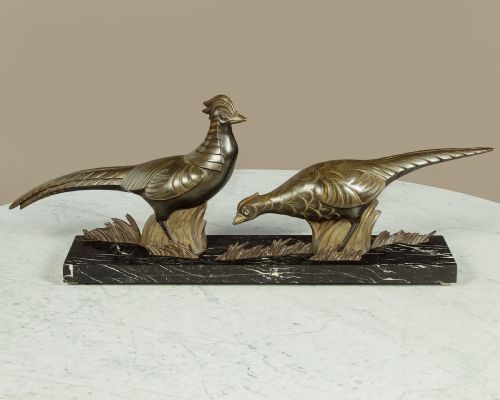






Antique Spelter Desk Ornament
These antique spelter desk ornaments are decorative metal sculptures brought to desks and tables for display.
Antique Spelter Desk Ornament
An antique spelter desk ornament is typically a sculptural figure or group cast in zinc alloy, frequently mounted upon a stone base. Buyers searching for an antique spelter desk ornament encounter animal studies, athletic subjects, and female figures.
The pieces appearing on this page span the Victorian, Edwardian, and Art Deco periods, alongside nineteenth century French work. Subjects range from golden pheasants and panthers to literary characters and cyclists.
Many examples sit upon heavy stone plinths made of black marble or onyx to anchor the metalwork. These objects served as decorative accents for writing desks and mantelpieces during the nineteenth and twentieth centuries.
How they were made
Makers cast spelter, which is a zinc alloy, into moulds to create figurative sculptures. The resulting metal is softer than bronze and receives various surface finishes.
Surfaces are treated with patinated metal finishes, bronze coatings, or cold paint to simulate more expensive materials. Figures are then secured to bases of onyx or marble using threaded bolts.
Listings feature items from the Victorian period through to Art Deco productions around nineteen thirty.
What varies in quality
The choice and execution of the base also influence the overall standard of the piece. Smoothly polished marble and substantial onyx plinths provide better balance and visual weight than simpler mounts.
Josef Lorenzl·P. Sega·Geo Maxim
The Antique Spelter Desk Ornament Glossary
- Spelter
- A zinc alloy commonly utilised as a less expensive alternative to bronze for decorative figures. It takes patination and paint well but has a softer composition.
- Cold painted
- A technique where paint is applied to metal after casting without being fired in a kiln. This finish is delicate and prone to rubbing over time.
- Patinated metal
- A chemically treated surface that alters the colour of the metal to simulate age or bronze. It gives the sculpture a warm, darkened tone.
- Onyx
- A banded variety of chalcedony frequently used for the heavy bases of desk sculptures. Its natural veining adds pattern to the mount.
Antique Spelter Desk Ornament: Frequently Asked Questions
What is spelter?
Spelter is a zinc-based alloy that makers used widely for decorative figures and sculptures from the nineteenth century onwards. It allowed workshops to produce affordable ornamental items for domestic interiors.
Because zinc is softer than bronze, spelter requires careful handling to prevent bending or surface scratching. It typically relies on applied patination or paint finishes to achieve its final appearance.
How do I date these pieces?
Dating relies heavily on the overall style, costume, and mounting materials associated with the sculpture. Art Deco examples from the interwar years often feature geometric bases and stylised figurative forms.
Victorian and Edwardian pieces tend to display more naturalistic detailing and different base materials like slate or varied marble. Examining the mounting screws and surface wear also helps determine the age.
Are these figures solid bronze?
These desk ornaments are made from spelter rather than solid bronze. Spelter is lighter in weight and softer than bronze, which can sometimes be identified by examining areas of wear where the grey metal beneath shows through.
Many pieces received a bronzed metal finish to mimic the appearance of true bronze. This was a standard manufacturing practice for decorative objects intended for desks and display.
How should I clean them?
Cleaning requires only a soft, dry cloth to remove dust from the surface of the metal and the stone base. Moisture should be avoided, particularly on cold painted surfaces where water can lift the paint.
Harsh metal polishes must not be used because they will strip away the original patination or bronze coating. Gentle care preserves the historical finish of the object.