
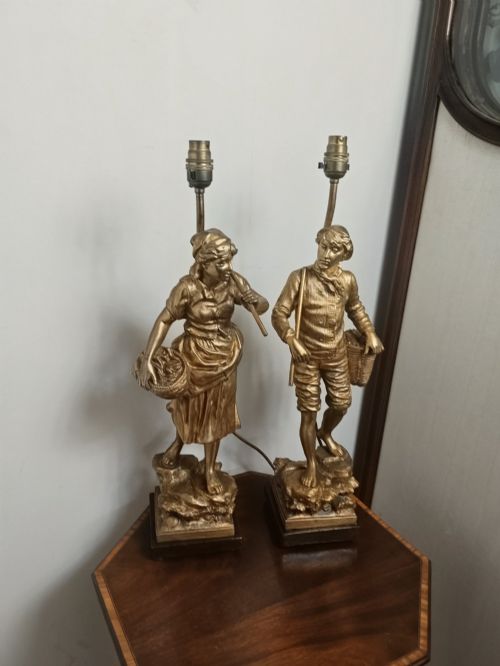




Gold Spelter Figure
A gold spelter figure brings the decorative energy of the early twentieth century into a room through metallic casting finished in gilt.
Gold Spelter Figure
A gold spelter figure encompasses decorative sculptures, table lamps, and mantel clocks finished with a gilt or bronzed surface. These pieces range from nineteenth-century revival styles to the sleek lines of the twentieth century.
The version most commonly encountered on this page is the Art Deco figure from the nineteen-thirties, often mounted on an onyx or alabaster base. These depictions frequently portray female dancers, ice skaters, or allegorical subjects.
Earlier examples span French late nineteenth-century historicism, featuring pairs of harvesters or figural lamps by noted makers. The core of what is handled here relies on zinc-alloy casting given a golden metallic appearance to mimic bronze.
What varies in quality
The choice and execution of the mounting base also determine distinction, with dense onyx and carved alabaster elevating the presence of the sculpture. Integration with functional elements, such as figural lamps or clock movements, separates standard decorative castings from workshop pieces bearing attribution.
Materials recorded across the inventory include spelter, onyx, brass, marble, gilt metal, fabric, zinc alloy, and wood.
E Rousseau·L & F Moreau·Josef Lorenzl·Phillipe H. Mourey
The Gold Spelter Figure Glossary
- Spelter
- A zinc alloy commonly used as a cost-effective alternative to bronze for decorative statues and lamps during the nineteenth and twentieth centuries. It takes patination and gilding readily.
- Gilt
- A thin layer of gold or golden material applied to the surface of metal objects. This finish provides the characteristic metallic gleam seen on these figures.
- Onyx
- A banded variety of chalcedony frequently used as a heavy foundational base for figural sculptures and table lighters. It offers a polished stone contrast to the metallic figure above.
- Art Deco
- A design style prevalent during the nineteen-thirties characterised by stylised geometric forms and streamlined figures. Many figures from this period depict dancers and modern women.
- Alabaster
- A fine-grained mineral often carved into decorative bases for statues and lamps. Its translucent quality distinguishes it from denser marbles.
Gold Spelter Figure: Frequently Asked Questions
What is spelter metal?
Spelter is a zinc-based alloy utilised extensively for decorative figures and lamps because it casts intricate details easily.
It provides a lighter and softer alternative to bronze while accepting various metallic finishes.
Are these figures solid gold?
These pieces are not solid gold, but rather cast in zinc alloy with a gilt or golden surface treatment.
The underlying metal is a base alloy designed to mimic the appearance of more expensive bronze or precious metals.
Why are they mounted on stone bases?
Onyx, marble, and alabaster bases provide necessary weight and stability to support the relatively soft zinc-alloy figures.
These stone mounts also enhance the visual contrast between the metallic sculpture and the polished natural material.