








Green Onyx Sculpture
A green onyx sculpture brings the rich mineral character of banded stone together with cast metal figures from the late nineteenth and early twentieth centuries.
Green Onyx Sculpture
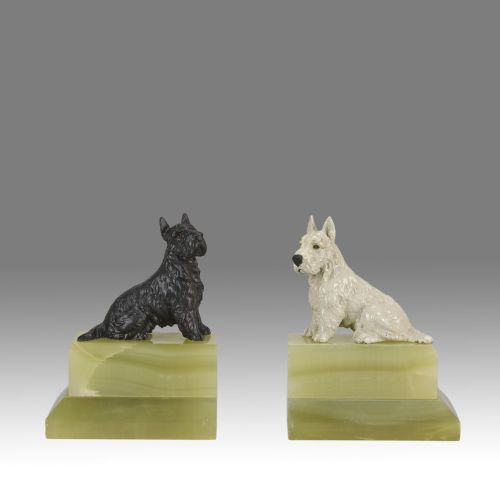
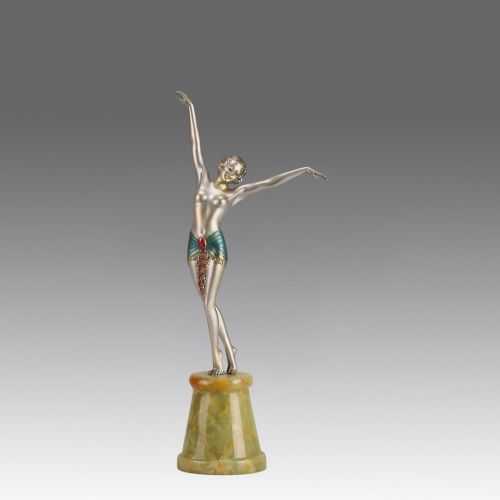
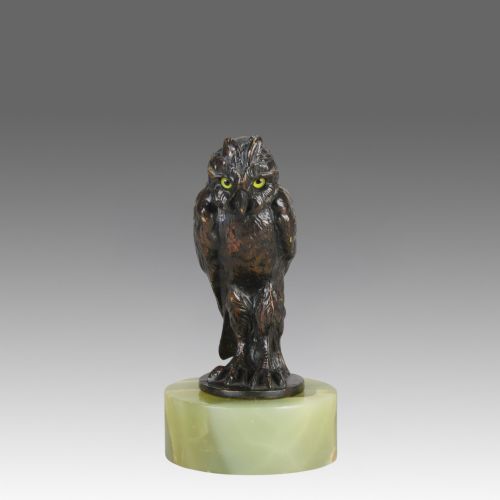
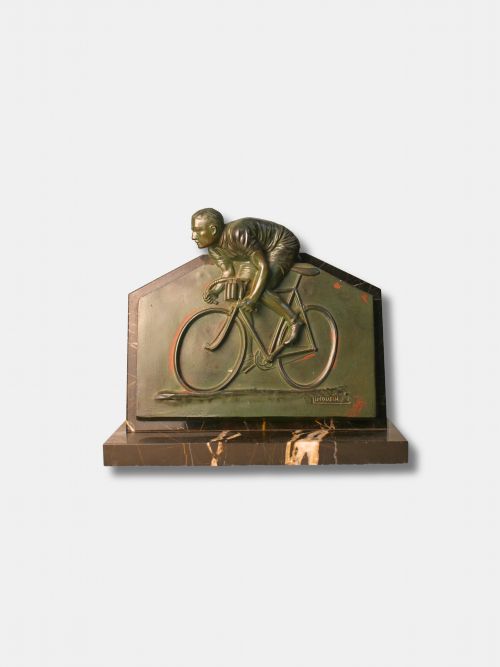
When you search for green onyx sculpture, you encounter decorative objects, bookends, desk tidies, mantel clocks, and figural groups produced across the nineteenth and early twentieth centuries. These pieces combine a polished stone base or plinth with figurative elements modelled in bronze, spelter, or brass.
The prevailing style on this page is Art Deco, alongside Edwardian, Art Nouveau, Egyptian Revival, and nineteenth-century French designs. Figures range from dancers and athletes to animals and classical subjects, mounted directly onto natural stone bases.
Many examples originate from Vienna workshops or French foundries, spanning periods from the mid-nineteenth century through the 1930s. The stone provides a heavy, coloured foundation that complements the metallic subjects mounted upon it.
Materials and construction
The manufacture of these pieces relies on combining carved natural stone with metal casting techniques. Bases and plinths are cut from solid onyx and polished to a smooth finish, showing natural banding and colour variations.
Figurative elements are cast using bronze, spelter, or brass, often finished with cold-painted details, enamel, or gilt surfaces. Sculptors mounted these metal figures securely onto the stone plinths using threaded bolts or pins fitted through the base.
A German Shepherd dog keeps watch alongside a clock, proving that even rigid Art Deco timepieces need a loyal hound on duty.
Judging quality and execution
Quality in these works is defined by the crispness of the metal casting and the preservation of any cold-painted surface decoration. Finer figures display sharp facial expressions, delicate hand-painted details, and smooth patination without excessive wear.
The selection of the stone itself dictates visual impact, with superior pieces featuring rich green tones and clean, unblemished surfaces. The integration between the metal sculpture and the stone plinth also distinguishes superior studio production from standard commercial output.
Josef Lorenzl·Ferdinand Preiss·Michel Decoux·Bruno Zach·Auguste Moreau·Asprey Of London
The Green Onyx Sculpture Glossary
- Cold-painted bronze
- A method of decorating bronze sculptures using oil-based paints that are applied without heat firing. This technique produces vibrant polychrome surfaces on early twentieth-century figures.
- Spelter
- A zinc alloy frequently used as a cost-effective alternative to bronze in decorative figures and clock mounts. It accepts patination and metallic paint finishes readily.
- Chryselephantine
- A term describing sculptures combining carved ivory with bronze or other metals. These works often feature stone or onyx bases.
- Garniture
- A set consisting of a mantel clock accompanied by matching decorative side pieces or vases. They are typically executed in coordinated materials like onyx and metal.
- Obelisk
- A tall, four-sided tapering monument ending in a pyramid-shaped top. In decorative arts, these are fashioned from solid blocks of ornamental stone.
Green Onyx Sculpture: Frequently Asked Questions
What is a green onyx sculpture?
A green onyx sculpture is a decorative piece featuring a carved natural stone base paired with a cast metal figure. These works typically date from the late nineteenth century through the Art Deco period.
The stone provides a heavy, polished plinth that supports subjects ranging from human dancers to animals and clock mechanisms.
How do I clean a green onyx sculpture?
Cleaning requires a soft, dry cloth to remove dust from both the polished stone and the metal surfaces. Moisture should be kept away from cold-painted metal and porous stone.
Harsh chemical cleaners will damage the protective polish on the onyx and strip delicate paint finishes from the bronze or spelter figures.
Are these sculptures signed?
Many figurative pieces bear cast signatures or foundry marks belonging to the sculptor or maker on the metal base. Signatures are often found near the feet of the figure.
Stones rarely feature signatures, as markings are generally confined to the cast metal components of the work.
What is the difference between bronze and spelter?
Bronze is a durable alloy of copper and tin that takes fine detail and patination well. Spelter is a softer zinc alloy used widely for affordable decorative figures.
Spelter figures are lighter than bronze and require careful handling to prevent fractures at stress points.