

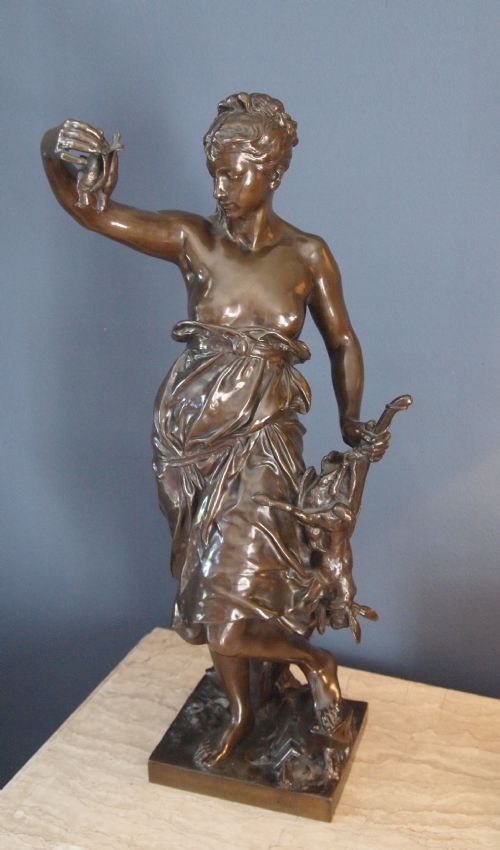





Bronze Diana Statue
A bronze diana statue captures the mythological huntress in enduring metal, offering classical grace and striking athletic form for the home.
Bronze Diana Statue
When you search for a bronze diana statue, you encounter classical figures and modernist interpretations of the goddess of the hunt. The pieces span from the late nineteenth century into the twentieth century, reflecting shifting artistic tastes over decades.
Nineteenth century examples lean heavily toward Grand Tour souvenirs and academic interpretations modelled after ancient sculpture. You regularly meet French works depicting Diana of Gabii or the huntress with her bow and arrow.
Twentieth century iterations shift into Art Deco styling, rendering the goddess with streamlined geometry and dynamic movement. These later pieces often incorporate mixed media bases like marble or onyx to anchor the metalwork.
Materials and methods of construction
The primary medium is cast bronze, frequently finished with patination to create deep tonal variations on the surface of the metal. Some pieces utilise patinated metal or spelter as alternative casting alloys for the sculptural body.
Bronze Diana Statue Retail Price Guide 2026
Typical asking prices for bronze diana statue among the pieces listed under this phrase on Sellingantiques today, from the lower quarter to the upper quarter. They describe what is for sale here now, not the wider market.
Listings feature works spanning from the eighteen seventies through the nineteen thirties, covering both Neoclassical academic styles and Art Deco design.
What separates the finest pieces
Quality rests upon the crispness of the cast and the nuance of the surface finish. Superior works retain sharp anatomical detail in the figure and precise rendering of drapery or hair.
The skill of the patination dictates depth and character, moving a flat metallic surface to a rich, luminous skin. Signatures from established sculptors and finely fitted stone plinths further elevate the standing of a piece.
Pierre Le Faguays·Mercié·R Henn·Bulio·Louis Ernest Barrias
The Bronze Diana Statue Glossary
- Patina
- The surface coloration and chemical sheen developed naturally over time or applied intentionally by the bronzeworker. This finish protects the metal and defines the visual texture of the garment and skin.
- Grand Tour
- A nineteenth century travel tradition where affluent collectors acquired classical souvenir bronzes in Italy and France. These reductions mimic famous antiquities housed in European museums.
- Spelter
- A zinc alloy commonly utilised as a cheaper alternative to bronze for sculptural casting. It requires careful handling and often mimics bronze through applied surface finishes.
- Art Deco
- A design movement peaking in the nineteen thirties characterised by sleek lines, stylised forms, and modern geometry. Figures from this era interpret classical subjects through a contemporary modernist lens.
Bronze Diana Statue: Frequently Asked Questions
How do I identify a Grand Tour bronze?
Grand Tour bronzes typically date from the nineteenth century and serve as reduced-scale copies of famous classical antiquities. They were bought by travellers visiting European cultural sites as portable souvenirs of their education.
Look for fine cast detail and traditional patination that mimics ancient excavated statuary. Their subjects frequently reference canonical Greek or Roman sculpture housed in Italian and French collections.
What is the difference between bronze and spelter?
Bronze is a durable copper and tin alloy that accepts rich patination and holds crisp sculptural detail well. Spelter is a softer zinc-based alloy that was often used to produce more affordable decorative figures.
Underneath the surface finish, spelter is lighter and more brittle than genuine bronze. A careful check of the weight and the base helps distinguish the two materials.
Why are some figures mounted on marble?
Marble and onyx bases provide essential weight and structural stability to tall or dynamic sculptural compositions. Natural stone plinths also create a deliberate visual contrast against dark patinated metal.
Art Deco pieces in particular utilise geometric marble bases to ground the elongated forms of the figures. The stone is usually fitted directly to the cast metal through threaded bolts or pins.