



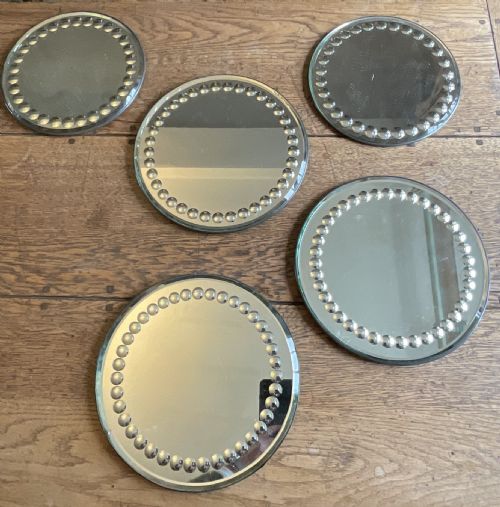


Sorcerer Wall Mirror
A sorcerer wall mirror bends the light of a room in its deep convex glass, offering a curious glimpse of domestic spaces from the nineteenth and early twentieth centuries.
Sorcerer Wall Mirror
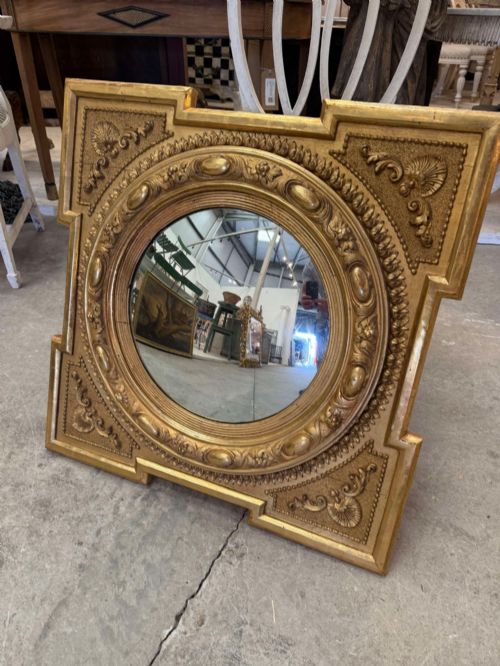
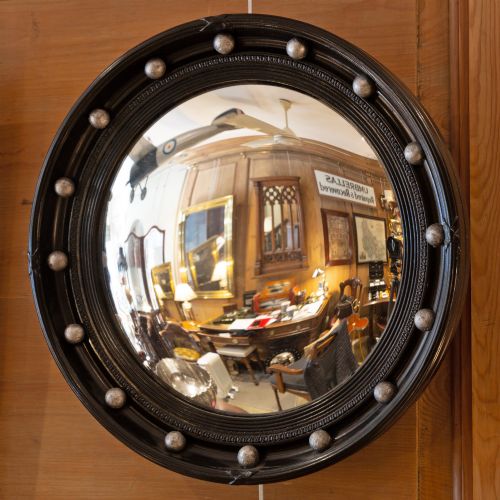
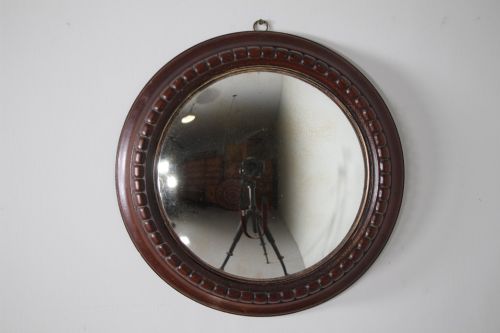
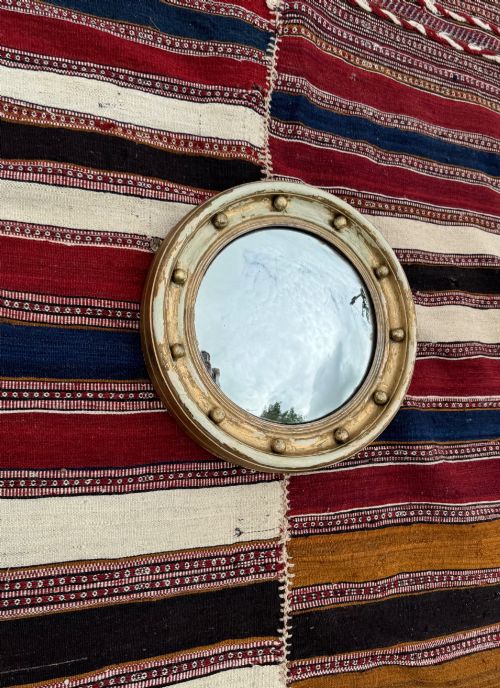
A sorcerer wall mirror presents a round convex plate that captures a panoramic view of an entire interior within a compact frame. Most examples encountered here date from the Victorian era and the decades around nineteen hundred, reflecting the Victorian fascination with optical curiosities.
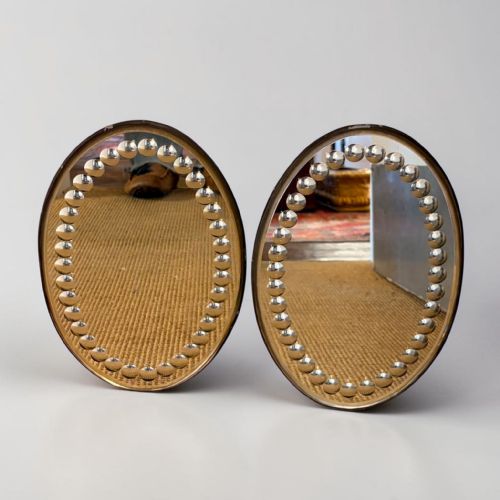
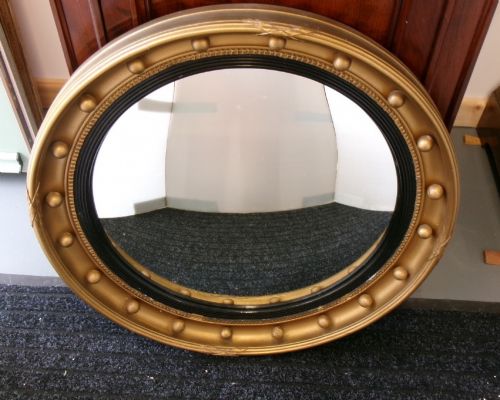
Forms range from simple ebonised wooden rims to elaborate giltwood frames adorned with velvet borders or candle sconces. These pieces served as functional hall mirrors and decorative wall ornaments in period homes.
The term encompasses related historical variations such as butler's mirrors and witch's mirrors, all sharing the distinctive curved glass that distinguishes them from flat wall mirrors.
How these mirrors were constructed
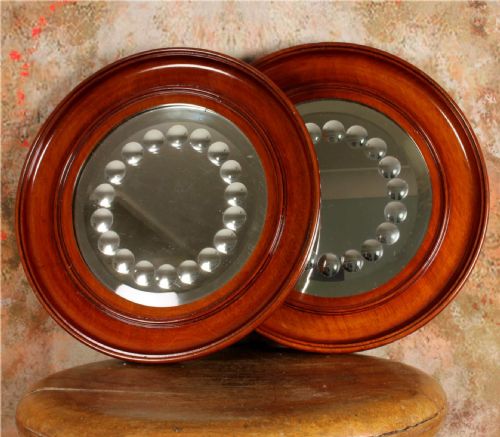
Makers fashioned the characteristic curved glass plates using specialised blowing and cooling techniques before mounting them securely within sturdy wooden structures. Frames were frequently carved from mahogany or built from softer woods finished with gesso and gilt.
Surface decoration often utilised ebonised wood or rich velvet trims to frame the reflective plate, contrasting sharply with the bright metallic finishes of giltwood. Surviving pieces demonstrate the joinery and framing methods typical of nineteenth-century cabinet makers.
Sorcerer Wall Mirror Retail Price Guide 2026
Typical asking prices for sorcerer wall mirror among the pieces listed under this phrase on Sellingantiques today, from the lower quarter to the upper quarter. They describe what is for sale here now, not the wider market.
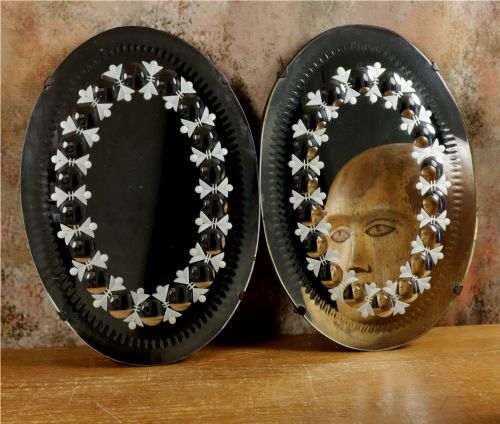
Listings for the sorcerer wall mirror span the nineteenth century, the Victorian era, and the nineteen twenties, utilising materials such as mahogany, giltwood, and velvet.
What distinguishes finer examples
Quality rests in the clarity and depth of the original convex glass plate, alongside the integrity of the surrounding wood or gesso frame. Superior pieces retain their original mercury or silver backing with minimal degradation, preserving the crispness of the reflection.
The intricacy of the frame carving and the presence of period details such as integrated candle sconces or velvet surrounds separate standard hall mirrors from more ambitious decorative items.
The Sorcerer Wall Mirror Glossary
- Convex glass
- A curved glass plate that bulges outward towards the viewer, creating a wide-angle reflection of the surrounding room.
- Giltwood
- Wood that has been coated with a thin layer of gold leaf or gilt composition, frequently seen on ornate Victorian frames.
- Ebonised wood
- Timber treated with a dark stain or finish to imitate expensive ebony, popular in nineteenth-century decorative items.
- Gesso
- A plaster-like mixture applied to wood frames as a smooth base for gilding or painting.
- Girandole
- A decorative wall mirror featuring attached candle sconces that reflect candlelight into the space.
Sorcerer Wall Mirror: Frequently Asked Questions
Where should I hang a sorcerer wall mirror?
These mirrors suit narrow entrance halls, reception rooms or dark corners where their curved glass can gather and distribute available light effectively.
Because they offer a wide-angle view of the interior, placing them opposite a window or doorway maximises their visual impact in a room.
How do I identify a Victorian sorcerer mirror?
Look for construction details typical of the nineteenth century, including heavy mahogany or gesso frames, hand-turned wooden elements, and aged mirror plates.
Many examples feature original velvet backings or paper labels that point to their production during the Victorian period.
Why are they called witch mirrors?
Historical superstition held that the wide, distorted reflection of a convex glass could ward off evil spirits and monitor the activities of guests in a room.
By the nineteenth century, this folk name had largely merged with terms like sorcerer and butler mirror as the pieces became purely decorative.
How do I clean the convex glass safely?
Use a soft, dry microfibre cloth to remove dust gently from the surface of the curved glass without applying heavy pressure.
Avoid spraying liquid cleaners directly onto the mirror, as moisture can seep behind the aged glass plate and damage the original backing.