


Solid Silver Tea Container
A solid silver tea container is a refined vessel for dry leaves, offering lasting metal and decorative form to a room.

Solid Silver Tea Container
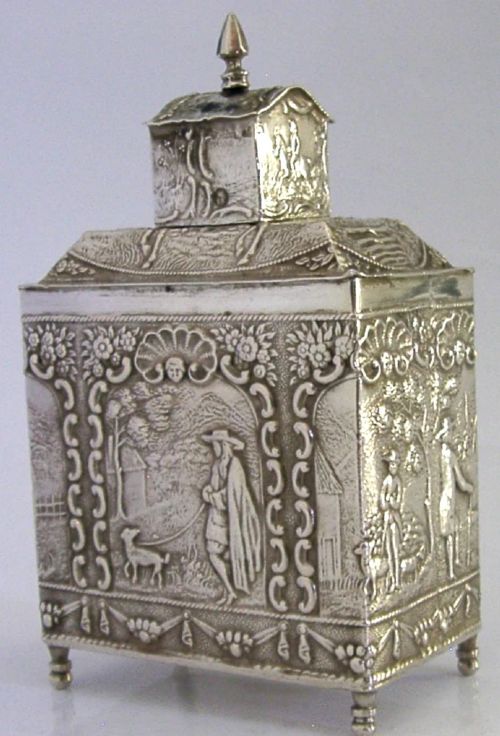
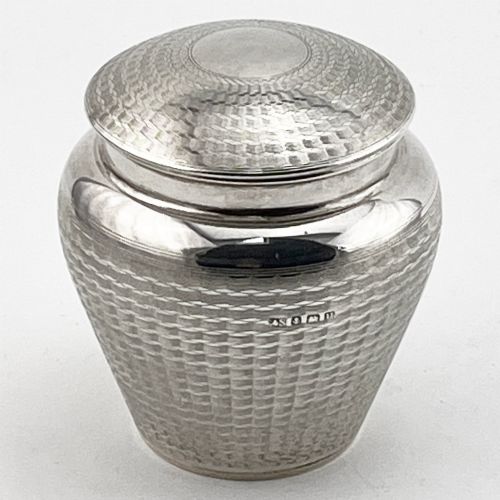
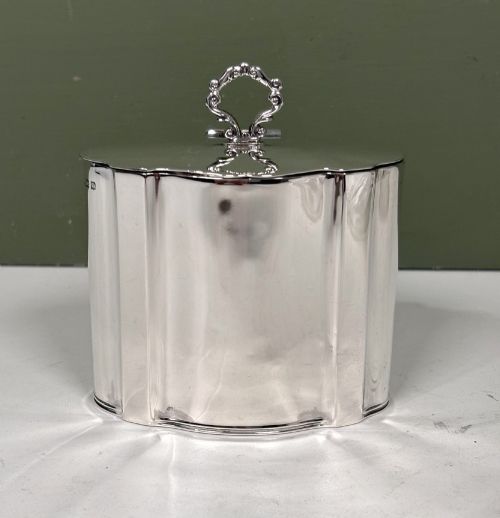
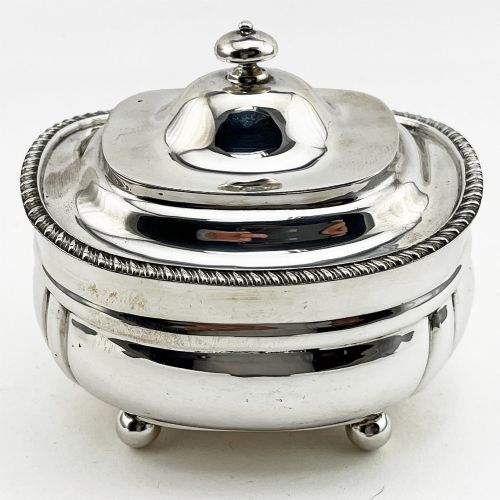
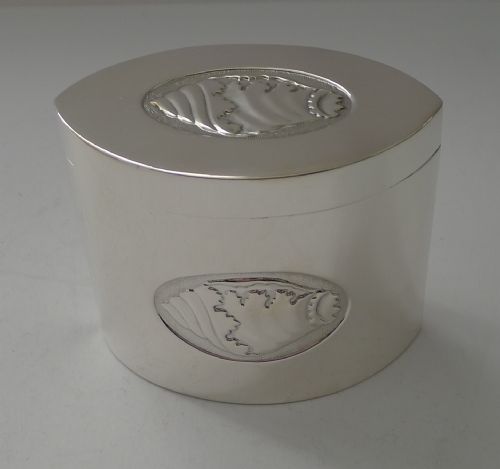
A solid silver tea container, often termed a tea caddy, provides a secure metal enclosure designed to preserve the aroma of loose tea leaves. The pieces on this page span several eras, predominantly featuring Edwardian, Victorian, and Georgian styles alongside Art Deco and Dutch Rococo Revival examples.
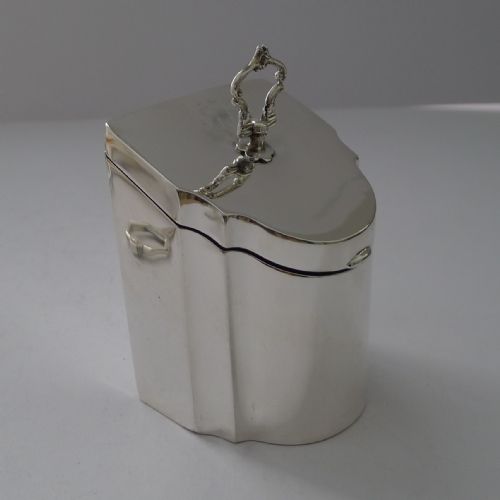
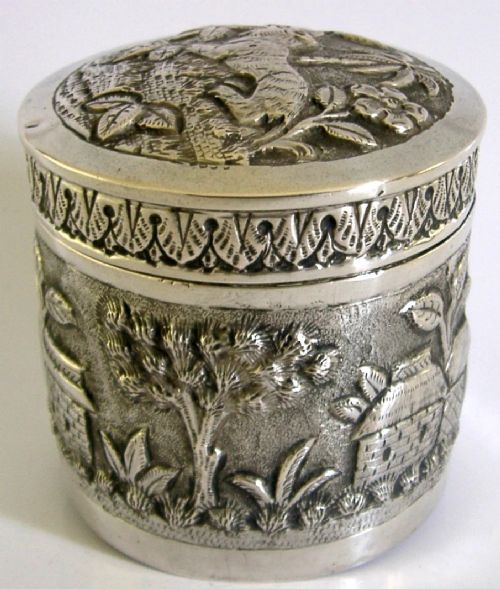
Buyers will encounter various forms, ranging from traditional knife box shapes and upright canisters to novelty paint tin designs and Ottoman Turkish boxes. English manufacturing centres such as London, Sheffield, and Chester dominate the origin of these vessels, supplemented by international origins including Dutch and Indian workshops.
Materials and construction
These containers are constructed primarily from solid silver or sterling silver, providing a durable and lustrous metallic body that withstands daily handling. Certain examples incorporate contrasting elements such as ebonised wood and ebony for handles, knobs, or internal details.
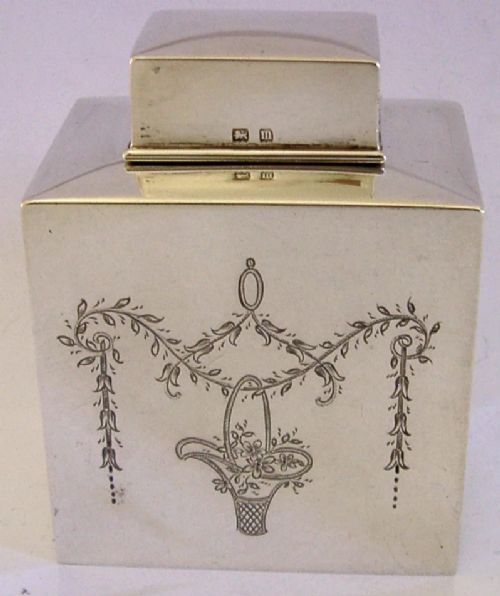
Silversmiths utilised hammering, casting, and repoussé techniques to shape the silver into intricate revivalist motifs or clean geometric lines. Hallmarks stamped directly into the metal record the assay office, year of production, and standard of silver.
The selection includes pieces spanning from the Georgian era through the Victorian and Edwardian periods into the 1920s.
Assessing quality and craftsmanship
Quality in a solid silver tea container rests upon the weight of the metal and the crispness of the chased or engraved decoration. Substantial gauge silver provides a reassuring heft in the hand and ensures structural integrity over centuries of use.
Superior pieces display careful attention to hinges, lids, and internal fittings, ensuring a snug closure that protects the contents. The distinction between standard production and exceptional work often lies in the depth of relief work and the clarity of the maker marks.
Zimmermann·Goldsmiths and Silversmiths Co.·Asprey and Co.·Atkin Brothers
The Solid Silver Tea Container Glossary
- Tea caddy
- A small box or container used for storing tea leaves. The term derives from catty, a Chinese weight measurement.
- Sterling silver
- An alloy of silver containing 92.5 percent pure silver and 7.5 percent other metals, usually copper. This standard ensures both durability and a bright metallic lustre.
- Hallmark
- A series of official marks stamped on precious metals by an assay office. It verifies the purity of the metal and the year of manufacture.
- Repoussé
- A metalworking technique in which a malleable metal is ornamented by hammering from the reverse side. This creates low relief designs on the exterior surface.
- Gauge
- The thickness of the sheet metal used to construct the container. A heavier gauge indicates a more substantial and robust object.
Solid Silver Tea Container: Frequently Asked Questions
How were they used?
These containers served to store expensive loose tea leaves safely under lock in wealthier households. Tea was a valuable commodity, requiring secure vessels to prevent pilfering and to keep moisture away from the leaves.
Servants or the mistress of the house measured out the portions for each sitting using the matching spoon or lid. The caddy sat prominently on the dining table or sideboard during social gatherings.
How do I clean the silver?
Maintenance requires gentle washing with warm soapy water and a soft cloth to remove everyday dust and oils. Avoid harsh abrasive dips that strip the characterful dark patina from recessed decorative areas.
Regular, light dusting preserves the reflective finish of the sterling silver without wearing down delicate hallmarks or engraved details. Store the container in a dry environment to prevent tarnishing.
How do I identify the date?
Dating relies primarily on the stamped hallmarks found on the body or lid of the container. These include symbols for the assay office, a lion passant for sterling standard, and a date letter corresponding to the exact year of testing.
Stylistic clues such as the neoclassical lines of the Georgian period or the geometric forms of Art Deco also assist in narrowing down the era of production.
Can I still store tea in them?
Modern storage is entirely possible, provided the interior is clean and free from old residue. Solid silver provides a stable, non-reactive environment that protects dry goods from light and air.
Ensure any original wooden or fabric linings remain dry during cleaning to prevent degradation of internal components. Using the container for loose leaf tea continues its original domestic purpose.