


Solid Silver Scoop
A solid silver scoop holds the weight of tea leaves, marrow, or cheese from centuries past within its gleaming bowl.
Solid Silver Scoop
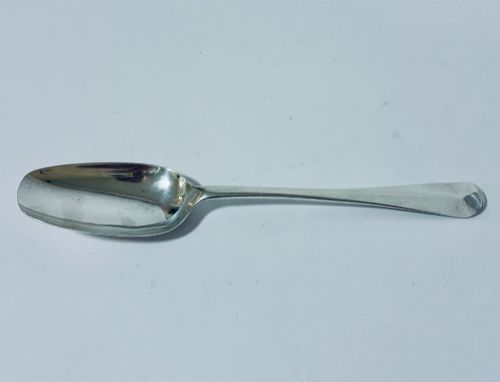
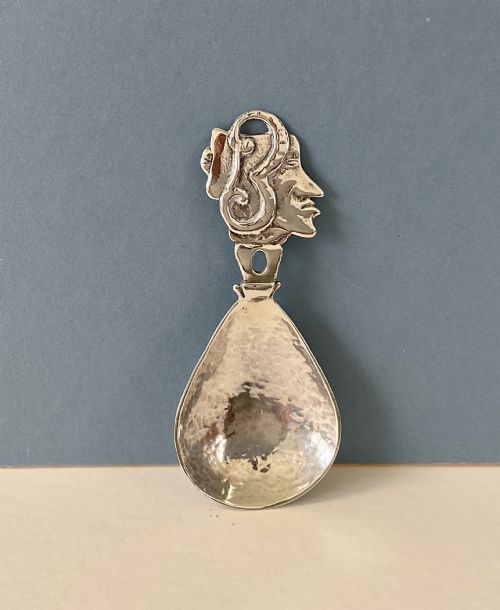
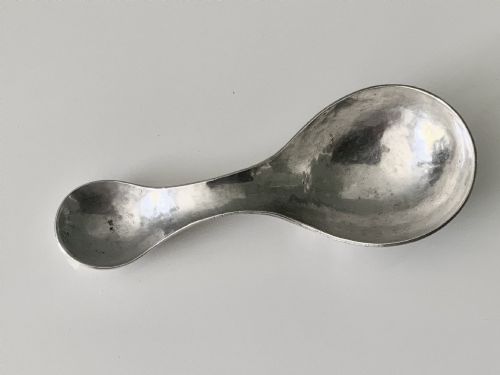
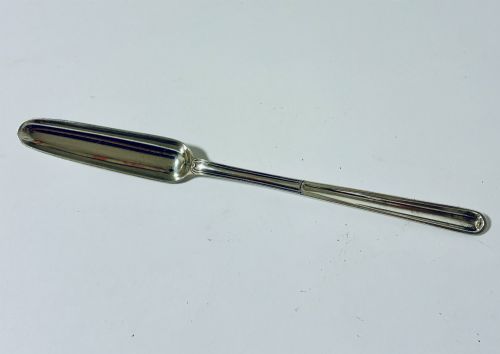
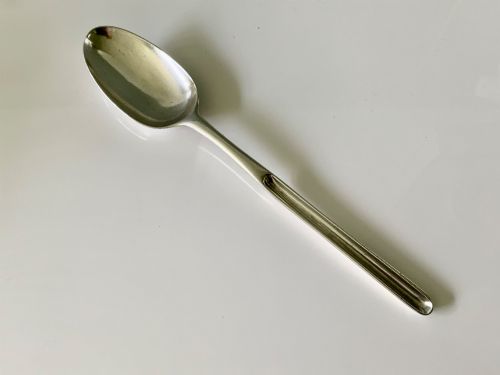
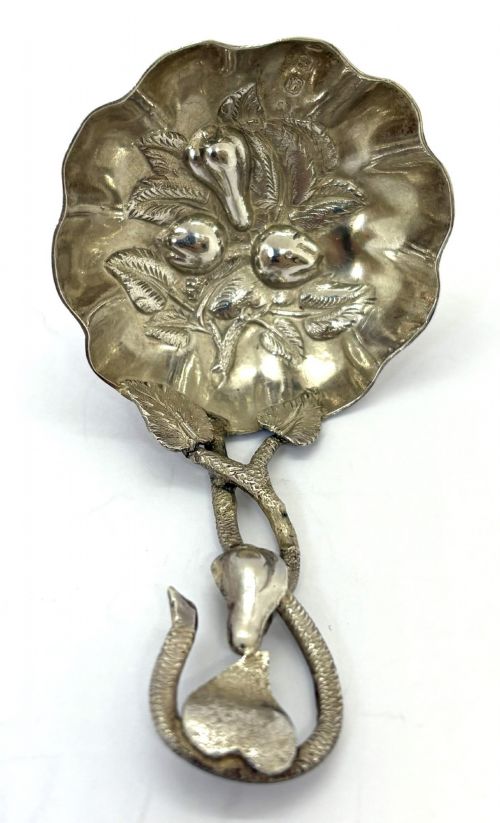
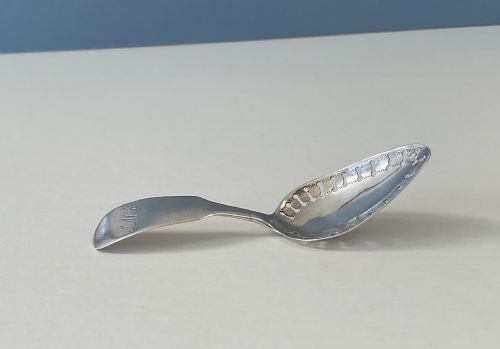
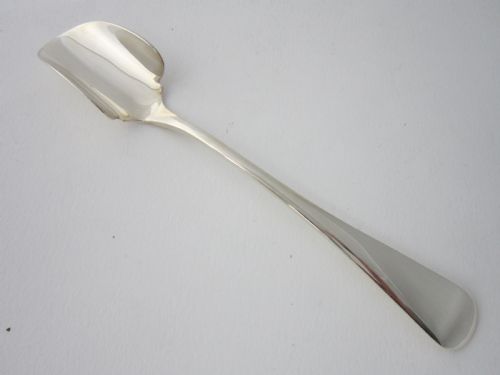
A solid silver scoop primarily encompasses caddy spoons, marrow scoops, and cheese or Stilton scoops designed for domestic service. You will most frequently encounter Georgian and Victorian caddy spoons alongside longer-handled marrow and cheese implements.
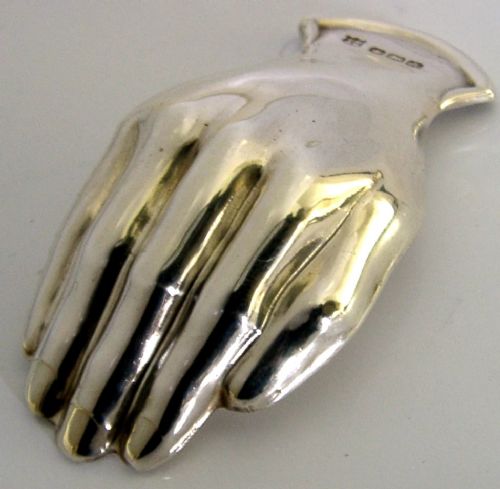
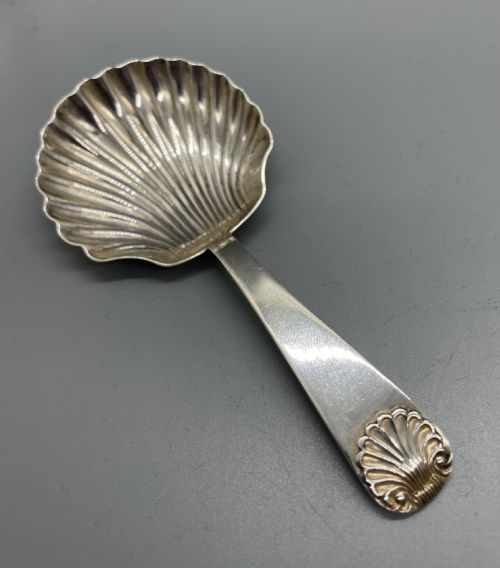
The caddy spoons span simple shovel forms to whimsical jockey caps and vine leaf motifs intended for measuring tea from the caddy. Marrow and Stilton scoops present elongated, double-ended or ivory-handled profiles meant for extracting marrow or portioning cheese.
Materials and construction
Silversmiths utilised sterling silver and silver-gilt, hammering and shaping the metal into bowls and handles, occasionally incorporating stained bone or ivory. Many pieces bear assay office marks from London, Birmingham, and Sheffield indicating the town, year, and maker.
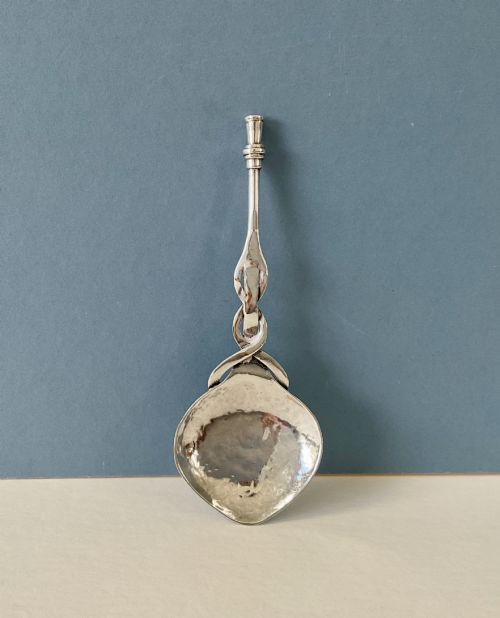
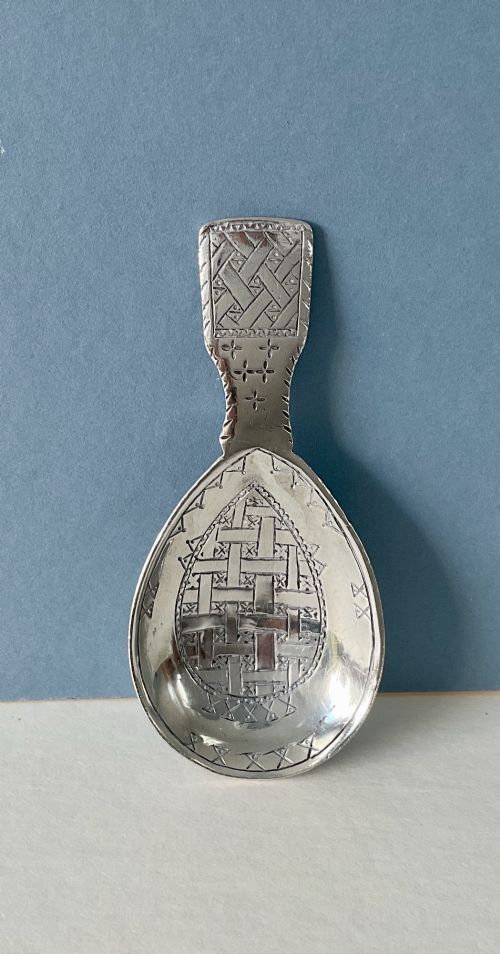
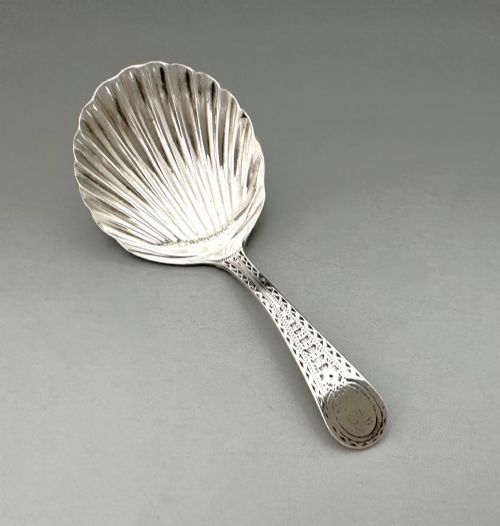
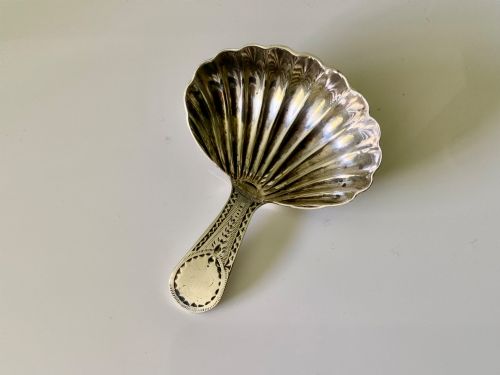
Handles range from plain Old English patterns to intricate Arts and Crafts designs, sometimes featuring engraved details or double-struck decoration on the metal.
Listings feature sterling silver, silver-gilt, and stained bone across Georgian, Victorian, and Edwardian periods.
Assessing the execution
Quality rests upon the crispness of the chasing, the gauge of the silver used in the bowl, and the integrity of any applied handle material like bone or ivory. Finer examples display meticulous hand-engraving and balanced proportions that mark the work of distinguished silversmiths.
Pieces from renowned makers or provincial centres such as Scotland and Ireland carry additional distinction through their regional assay marks and uncommon stylistic variations.
Joseph Willmore·George Unite·Mappin and Webb·Thomas Chawner·William Hutton and Sons·Roberts and Belk·Henry Atkin·George Smith
The Solid Silver Scoop Glossary
- Caddy Spoon
- A small utensil specifically shaped for measuring dry tea leaves from a tea caddy into a teapot. These often feature decorative bowls shaped like leaves, shells, or caps.
- Marrow Scoop
- An elongated, narrow double-ended implement designed for extracting bone marrow from joints. One end typically forms a small trough and the other a larger channel.
- Stilton Scoop
- A long-handled utensil utilised for cutting and serving hard cheeses such as Stilton. They frequently pair a silver blade with an organic handle made of bone or ivory.
- Silver-Gilt
- Sterling silver that has been coated with a thin layer of gold on its surface. This technique imparts a rich, warm tone often seen inside tea caddy bowls.
- Assay Mark
- A stamp or series of stamps applied to precious metals to guarantee the standard of silver purity. These marks record the town, maker, and year of testing.
Solid Silver Scoop: Frequently Asked Questions
What is a solid silver scoop used for?
These utensils served specific dining and domestic duties, ranging from measuring loose tea leaves into caddies to serving bone marrow or portions of cheese at the table.
Over time, their forms evolved from purely functional kitchen and dining tools into decorative items collected for their craftsmanship and varied regional designs.
How do I date a Georgian silver scoop?
Dating relies upon the hallmarking system stamped directly onto the silver, which includes date letters corresponding to specific assay office cycles.
By cross-referencing the lion passant, town mark, and date letter against official records, you can pinpoint the exact year and location of manufacture.
What distinguishes a marrow scoop from a Stilton scoop?
A marrow scoop is typically a double-ended piece of solid silver featuring two narrow troughs of differing widths designed to scrape bone marrow.
A Stilton scoop possesses a single, larger blade with a substantial handle often made of ivory or bone, built specifically for digging into hard cheese.
Why do some caddy spoons have gilded bowls?
Gilding applied a layer of gold over the sterling silver inside the bowl to protect the metal from tarnishing due to the tannic acid in tea leaves.
This protective layer ensured the silver remained bright and prevented chemical reactions between the brew and the metal.