



Solid Silver Fruit Basket
A solid silver fruit basket brings weight, pierce-work and presence to a table, combining utility with formal Edwardian and Victorian display.
Solid Silver Fruit Basket
When you search for a solid silver fruit basket, you encounter large serving pieces designed for display on dining tables and sideboards. These objects bridge the gap between functional tableware and decorative centrepieces, often featuring substantial weight and openwork construction.
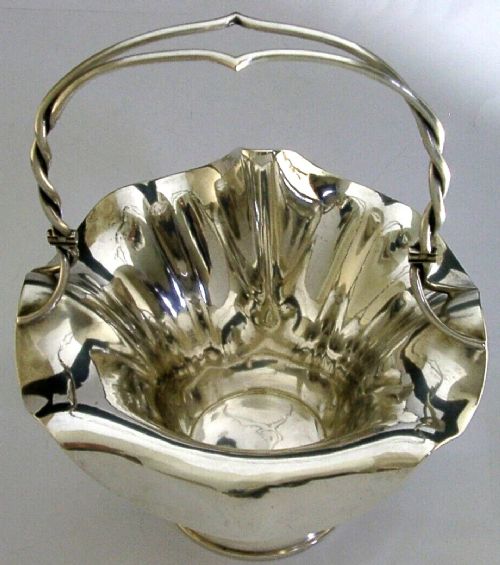
You are most likely to meet Edwardian examples and pieces from the late nineteenth century on this page. Makers utilised sterling silver to form oval serving dishes, pierced bowls, and swing-handle baskets intended for formal entertaining.
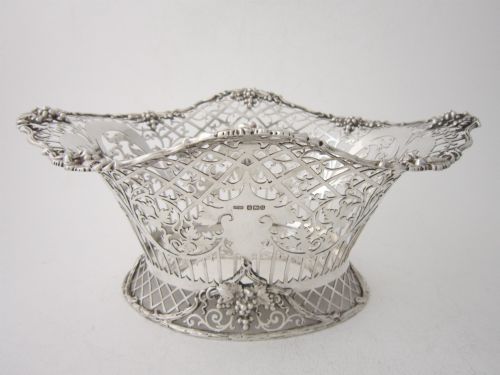
The forms range from heavy Edwardian baskets with elaborate fretwork to Victorian oval serving dishes and substantial George V centrepiece bowls. Each piece reflects the decorative priorities of its period, moving from ornate nineteenth-century embossing to cleaner twentieth-century pierced lattice designs.
Materials and construction methods
Silversmiths constructed these baskets using sterling silver sheets, which were shaped through hammering, spinning, or pressing to form the body of the bowl. Master craftsmen then applied pierce-work, fretwork, and lattice patterns by hand-sawing or punching intricate designs through the metal.
Embossed and repousse detailing appears frequently, created by hammering the reverse of the silver to push decorative fruit, floral, or scroll motifs into relief on the front. Cast elements such as feet, handles, and swing-handle mounts were soldered securely to the main body to support the weight of the piece.
Solid Silver Fruit Basket Retail Price Guide 2026
Typical asking prices for solid silver fruit basket among the pieces listed under this phrase on Sellingantiques today, from the lower quarter to the upper quarter. They describe what is for sale here now, not the wider market.
One massive centrepiece tips the scales at over three kilograms, proving that Victorian dining tables took their fruit very seriously indeed.
Assessing quality in silver baskets
The distinction between standard production and top-tier work rests upon gauge thickness and the precision of the piercing. Heavier metal provides structural rigidity, preventing distortion in large bowls and ensuring that pierced fretwork retains sharp, clean edges without warping.
Hand-finished chased and repousse details show greater depth and crispness on superior pieces, where the artisan spent hours defining individual leaves, fruit, and scrollwork. Maker attribution also influences standing, as workshops known for high-standard output maintained rigorous benchmarks across handles, feet, and hallmarks.
Joseph Rodgers·Fenton·William Comyns London·Hammond, Creake And Co·James Deakin And Sons·William Hutton And Sons·Martin Hall
The Solid Silver Fruit Basket Glossary
- Sterling silver
- An alloy of silver containing 92.5 percent pure silver and 7.5 percent other metals, usually copper, to add durability. This standard grade is stamped with official hallmarks.
- Pierced work
- A decorative technique where metal is cut away to form open patterns such as lattices, geometric shapes, or scrolling foliage. It lightens the visual weight of large silver items.
- Repousse
- A method of metalworking where the silver is hammered into relief from the reverse side. It creates three-dimensional surface decoration like fruit clusters and floral motifs.
- Epergne
- A large table centrepiece featuring a central bowl with multiple branching arms and smaller baskets for holding fruit, sweets, or flowers. It stands as the most elaborate form of table display.
- Swing handle
- A hinged handle attached to the rim of a basket that allows the grip to move freely from side to side. These joints require solid pins and sturdy mounts to bear the weight.
Solid Silver Fruit Basket: Frequently Asked Questions
What were solid silver fruit baskets used for?
These baskets held fresh fruit for formal dining table service or functioned as decorative centrepieces during the Victorian and Edwardian periods. Wealthy households displayed them prominently on sideboards or dining tables to reflect status and taste.
Over time, their role shifted toward decorative display as dining rituals changed. Today, they continue to serve as centrepieces or decorative bowls in domestic interiors.
How do I distinguish Edwardian pieces from Victorian ones?
Victorian baskets often exhibit heavier embossing, dense repousse fruit and floral motifs, and Neo-Rococo influences. The construction prioritises rich surface texture and ornate decorative borders.
Edwardian examples tend to feature lighter pierced lattice work, fretwork, and cleaner geometric or floral borders. Hallmarks and date letters stamped on the silver provide the exact year of manufacture.
How should I clean and care for a silver basket?
Maintenance involves gentle cleaning with a specialised silver polish and a soft cloth to remove tarnish without abrading the surface. Avoid harsh chemical dips, which can strip the natural patina from recessed areas of pierced and repousse work.
Store the basket in a dry environment away from direct sunlight and high humidity. Regular handling prevents tarnish accumulation in intricate fretwork sections.
Do swing handles indicate a specific period?
Swing handles appear across both Victorian and Edwardian silver baskets, designed for practical lifting and serving. The presence of a swing handle does not tie a piece to a single decade.
The hinge mechanism and mount style help date the piece, as Edwardian versions often paired swing handles with pierced fretwork bowls.