


Solid Oak Welsh Dresser
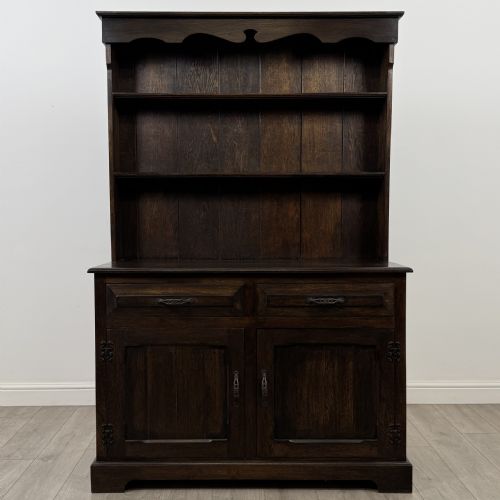
A solid oak welsh dresser anchors a room with timber built to endure, offering open plate racks and deep storage evolved from centuries of country house utility.
Solid Oak Welsh Dresser
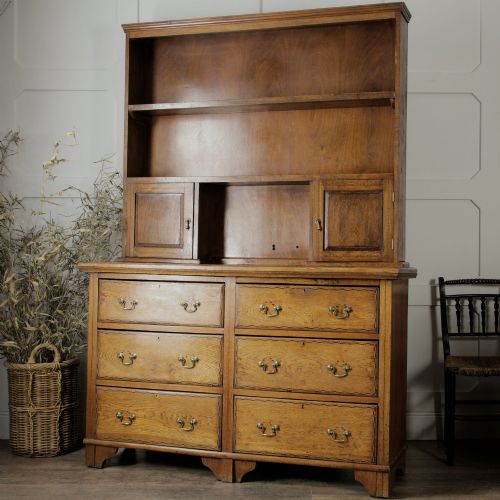
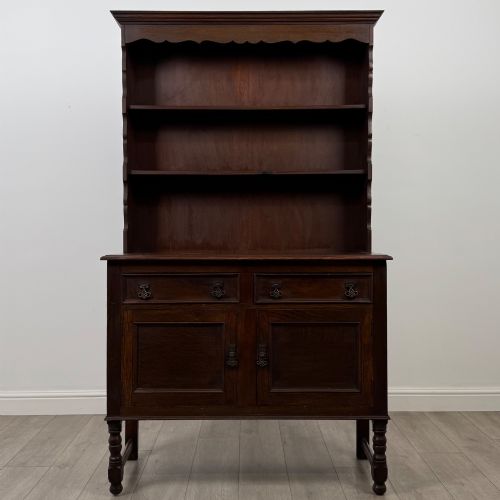
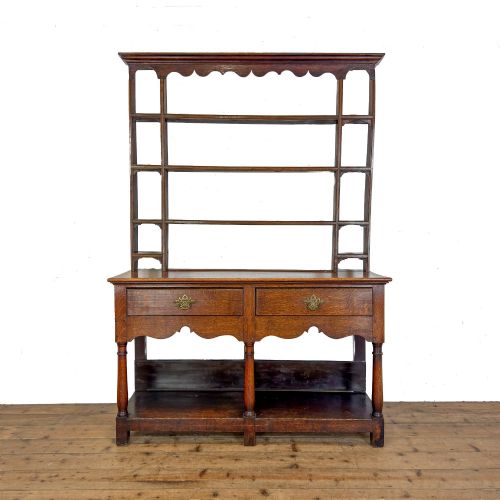
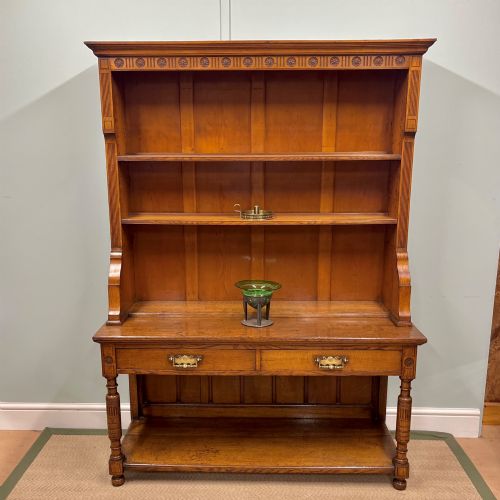
A solid oak welsh dresser combines a lower base of cupboards or drawers with an upper display rack for plates and platters. These pieces emerge from vernacular traditions, serving as the central utility furniture of historic kitchens and dining spaces.
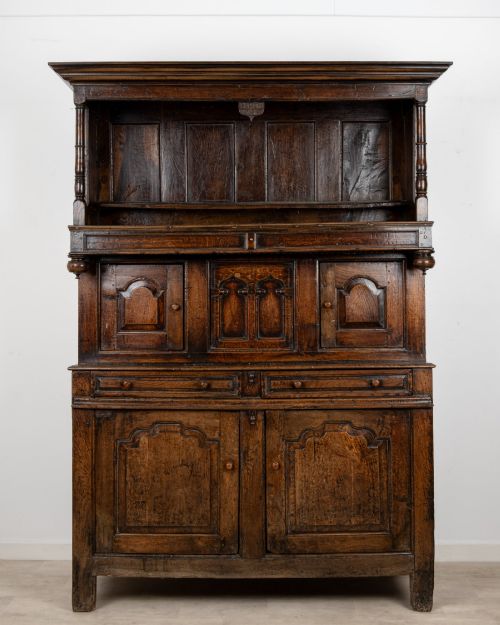
You will encounter regional forms spanning from seventeenth century cupboard dressers to later revival pieces made around nineteen ten. The selection balances early vernacular country oak with structured Georgian styles and later Arts and Crafts interpretations.
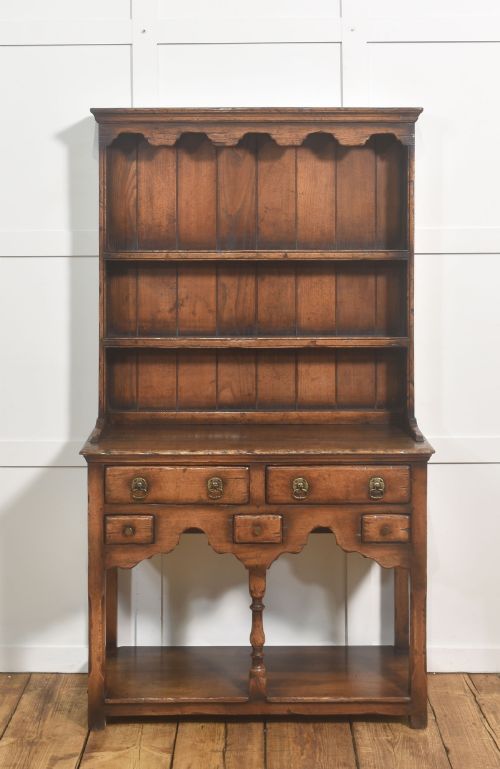
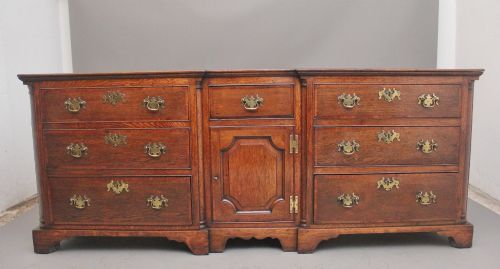
Base variants include potboard configurations with open lower shelves as well as enclosed cupboards and press arrangements. Each iteration reflects the practical storage needs of its period, executed in honest native timber.
Assessing Quality and Proportion
Quality rests in the integrity of the timber, the honesty of the construction, and the balance of proportions between base and rack. Earlier pieces demonstrate skilled hand craftsmanship in the shaping of mouldings and the fitting of drawers.
The degree of original surface wear and the retention of historic brass fittings separate standard regional examples from exceptional vernacular forms. Finer pieces maintain their structural unity while displaying rich, undisturbed patination on the oak surfaces.
Listings feature solid oak constructions spanning from seventeenth century examples to Edwardian revivals, incorporating brass and iron hardware.
Liberty and Co·Heals of London
The Solid Oak Welsh Dresser Glossary
- Potboard
- An open lower shelf beneath a dresser base traditionally used for storing pots and pans. This feature distinguishes many eighteenth century country examples.
- Cwpwrdd Tridarn
- A traditional Welsh three piece press cupboard often incorporating display sections. These form part of the early vernacular tradition.
- Plate Rack
- The upper tiered shelving unit designed to display ceramics and platters securely. It forms an integral visual component of the traditional dresser.
- Vernacular
- Architecture and furniture built by local craftsmen using traditional regional methods and materials. These pieces prioritize practical utility over high stylistic convention.
- Patina
- The surface sheen and colour developed by wood over years of handling, light exposure, and waxing. It serves as a visual indicator of age and authenticity.
Solid Oak Welsh Dresser: Frequently Asked Questions
How do I date a solid oak welsh dresser?
Dating relies on examining construction techniques, tool marks, and timber characteristics. Early pieces exhibit pegged joinery and hand-planed boards, while later revival models show uniform machining.
Hardware styles and regional vernacular traits also help anchor a piece to specific eras like the seventeenth century or the Edwardian period.
Are the plate racks original to the base?
Many dressers survive with their original plate racks, though some upper sections were paired with bases at a later date. Examining the timber continuity, wear patterns, and fixing methods helps determine if the two parts share the same history.
Matching patination between the top and bottom sections usually indicates an authentic pairing.
How should I care for a historic oak dresser?
Maintain oak furniture by applying occasional traditional beeswax to nourish the timber and preserve the historic surface. Keep the piece away from direct heat sources and dramatic humidity shifts to prevent wood movement.
Dust regularly with a soft cloth to protect the accumulated patina.