
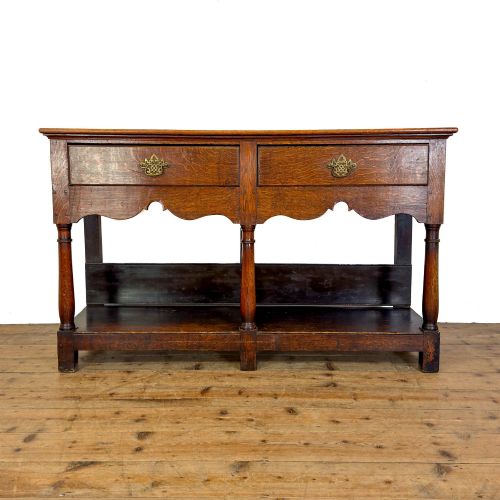
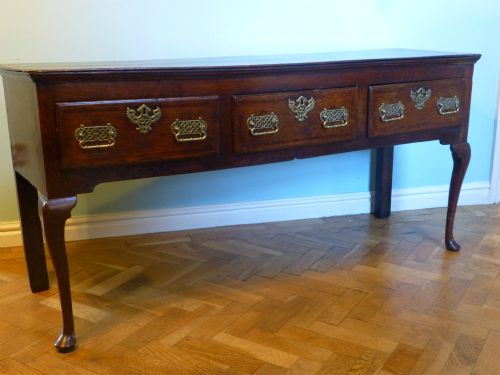


Eighteenth Century Oak Dresser
An eighteenth century oak dresser brings honest vernacular proportion and deep timber warmth to a room.
Eighteenth Century Oak Dresser
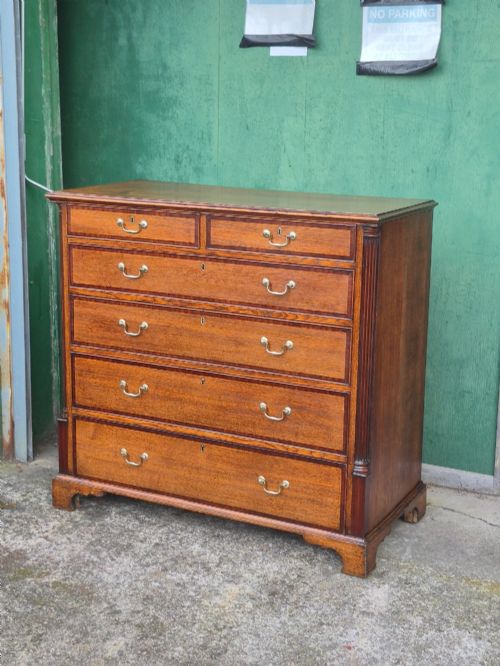
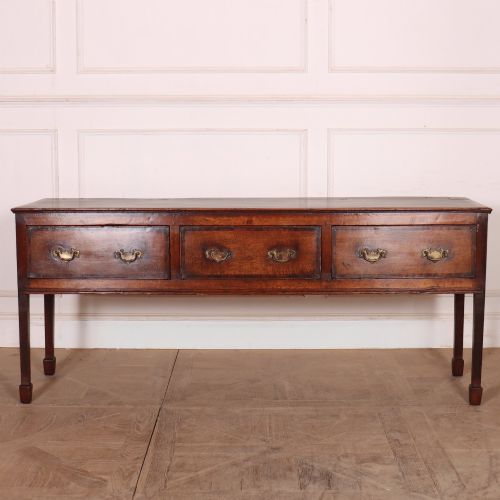
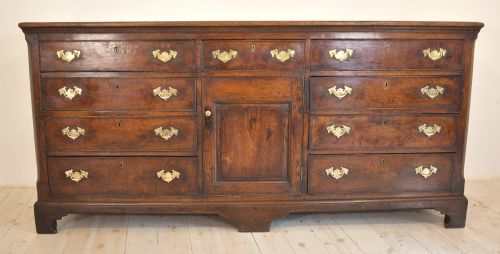
An eighteenth century oak dresser combines utilitarian storage with the robust presence characteristic of period vernacular furniture. Buyers searching this phrase most commonly encounter low dresser bases, potboard formats and regional variants hailing from Welsh, English and provincial European traditions.
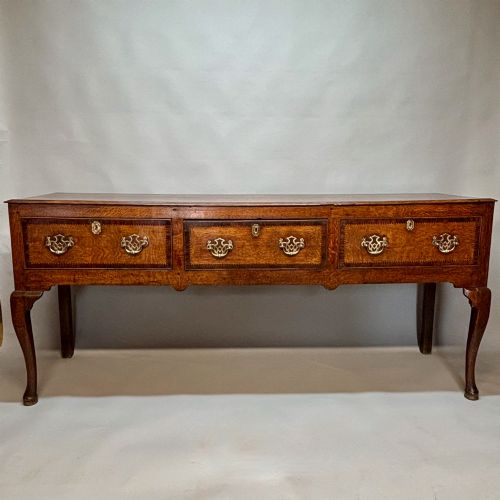
The form typically pairs a robust lower cabinet or base fitted with drawers alongside upper shelving tiers or display racks, though many surviving examples exist solely as low dresser bases. Regional idioms distinguish these pieces, ranging from the open potboards of Welsh country workshops to the splayed feet and cabriole legs of Georgian regional interpretations.
Constructed primarily to serve domestic storage needs in country houses and farmhouses, these pieces reflect the practical demands of earlier households. Today, they function as focal storage units in kitchens, dining rooms and hallways, bridging the gap between rustic utility and period charm.
Materials and Construction
Makers relied primarily on native oak, complemented by secondary timbers and regional varieties such as walnut in provincial French pieces and pine or fruitwood in structural interiors. Timber selection dictated the strength of the carcass and the durability of the working surfaces.
Joinery methods depended on traditional frame-and-panel construction, pegged mortise and tenon joints, and hand-cut dovetails for drawer construction. Metal components were restricted to functional brass drop handles, escutcheons and iron hardware used to secure doors and drawers.
Eighteenth Century Oak Dresser Retail Price Guide 2026
Typical asking prices for eighteenth century oak dresser among the pieces listed under this phrase on Sellingantiques today, from the lower quarter to the upper quarter. They describe what is for sale here now, not the wider market.
One persistent eighteenth century Welsh oak dresser base managed to survive centuries of farmhouse kitchens while retaining a wonderfully tactile patina.
Assessing Quality and Character
The upper tier of quality rests in the integrity of the timber surface, where decades of handling develop a deep, organic patina across the oak grain. Pieces retaining their original hardware, uncompromised potboard lower shelves and untouched structural joins command greater appreciation.
Proportion and regional articulation separate standard utility builds from finer examples, such as those featuring deliberate cabriole legs, shaped aprons or refined moulding details. Alterations to height, replaced upper racks or extensive board repairs shift a piece away from its original format.
The Eighteenth Century Oak Dresser Glossary
- Pot Board
- An open slatted lower shelf fitted between the legs of a dresser base. Originally designed to hold pots and heavy earthenware.
- Dresser Base
- The lower section of a dresser comprising drawers and cupboards without the upper plate rack. Many survive independently in this form.
- Deuddarn
- A traditional Welsh two-tier cupboard or cabinet with enclosed sections. It represents a specific regional form of vernacular storage furniture.
- Patina
- The surface sheen and colour acquired by timber through age, light exposure and regular waxing. This quality develops naturally over generations.
- Vernacular Furniture
- Domestic pieces made by local craftsmen for everyday regional use rather than high urban workshops. These designs follow traditional local patterns.
Eighteenth Century Oak Dresser: Frequently Asked Questions
How do I care for antique oak?
Feed the dry timber periodically with traditional beeswax to maintain the surface sheen and protect the grain from excessive moisture loss.
Keep the piece away from direct heat sources and sudden temperature fluctuations to prevent timber splitting and joint movement.
Can I use a dresser in a modern kitchen?
These pieces integrate naturally into contemporary spaces, offering practical storage for crockery, glassware and kitchen linens while grounding the room with historic character.
The deep drawers and surface tops accommodate modern appliances and everyday items without disrupting the traditional aesthetic.
What is the difference between a low dresser and a full dresser?
A low dresser consists strictly of the lower drawer and cupboard base, standing at table height. A full dresser includes the upper shelving rack intended for displaying plates.
Many pieces survive today as bases because the upper racks were frequently separated or discarded over centuries of shifting domestic use.