
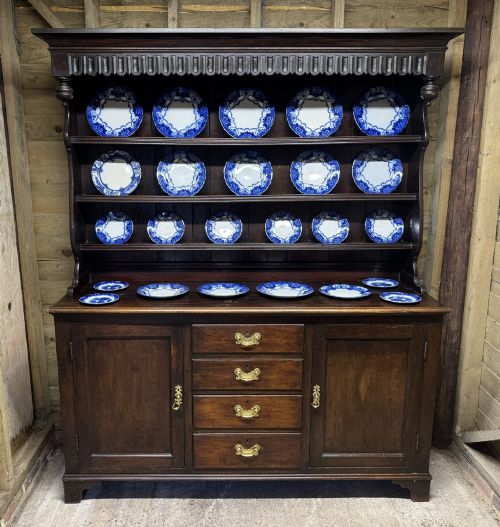
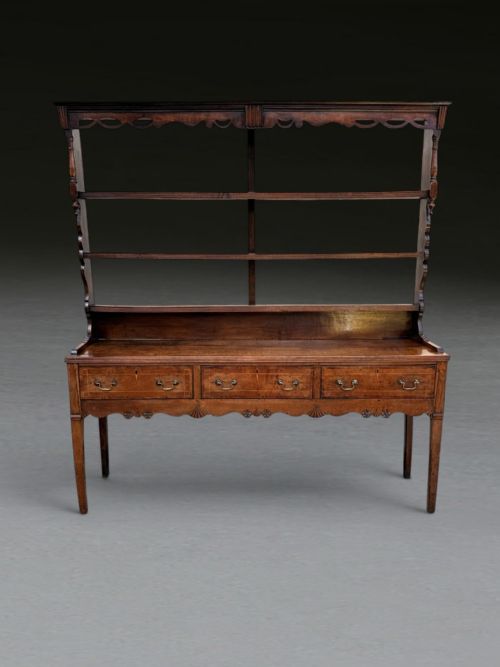
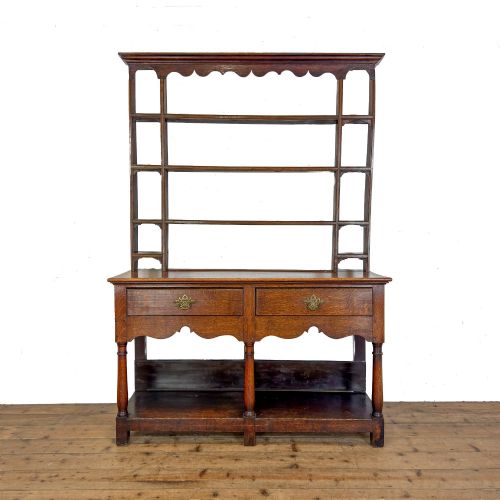
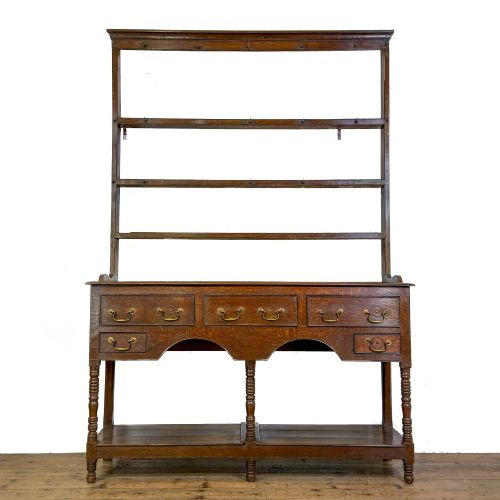


Open Plate Rack Dresser
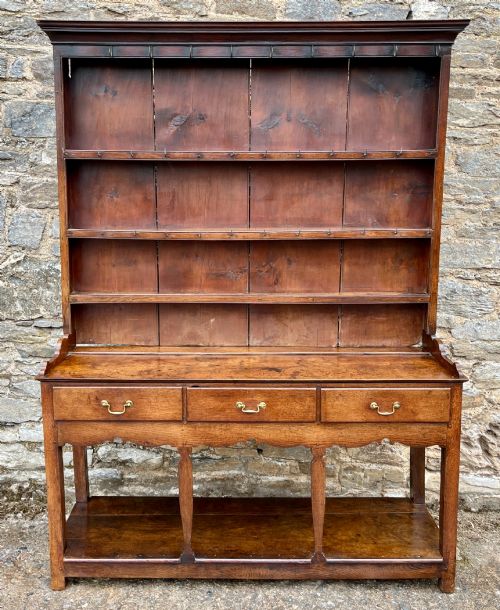
When you want an open plate rack dresser, you are looking at substantial timber storage that displays your ceramic collection.
Open Plate Rack Dresser
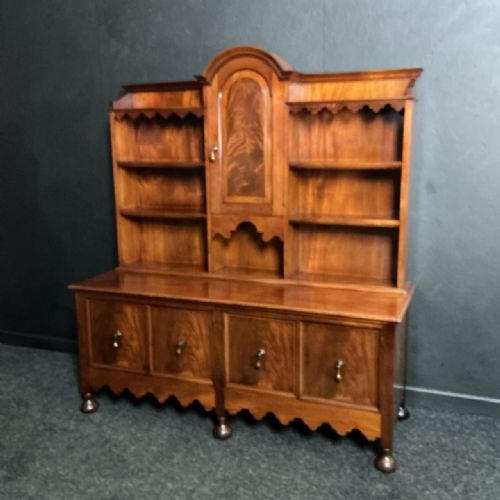
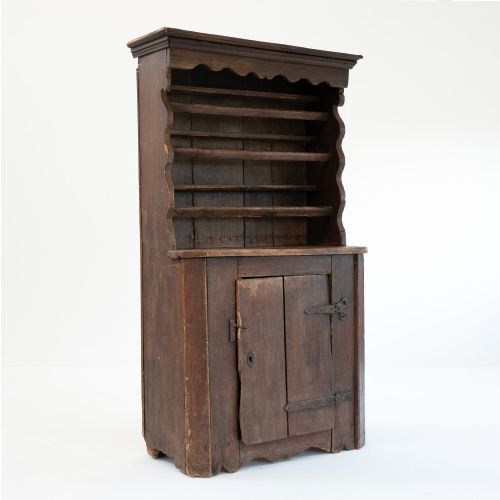
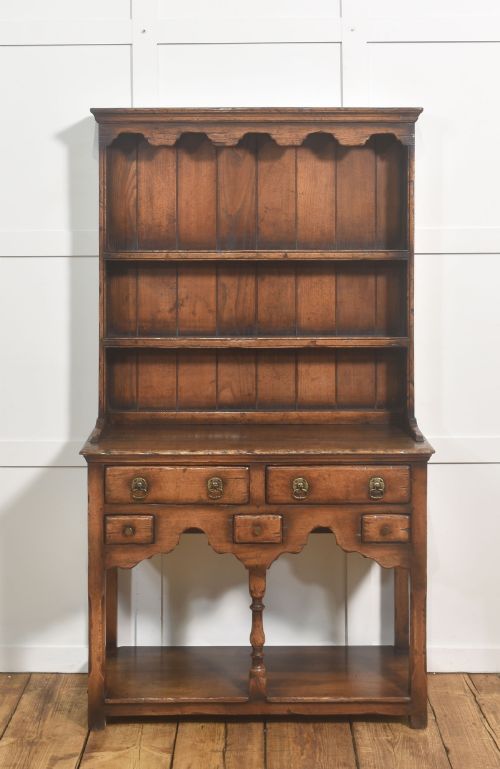
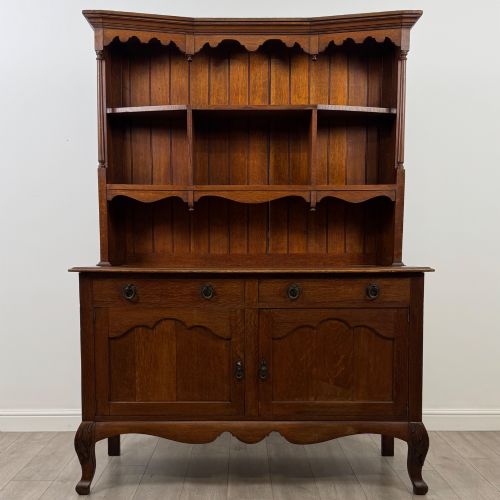
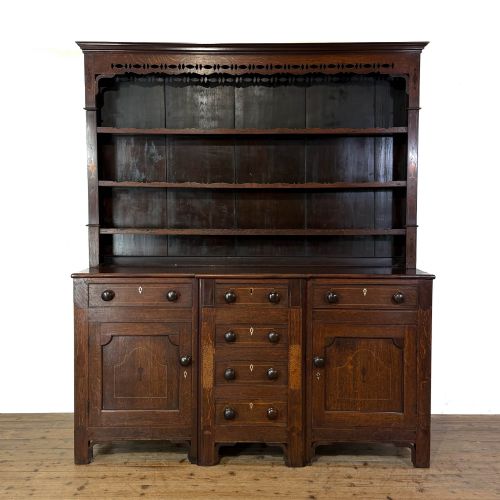
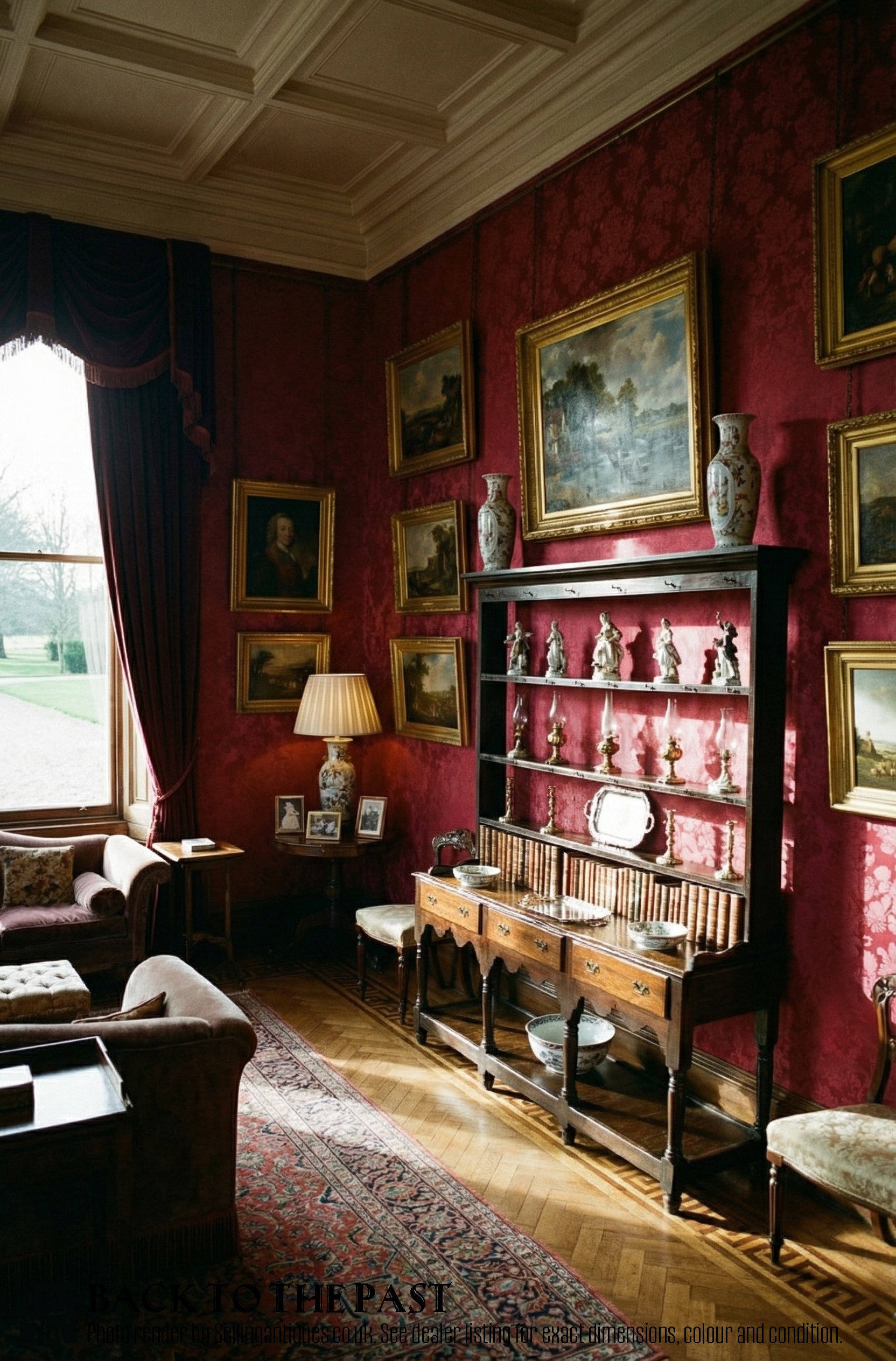
An open plate rack dresser combines a lower base of drawers and cupboards with an upper tier of open shelves designed to display crockery.
You will most frequently meet oak pieces originating from Welsh, English, and regional country workshops spanning the eighteenth and nineteenth centuries.
The format ranges from potboard bases with open lower shelves to breakfront configurations and narrow cottage proportions.
How they were made
Cabinetmakers utilised native hardwoods like oak and elm alongside pine, frequently finishing surfaces with paint or retaining the natural grain of the timber.
Construction methods relied on traditional joinery techniques, incorporating brass and iron hardware for drawer pulls and hinges.
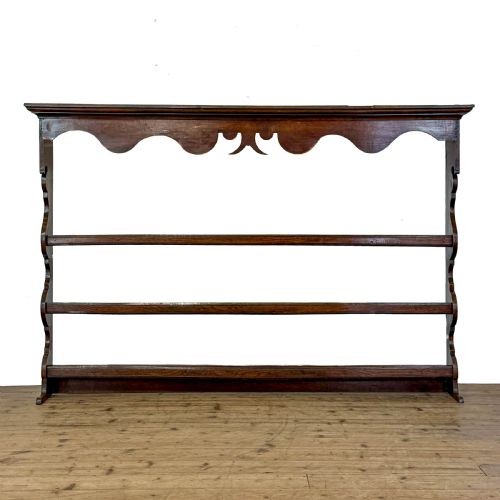
Upper racks were built directly into the base structure or fashioned as wall-hanging shelves to hold heavy ceramic plates securely.
One listed nineteenth-century Welsh dresser preserves its working dogs from Café Snowdon.
What varies in quality
The integrity of the timber and the retention of original surface treatments dictate the standing of a piece within its period.
The Open Plate Rack Dresser Glossary
- Potboard
- A lower open shelf positioned near the floor, traditionally used for storing pots and pans. This feature often distinguishes earlier country pieces.
- Breakfront
- A cabinet design where the central section projects forward from the flanking sides. It adds architectural depth to the piece.
- Flame mahogany
- A decorative wood veneer showing a distinct, flame-like grain pattern. Cabinetmakers selected this cut for prominent drawer fronts.
- Provincial
- Denoting items made in the regions rather than metropolitan workshops. These pieces display local vernacular design traits.
Open Plate Rack Dresser: Frequently Asked Questions
Are these dressers solid oak?
Many examples are constructed entirely from native oak timbers. Regional makers relied on local hardwoods for durability.
Other versions incorporate pine or mahogany, sometimes with painted finishes applied during their working lives.
How do I date a dresser?
Dating relies on construction methods, timber choice, and hardware styles. Eighteenth-century pieces typically show hand-planed surfaces and pegged joinery.
Later Victorian and Edwardian examples often display different moulding profiles and machine-sawn components.
Can the top rack separate?
Some upper plate racks detach from the lower base for transport and placement. Others are built as a single integrated unit.
Wall-hanging shelf versions also exist independently of a lower sideboard base.
Where were these dressers made?
These pieces originated in regional workshops across Wales, England, and Ireland. Local craftsmen adapted designs to suit rural domestic needs.
Regional variations appear in the drawer arrangements and cornice details.