


Solid Oak Extension Table
A solid oak extension table gives a dining room lasting presence and practical daily versatility through traditional draw-leaf or drop-leaf mechanisms.
Solid Oak Extension Table
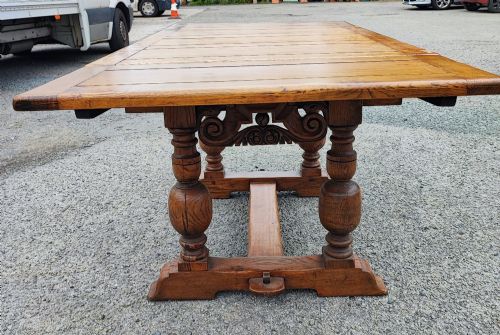
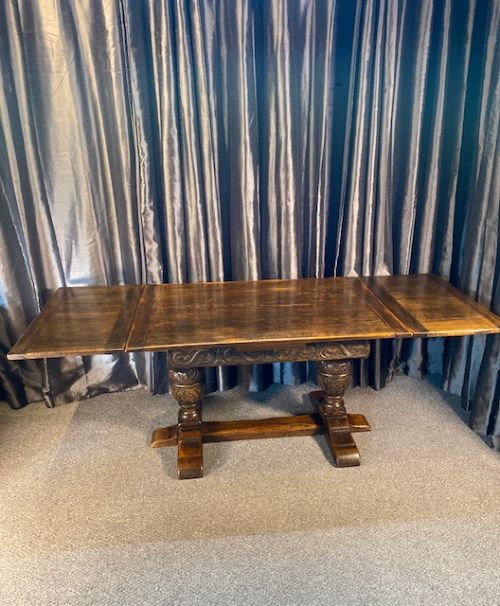
A solid oak extension table provides a robust surface for family dining while offering expandable leaves for larger gatherings. When searching for a solid oak extension table, buyers encounter formats ranging from early gateleg designs to early twentieth-century refectory and draw-leaf variants.
The selections span distinct historical revivals and periods including the Edwardian era, nineteen-tens, nineteen-twenties, and seventeenth century. These dining tables serve as functional centrepieces that adapt their footprint through clever sliding leaves or drop flaps.
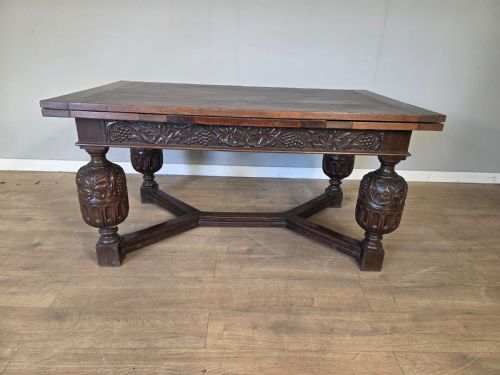
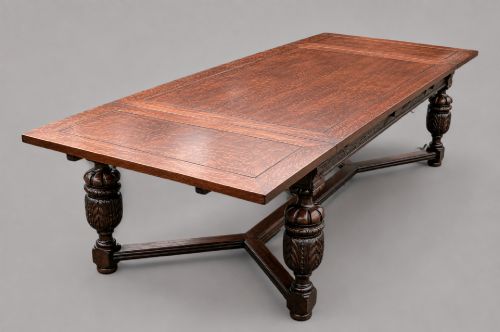
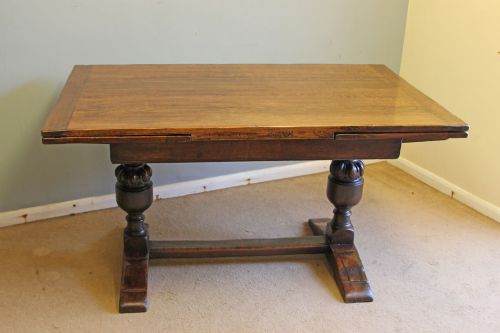
Refectory and farmhouse formats dominate the available inventory, bringing substantial timber weight and sturdy stretchers to domestic spaces. Each piece demonstrates how historical styles such as Jacobean Revival and Arts and Crafts influence everyday utility.
How they were made
Carpenters constructed these dining tables primarily from solid oak, utilising its natural density and prominent grain for structural durability. Metal and iron components occasionally reinforce mechanical joints, while brass fittings appear on selected hardware.
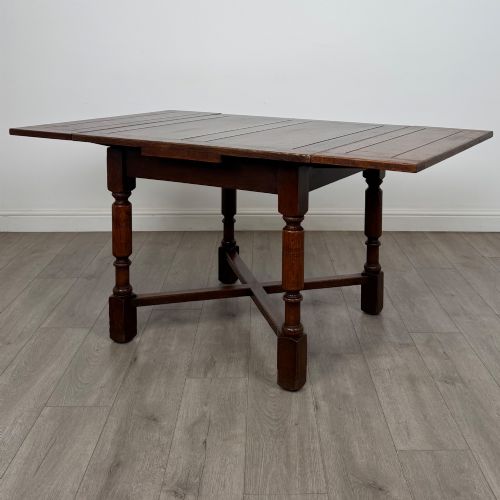
Makers employed traditional draw-leaf mechanisms and drop-flap hinges to allow the top surface to expand smoothly without sacrificing stability. Barley twist legs and heavy supporting stretchers provide both architectural interest and structural bracing under heavy loads.
Some tables feature barley twist legs so deeply carved they resemble twisted barley sugar, adding a playful flourish to sturdy oak.
What varies in quality
The distinction between standard utility pieces and finer examples rests in the proportion of the timber, the subtlety of the carved revival details, and the precision of the extension mechanism. Superior tables maintain smooth operation in their draw-leaf actions while preserving the integrity of the solid oak grain.
The refinement of historical styling, such as the execution of Jacobean or Elizabethan revival motifs, dictates the aesthetic standing of each piece. Heavier proportions and well-balanced barley twist turnings elevate the visual weight and craftsmanship of the dining table.
The Solid Oak Extension Table Glossary
- Draw-leaf
- An extension system where two concealed leaves slide out from beneath the main top to lengthen the table. This ingenious mechanism allows the surface area to double with minimal effort.
- Refectory
- A long, narrow dining table originally used in monastic dining halls. These pieces typically feature sturdy stretchers running low between the legs for added stability.
- Gateleg
- A table with hinged leaves supported by swinging legs that pivot out like a gate. This design allows the drop flaps to be lowered when space is restricted.
- Jacobean Revival
- A nineteenth and twentieth-century style imitating seventeenth-century English furniture. It is characterised by dark oak, geometric mouldings, and heavy turned supports.
Solid Oak Extension Table: Frequently Asked Questions
How do draw-leaf tables work?
Draw-leaf tables feature two additional leaves stored directly beneath the main surface. When pulled outward, these leaves rise smoothly into place to extend the overall length of the dining table.
This clever design eliminates the need to store separate loose boards elsewhere in the home. It provides an instant solution for accommodating extra guests at dinner.
What is a refectory table?
A refectory table is a long, narrow dining table traditionally built for communal dining. They are characterised by sturdy timber construction and low horizontal stretchers connecting the legs.
In modern homes, these tables serve as generous everyday dining surfaces. Their substantial oak frames provide exceptional durability for daily family life.
How do I care for solid oak?
Solid oak furniture benefits from regular dusting with a dry cloth and occasional treatment with natural beeswax. Avoiding direct sunlight and sudden temperature changes protects the timber from drying out.
Using coasters and mats safeguards the waxed or polished surface from moisture and heat. Proper care preserves the deep grain and rich colour of the wood for generations.
Are these tables good for small spaces?
Tables with drop-leaf or gateleg mechanisms are particularly suited for compact dining areas. The leaves can be lowered daily to save floor space and raised only when needed.
Draw-leaf versions offer similar flexibility by expanding only during meals. This adaptability makes historical oak tables surprisingly practical in modern rooms.