
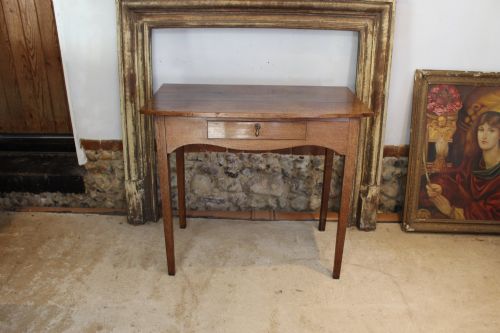
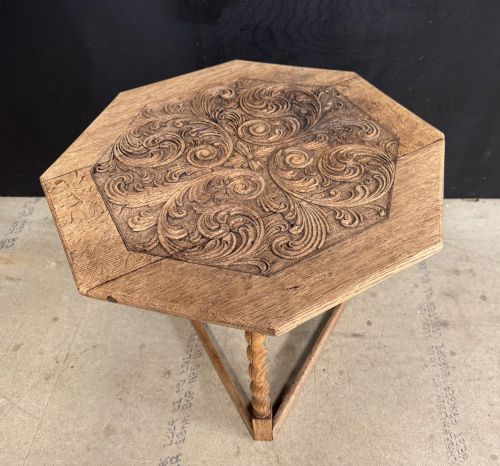
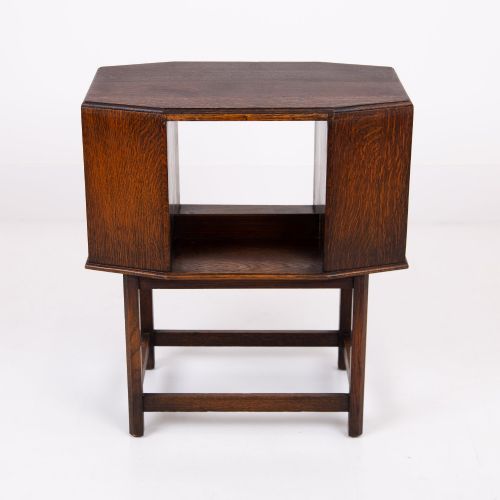
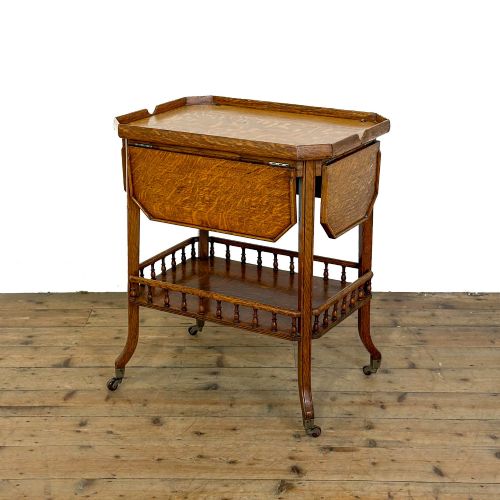
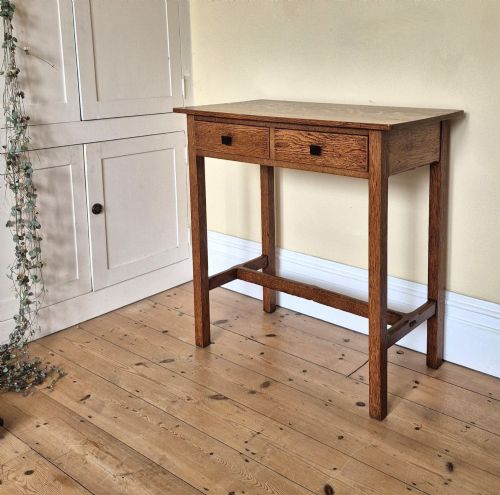


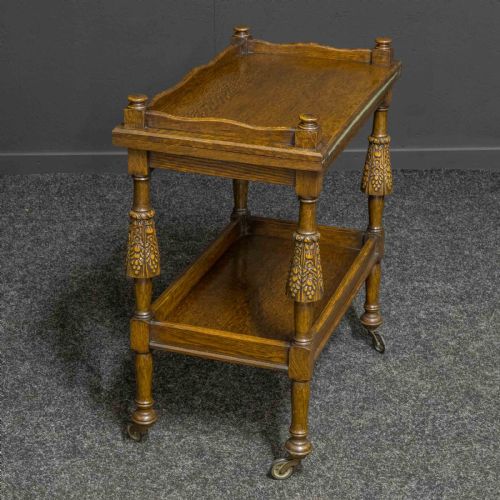

Medium Oak Side Table
A medium oak side table brings useful surface space and warm timber grain to a room.
Medium Oak Side Table
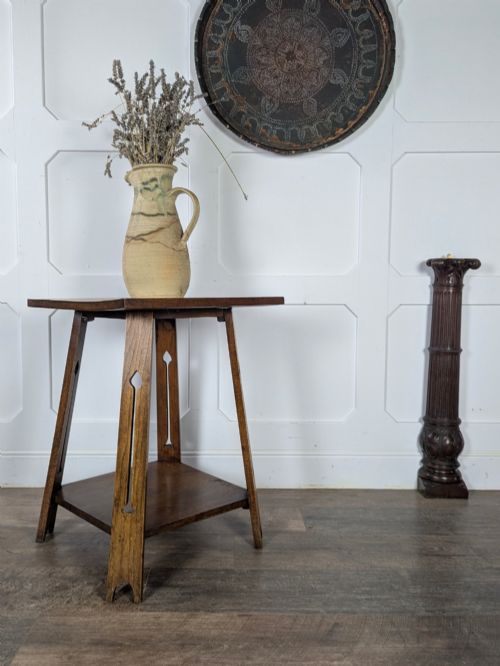
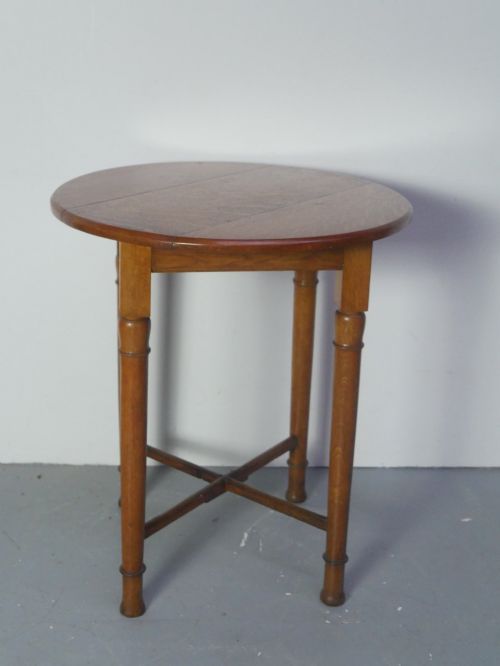
A medium oak side table serves as a versatile piece for living rooms, hallways, and bedrooms, offering a sturdy surface and practical storage. When buyers search for a medium oak side table, they encounter forms ranging from simple occasional tables to two-tier trolleys, lamp tables, and small drawer units.
The pieces available span the late nineteenth century through to the 1930s, encompassing Edwardian examples, Arts and Crafts designs, and Art Deco Modernist creations. These items often feature oak or solid oak construction, sometimes complemented by brass hardware or wood inlay.
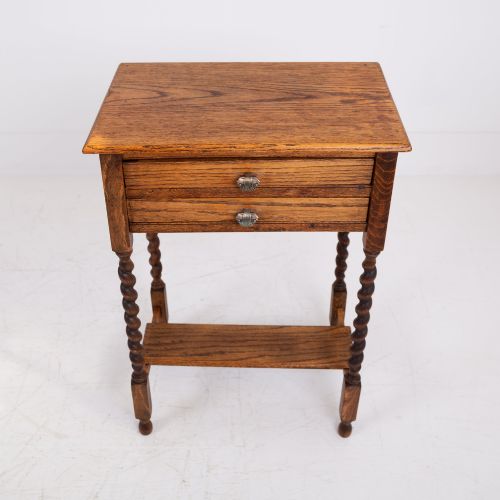
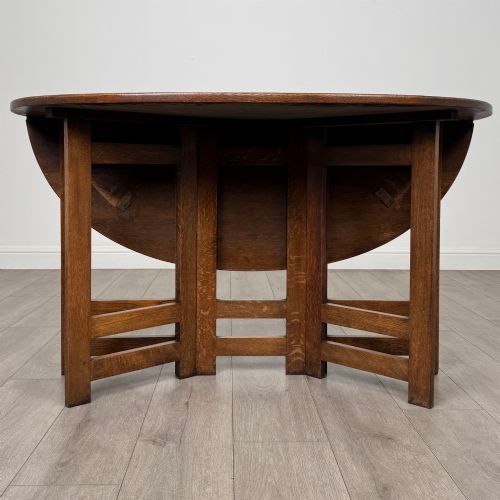
Makers and regional workshops produced diverse variations, including gateleg configurations, octagonal tops, and barley twist legs. Buyers find both straightforward surfaces for daily use and specialised furniture with integrated storage or shelving.
Materials and Construction
Craftsmen utilised solid oak and oak veneer over wood carcasses, ensuring a balance of structural strength and decorative grain presentation. Joinery methods varied from traditional pegged construction in earlier Arts and Crafts pieces to simpler assembly in later twentieth-century iterations.
Metal elements such as brass handles, hinges, and occasional fittings provided functional contrast to the timber. Selected examples incorporate wood inlay to create geometric or floral motifs across the surface.
Turned elements, including barley twist legs, required skilled lathe work, while two-tier trolleys and cabinets relied on sturdy frame construction to support daily weight.
Medium Oak Side Table Retail Price Guide 2026
Typical asking prices for medium oak side table among the pieces listed under this phrase on Sellingantiques today, from the lower quarter to the upper quarter. They describe what is for sale here now, not the wider market.
Listings feature periods spanning from 1890 to 1930, encompassing Edwardian, Arts and Crafts, and Art Deco styles.
Assessing Quality in Construction and Design
The distinction between standard production items and superior pieces rests on the choice of timber and the precision of the joinery. Solid oak construction with thoughtful grain matching elevates a piece above those utilising simpler veneers on softer secondary woods.
Hardware selection and decorative detail signal the original maker's intent, with well-cast brass fittings and refined wood inlay outperforming plain alternatives. The integration of functional elements, such as smoothly operating drawers or stable gateleg mechanisms, determines daily practicality.
Stylistic coherence within movements like Arts and Crafts or Art Deco Modernist reflects the care taken during design and execution.
Gomme·Hubert Simpson of Kendal
The Medium Oak Side Table Glossary
- Solid oak
- Timber derived entirely from the oak tree without the use of manufactured core boards or surface veneers. This material provides substantial weight and durability to tables.
- Oak veneer
- A thin layer of oak timber applied over a secondary wood base to provide the appearance of solid oak. This technique allowed makers to utilise decorative grain patterns efficiently.
- Barley twist
- A type of furniture leg turned in a helical spiral resembling a twisted rope. This decorative feature gained popularity during the Edwardian period.
- Gateleg table
- A table with hinged flaps supported by pivoted legs that swing out like a gate. This design allowed furniture makers to create space-saving surfaces.
- Arts and Crafts
- A design movement prioritising traditional craftsmanship, visible construction, and simple forms. Pieces from this style often emphasise the natural texture of oak.
Medium Oak Side Table: Frequently Asked Questions
How do I date an oak side table?
Dating relies on observing construction methods, hardware styles, and design characteristics associated with specific periods like the Edwardian era or the 1930s. Clues such as machine-cut versus hand-cut joinery or the presence of Art Deco motifs help narrow the timeframe.
Examining secondary timbers and finish types also provides insight into when the piece was constructed, as cabinet-making standards evolved significantly between the late nineteenth century and the mid-twentieth century.
Were these tables used for tea?
Many two-tier trolleys and occasional tables were specifically designed to facilitate serving tea and refreshments in the parlour or drawing room. Their multiple tiers provided convenient space for pots, cups, and plates.
Over time, owners repurposed these versatile surfaces for lamps, books, and general display as domestic habits shifted away from formal afternoon tea.
How do I care for medium oak?
Maintaining oak furniture involves keeping the timber away from direct heat sources and strong sunlight, which can dry out and fade the wood. Regular dusting with a soft, dry cloth preserves the finish.
Occasional application of appropriate beeswax helps nourish the grain and protects the surface from minor moisture marks without building up heavy chemical residues.
What is an occasional table?
An occasional table is a small, portable piece of furniture designed to be moved around a room as needed for specific tasks. These tables offered flexible surface space before fitted living room layouts became standard.
They frequently featured lightweight frames, shelves, or small drawers to hold everyday items close to seating areas.