
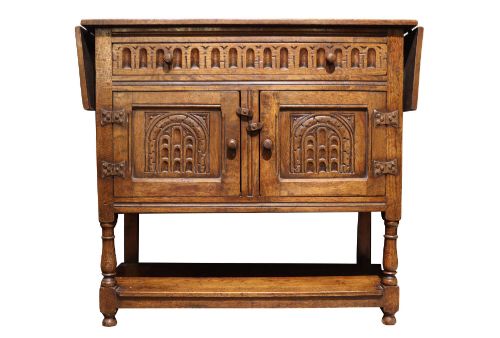
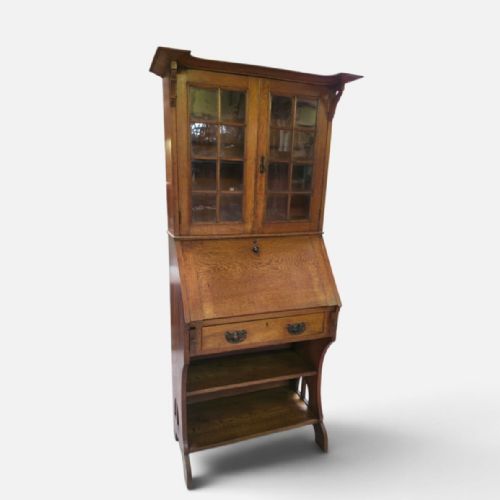
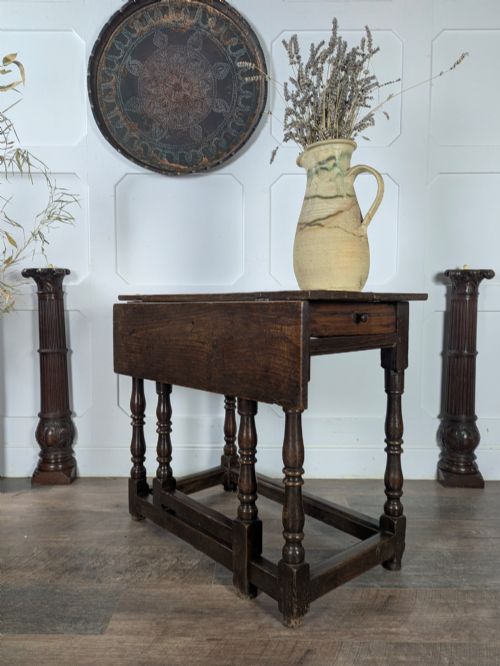
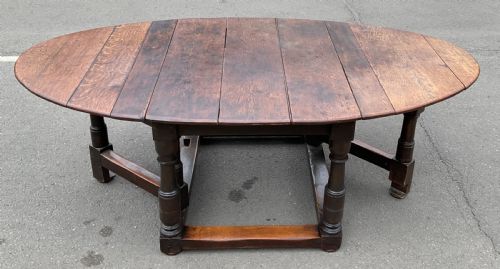


Solid Oak Drop Leaf
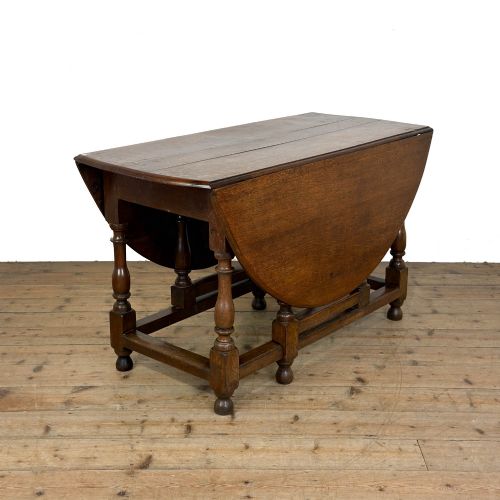
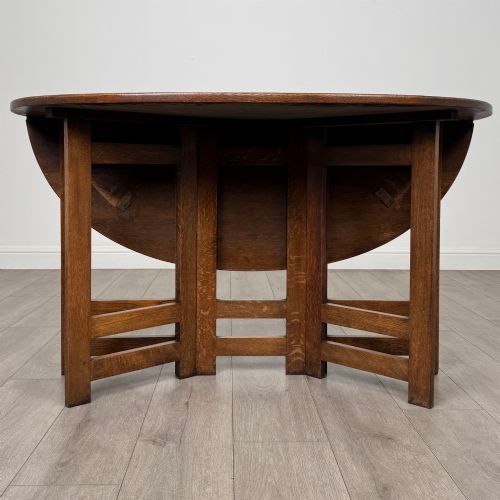
A solid oak drop leaf table offers dependable timber framing and folding leaves that fold away neatly when floor space is at a premium.
Solid Oak Drop Leaf
A solid oak drop leaf search brings up sturdy timber tables designed with hinged flaps that drop down at the sides to save space. You will most frequently meet gateleg dining tables, side tables, and occasional coffee tables built from heavy oak.
These practical pieces cross multiple periods, appearing in robust seventeenth-century iterations, eighteenth-century vernacular designs, and later Arts and Crafts or twentieth-century revivals. They function primarily as dining surfaces or occasional tables that expand when needed and fold flat against a wall.
The format spans small tea trolleys and narrow coffee tables up to large six-seater and eight-seater dining tables. While timber remains overwhelmingly oak, occasional pieces incorporate secondary woods like ash or brass and iron fittings.
Materials and construction
Makers built these tables using solid oak timbers joined with traditional framing methods, often pairing the main body with secondary woods such as ash for internal or structural components. Surfaces frequently show plank construction secured by substantial stretchers and hinged gatelegs that swing out to support the dropping flaps.
Hardware played a functional role in assembly, utilising iron hinges and brass fittings to attach drop leaves and secure folding legs. Selected pieces incorporate turned elements like bobbin turnings or carved decoration on the frieze and legs.
Among heavy oak dining furniture, the search turns up an unexpected sparkling interloper: a nine-carat yellow gold acorn drop pendant.
Assessing the standards
Quality rests heavily on the integrity of the timber, the weight of the solid oak planks, and the stability of the gateleg action when extended. Superior examples retain original hinges, uncompromised structural joints, and good colour across both the top and the dropping leaves.
Later revivals and mid-century items vary in timber selection and mechanical smoothness compared to early seventeenth or eighteenth-century examples. Hand-turned legs, balanced proportions, and untouched original surfaces separate finer period pieces from utilitarian later production.
The Solid Oak Drop Leaf Glossary
- Gateleg table
- A table with hinged leaves supported by one or more legs that swing out like a gate. This design provides robust support for heavy oak flaps.
- Drop leaf
- A table top configuration featuring a fixed central section and hinged flaps that lower when not in use. It allows the footprint of the furniture to be reduced quickly.
- Bobbin turning
- A type of lathe-turned leg or stretcher shaped to resemble a series of wooden bobbins or spools end-to-end. This decorative turning appears frequently on seventeenth-century furniture.
- Refectory table
- A long dining table historically used in communal halls. Examples in this category combine this heavy form with folding drop leaves.
- Plank top
- A tabletop constructed from solid parallel boards joined together rather than veneered panels. It forms a durable working surface on early oak tables.
Solid Oak Drop Leaf: Frequently Asked Questions
How do I use a drop leaf table daily?
Keep the leaves dropped against the sides to maintain an open floor plan in smaller rooms or hallways. Simply swing out the gatelegs and raise the flaps whenever you require extra surface area for dining or working.
Avoid placing heavy items directly over unsupported joints and use mats to protect the solid oak timber from moisture and heat. Regular dusting and occasional wax application will keep the surface protected over years of daily use.
What periods do these tables come from?
The listings include substantial seventeenth-century examples featuring bobbin-turned legs alongside eighteenth-century vernacular dining tables. You will also encounter twentieth-century revivals and Arts and Crafts interpretations.
Later pieces from the nineteen-twenties and nineteen-thirties borrow historical styling cues like Jacobean turning while offering practical compact dimensions. Each era brings distinct leg turnings and timber finishes to the basic gateleg format.
Are these tables suitable for small spaces?
These tables excel in compact rooms because the hinged leaves lower to a minimal footprint when not in use. Small coffee tables, tea trolleys, and narrow side variants fit easily into tight corners.
When dining or entertaining is required, the hinged flaps lift up in seconds to seat several people. The dual nature of the folding leaves makes them exceptionally adaptable for modern apartments.
What woods are used besides oak?
While solid oak forms the primary material for nearly all listed tables, makers occasionally incorporated ash for internal framing or secondary structural elements. Metal components rely on brass and iron for hinges and structural support.
Tiger oak appears in specific revival and twentieth-century items, displaying distinctive figuring across the grain. The overwhelming majority of pieces maintain a heavy solid oak construction throughout.