

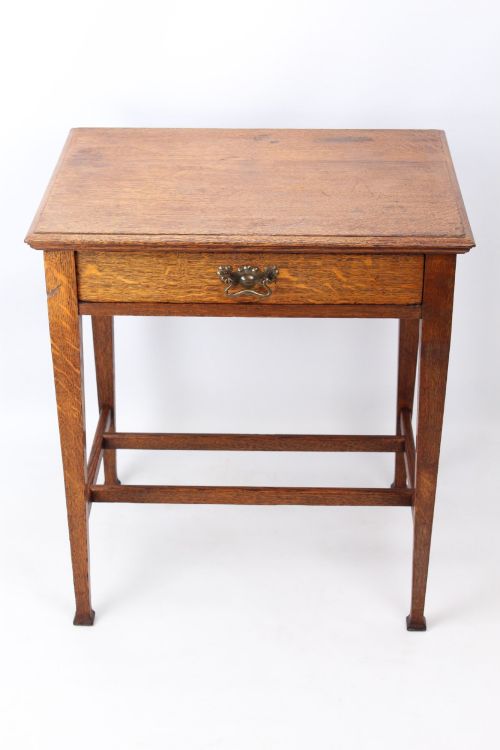
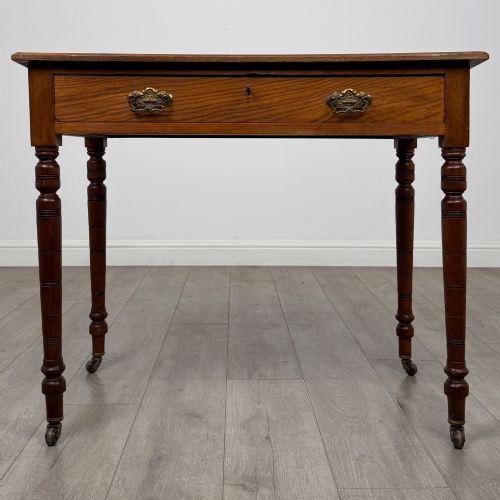
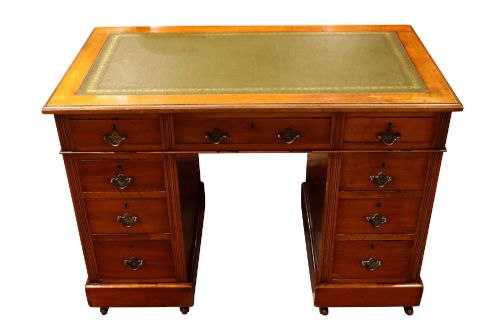
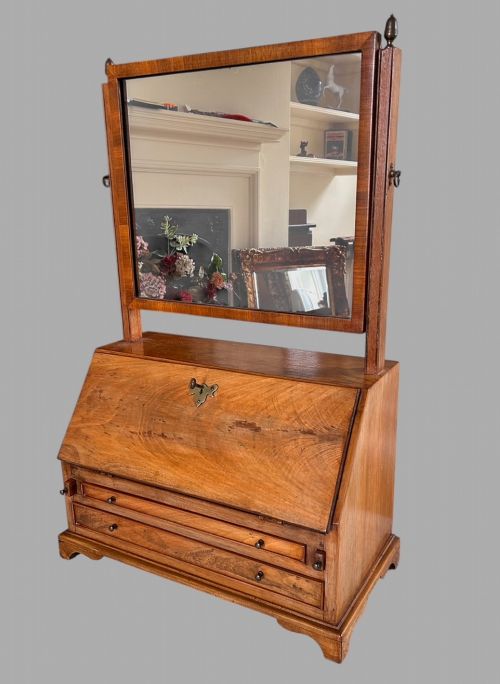
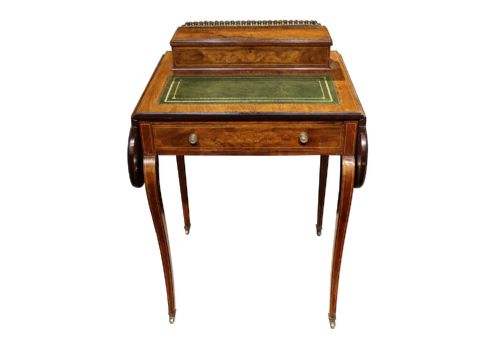
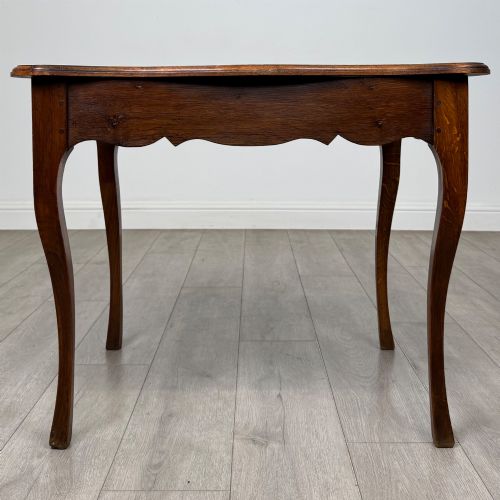
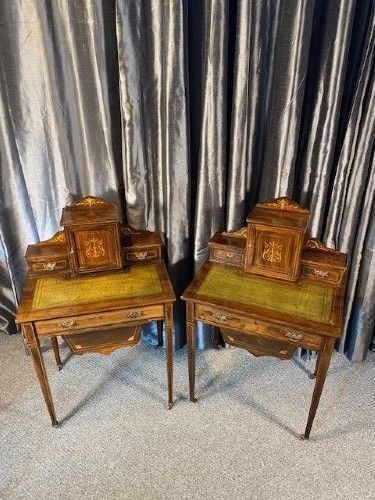
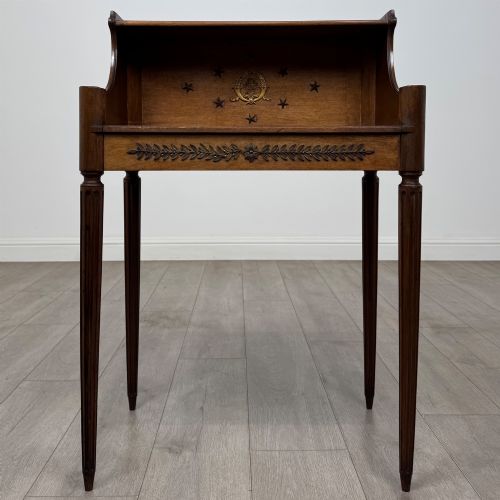
Small Writing Table
When you search for small writing table, you are looking at compact companions designed for correspondence, reading and administrative work across centuries.
Small Writing Table
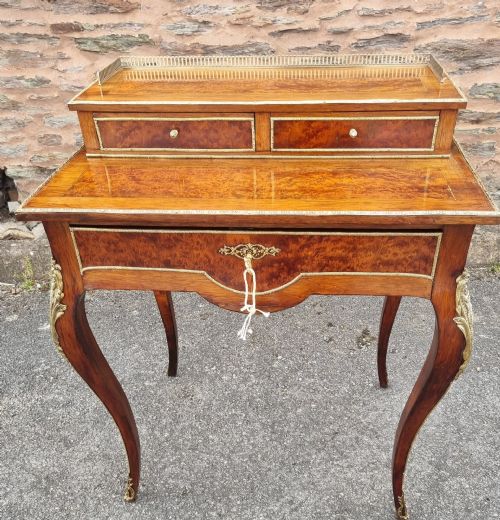
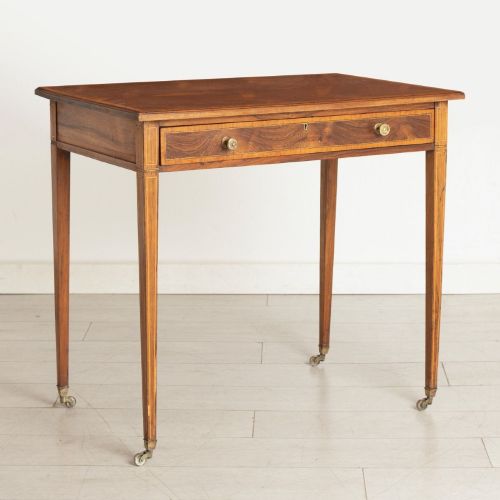
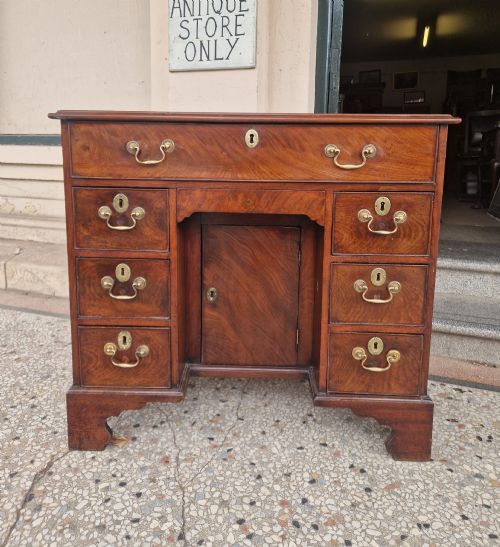
A small writing table spans periods from the 18th century through the Georgian, Victorian and Edwardian eras up to the 1920s. These pieces include lowboys, kneehole desks, pedestal desks and side tables fitted with drawers, drop leaves or leather inserts.
The versions met most frequently on this page originate in the Victorian and Edwardian periods, constructed in mahogany, walnut and oak. Many incorporate marquetry, parquetry or satinwood inlay, reflecting the prevailing styles of their respective decades.
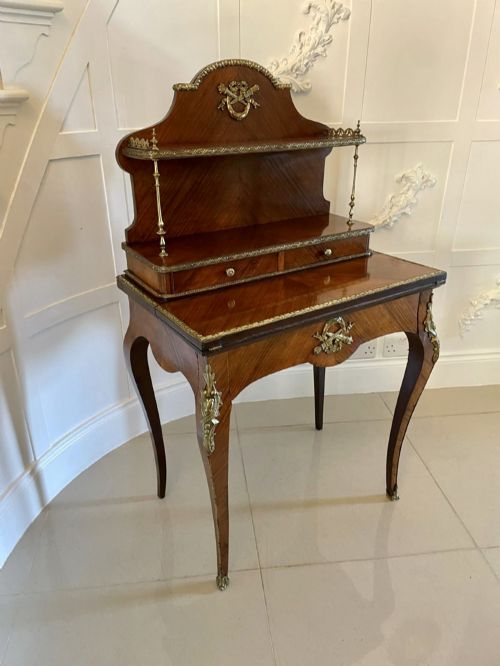
Forms range from simple pine and oak work tables to refined rosewood lady's writing desks and French-influenced revival pieces. Their compact proportions suited smaller chambers, dressing rooms and boudoirs where full-sized partners desks proved impractical.
How they were made
Cabinet makers built these tables primarily in solid timbers and veneers of mahogany, walnut, oak and rosewood, often contrasting them with satinwood, amboyna or burr yew accents. Drawer linings in secondary woods like pine or oak show traditional dovetail construction.
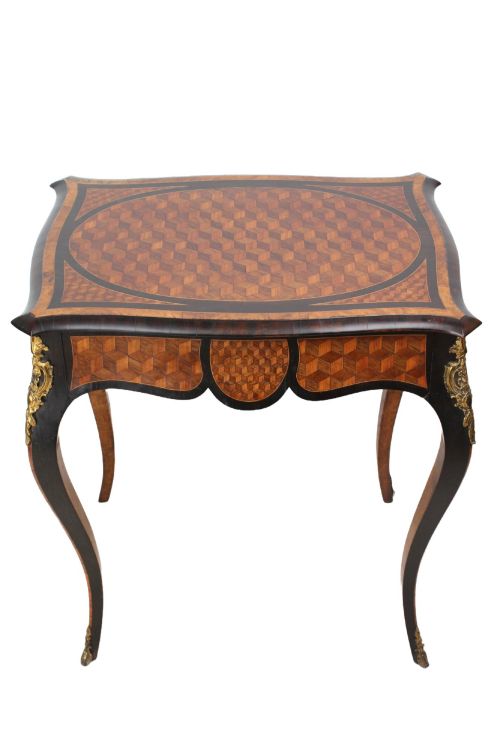
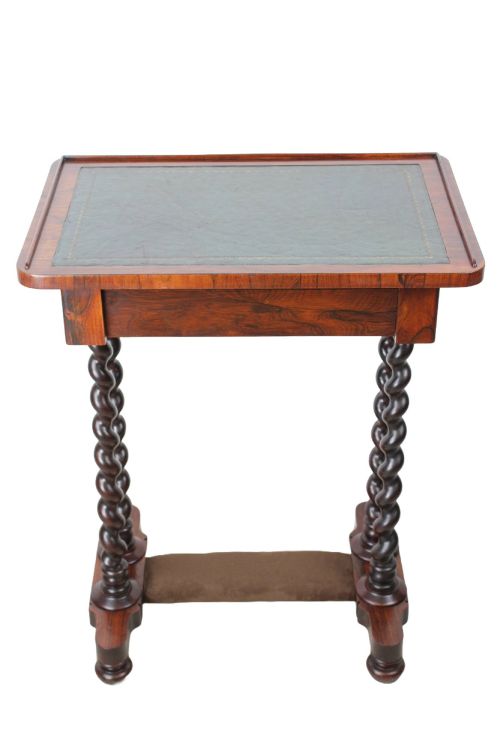
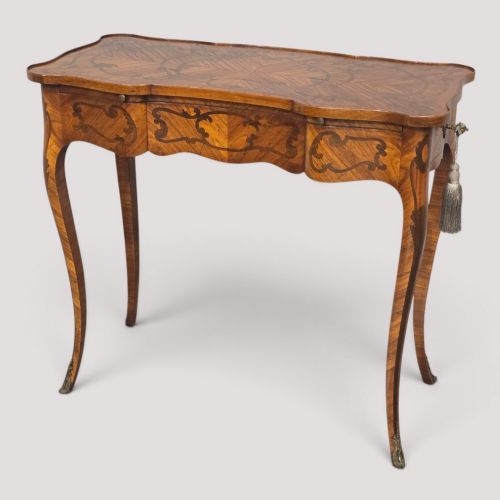
Surface ornament relied on marquetry, parquetry, ebony stringing and brass or ormolu mounts, complemented by tooled leather writing surfaces. Drop-side flaps, folding tops and fitted interiors with pigeonholes and tiny drawers required intricate mechanical joinery.
Small Writing Table Retail Price Guide 2026
Typical asking prices for small writing table among the pieces listed under this phrase on Sellingantiques today, from the lower quarter to the upper quarter. They describe what is for sale here now, not the wider market.
The inventory includes side tables, pedestal desks, lowboys, kneehole desks and tabletop bureaux.
What varies in quality
Excellence in a small writing table shows in the selection of figured wood veneers, such as burr walnut, flame mahogany or rich rosewood, matched symmetrically across the top and drawer fronts. The crispness of inlaid stringing, parquetry patterns and cast ormolu mounts dictates the upper tier of craftsmanship.
Internal execution separates standard production from superior pieces, seen in tidy secondary wood framing, smoothly operating drawers with hand-cut dovetails and well-fitted interior compartments. The structural integration of drop leaves, tambour doors or folding mechanisms reveals the maker's underlying skill.
JAS Shoolbred·Gillows
The Small Writing Table Glossary
- Lowboy
- A small table with one or more rows of drawers supported on four legs, originating in the 18th century and frequently utilised as a writing surface or dressing table.
- Marquetry
- Decorative patterns formed by inserting pieces of contrasting wood, shell or ivory into a veneered surface to create pictorial or geometric designs.
- Parquetry
- Geometric mosaic woodwork arranged in regular patterns like cubes or herringbone, commonly seen on Victorian and Edwardian table tops.
- Bonheur De Jour
- A light lady's writing desk featuring a small cabinet or set of pigeonholes and drawers superstructure on top of the main writing surface.
- Ormolu
- Gilded bronze mounts and decorative trimmings applied to furniture, popular in French revival and mid-19th-century luxury pieces.
Small Writing Table: Frequently Asked Questions
What is a lowboy?
A lowboy is a compact 18th-century table with drawers, often set on cabriole or straight legs. These versatile pieces served multiple domestic functions including writing and dressing.
They appear frequently in Georgian oak and walnut, prized for their clean proportions and modest footprint.
How do I date an Edwardian desk?
Edwardian writing tables, built around 1900 to 1910, often feature lighter mahogany or satinwood timbers with delicate inlaid stringing. They frequently reflect Sheraton or Georgian revival influences.
Look for machine-sawn timber combined with hand-finished details, fitted interiors, and occasionally retailer labels inside the drawer.
Were these tables used in parlours?
Yes, smaller writing desks and side tables suited reception rooms, drawing rooms and bedrooms. Ladies writing tables provided a dedicated space for correspondence and keeping household accounts.
Their decorative finishes meant they sat comfortably among other fine parlour furniture without dominating the room.
What woods are most common?
Mahogany, walnut and oak dominate the selection across Georgian, Victorian and Edwardian periods. Rosewood appears frequently in finer 19th-century pieces, alongside exotic accents like satinwood and amboyna.
Simpler country pieces utilised pine or fruitwoods, while revival items embraced rich burr veneers.