



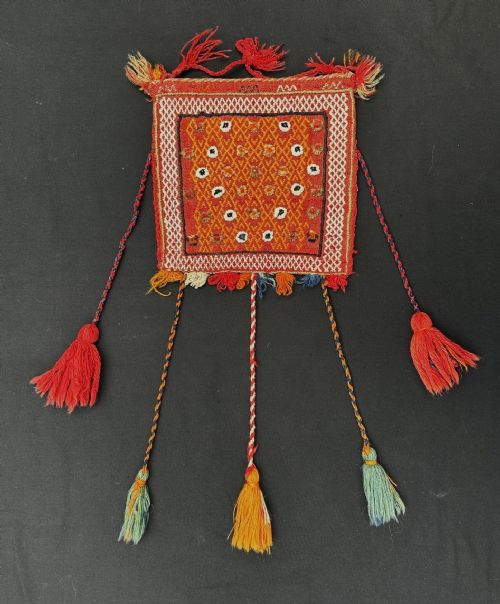


Small Woven Wall Hanging
A small woven wall hanging brings the geometric colour and nomadic texture of Persian tribal life directly into a modern interior.
Small Woven Wall Hanging
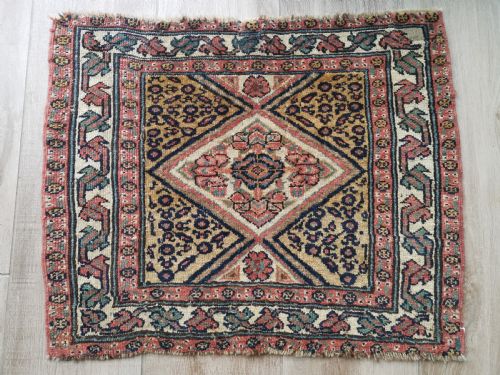
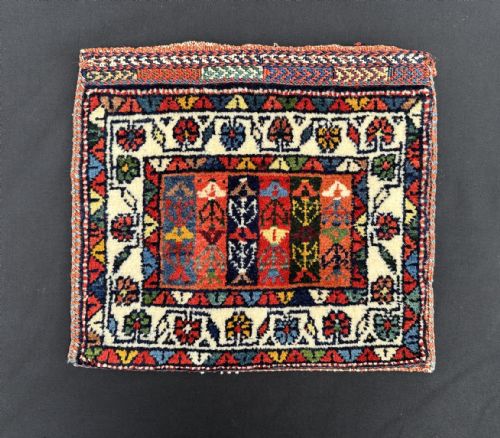
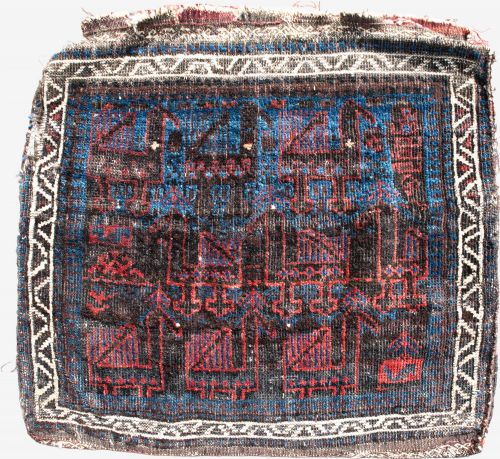
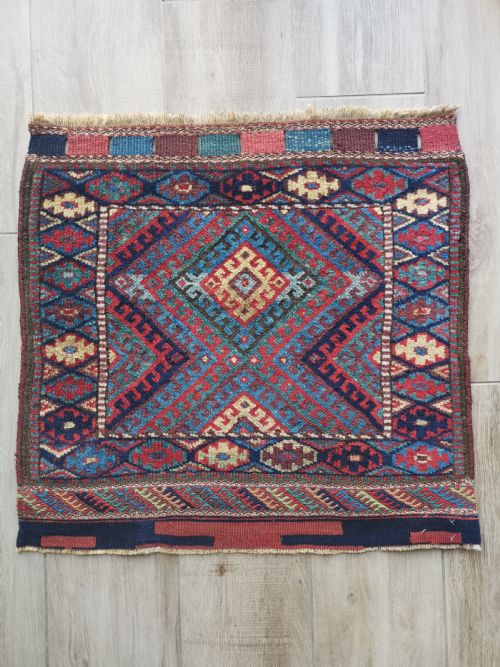
A small woven wall hanging on this page typically originates as a utilitarian textile from tribal or nomadic traditions across Persia, Anatolia, and Central Asia. These items span periods from the early nineteenth century through to the early twentieth century, capturing distinct regional weaves.
Most examples meet the buyer as fragments or complete faces of functional items such as saddle bags, storage torbas, chantehs, and vanity bags. Collectors and decorators adapt these portable tribal weavings to hang on walls, displaying the dense iconography of groups like the Afshar, Yomut, Tekke, and Jaf Kurd.
The format ranges from square personal bags to rectangular prayer rugs and small mats. Each piece reflects the domestic economy and nomadic lifestyle of its makers, translating utilitarian livestock equipment into expressive flat-woven or pile-knotted textile art.
Materials and Construction
Construction relies heavily on wool, hand-spun wool, and occasional silk, manipulated into durable structures designed to withstand daily nomadic travel. Weavers utilised natural dyes to achieve deep reds, indigos, and earth tones that mellow gradually over decades of exposure and use.
Techniques combine pile knots with flat-woven plain weave or Soumak wrapping, depending on whether the item functioned as a sturdy storage sack or a personal vanity bag. The integration of hand-spun materials creates subtle irregularities in texture and colour saturation across the surface.
Listings feature pieces spanning the nineteenth and early twentieth centuries, constructed from wool, hand-spun wool, silk, and natural dyes by tribal groups across Persia and Central Asia.
Evaluating Quality
Quality rests primarily in the fineness of the weave and the precision of the tribal guls or geometric motifs. Tighter knotting and sophisticated handling of natural dye palettes distinguish master nomadic work from standard utilitarian output.
Condition and completeness also drive the standing of a piece, separating intact bag faces and untouched torbas from heavily fragmented textile remnants. The clarity of design execution and the retention of original side cords indicate superior workshop standards within tribal groups.
The Small Woven Wall Hanging Glossary
- Torba
- A small storage bag produced by Turkmen tribes, frequently featuring characteristic gul medallions. These pieces were traditionally hung inside felt tents to hold household goods.
- Chanteh
- A small personal carrying bag or vanity case woven by Persian nomads. They often display intricate pile work on the face while the back remains plain weave.
- Gul
- A repeated octagonal or medallion motif used in Turkmen and Central Asian weaving. Each design variation identifies a specific tribal group or clan.
- Mafrash
- A rectangular storage bale or chest face used by nomads for bedding transport. They employ techniques ranging from pile knots to soumak brocading.
Small Woven Wall Hanging: Frequently Asked Questions
How do I hang a textile safely?
Mounting a fragile textile requires distributing the weight evenly across the upper edge without piercing the old fibres. A conservation-grade Velcro strip or a custom fabric sleeve stitched to the reverse prevents distortion.
Keep the hanging away from direct sunlight and damp walls to protect the natural wool and vegetable dyes from fading or degrading over time.
What is a bagface?
A bagface is the decorative front panel of a utilitarian nomadic container, such as a saddlebag or storage sack. Because the back wore out during daily travel, the front survived independently as a finished decorative object.
Nomads constructed these panels with durable pile knots to display tribal status and intricate clan iconography while on the move.
How are tribal rugs dated?
Dating relies on structural analysis, the chemistry of natural dyes, and stylistic comparisons with documented nineteenth-century examples. Hand-spun wool texture and specific regional design mutations offer clear chronological markers.
Experts examine the quality of the wool and the palette shifts to place pieces within decades such as the 1880s or 1900s.
Where were these pieces made?
These textiles originated across Persia, the Caucasus, Anatolia, and Central Asian regions inhabited by nomadic confederacies. Groups such as the Shahsevan, Afshar, Yomut, and Kurdish tribes produced them for domestic utility.
Each geographic area developed distinct weaving structures, colour preferences, and geometric vocabulary unique to its landscape and culture.